NN vs NNN Lease
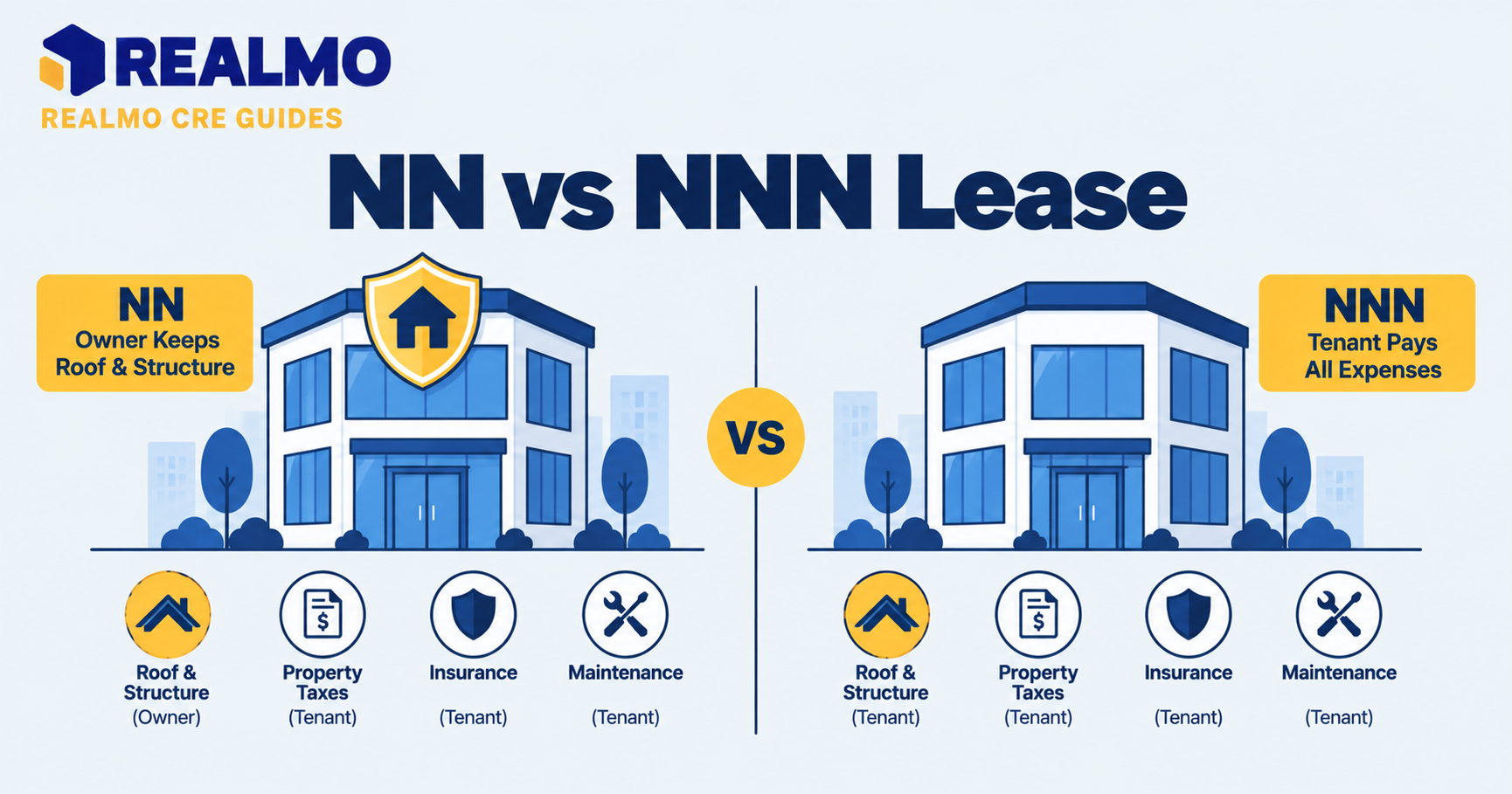
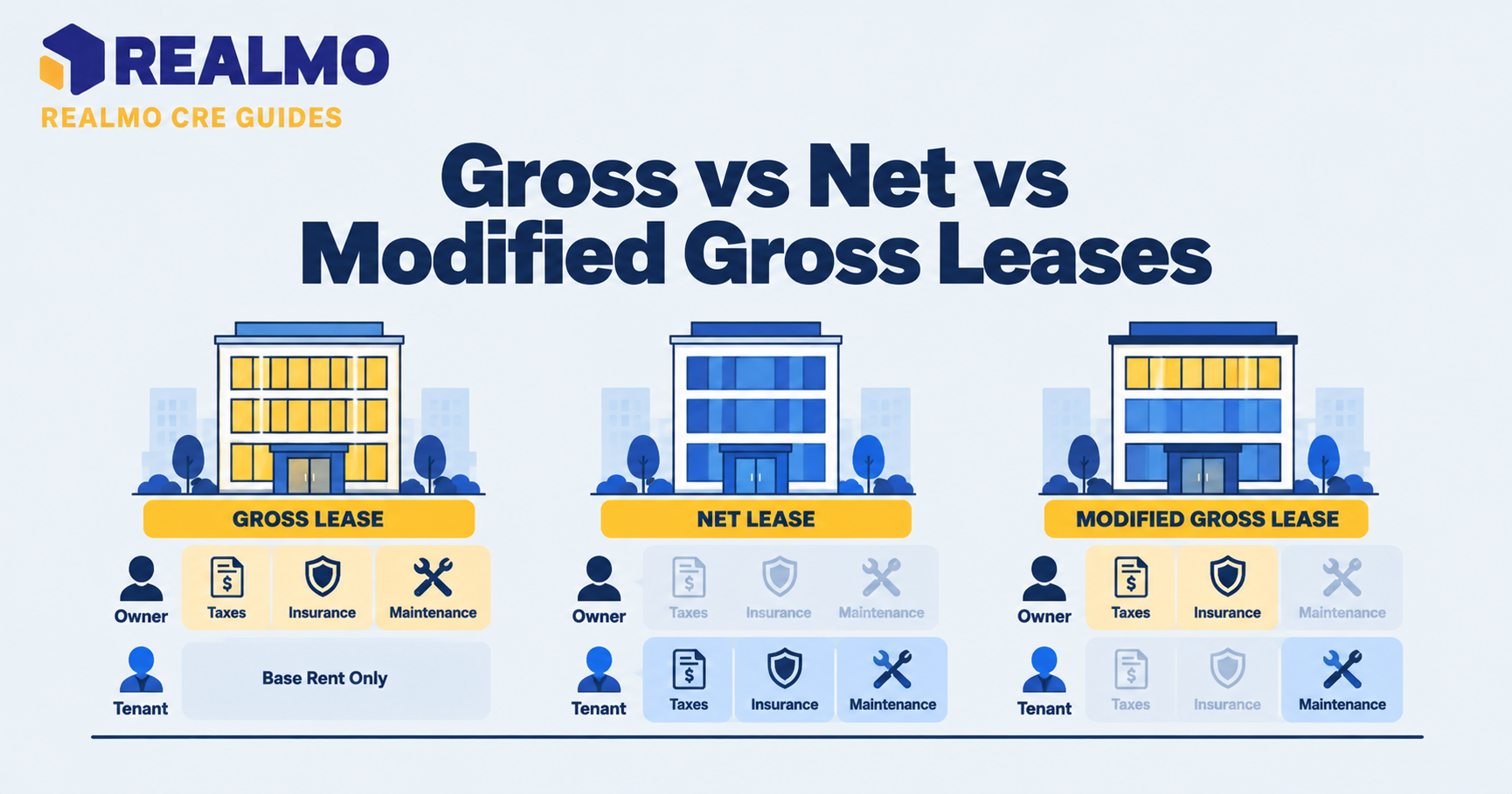
An NN vs NNN lease differs on one axis: who pays for the building itself. A double net (NN) lease assigns property taxes and insurance to the tenant, and leaves roof, structure, and parking with the landlord. A triple net (NNN) lease moves maintenance and common area costs across too. Capex is the dividing line.
Why the split shows up in your first-year NOI
You’re bidding on a 12,000-square-foot single-tenant building with eight years of term left. The flyer says net leased. Under a triple net structure, the tenant pays taxes, insurance, HVAC service, and parking repairs. Your expense column holds asset management and little else. Under a double net structure, the same rent arrives, and a roof replacement lands on you in year four. The rent roll shows neither version. Both look identical on a return summary built from base rent alone. Sellers price on rent. You buy on cash flow after capital spending. Two buildings, one tenant, same price, different returns.
What an NN vs NNN lease assigns to each party
Net lease structures stack. A single net lease adds property taxes to base rent. A double net lease adds insurance premiums on top of taxes. A triple net lease adds maintenance, common area costs, and the service contracts attached to them.
What stays with the landlord under NN is the expensive part: roof, foundation, load-bearing walls, and in most retail deals the parking lot. HVAC sits in the negotiated middle. Plenty of NN leases give the tenant routine service and repair while keeping replacement with ownership, split by a dollar threshold written into the clause.
The industry does not agree on where NNN ends. One camp treats NNN as tenant-pays-everything. The other reserves that for an absolute net lease, also called bondable, where the tenant carries roof, structure, and casualty restoration with no right to abate rent. Both usages show up in offering materials from national brokerages. Neither is wrong. The document governs, the acronym doesn’t.
Why the label on the offering memorandum misleads
Read four sections before you accept a label: Repairs and Maintenance, Casualty, Operating Expense Reimbursement, and Surrender. The first tells you who buys the roof. Casualty tells you who rebuilds after a fire, and whether the tenant can walk. Surrender tells you what condition the space comes back in.
Reimbursement clauses hold the traps. A lease can be marketed as NNN and still cap controllable expenses at a fixed annual increase. It can exclude capital items above a stated threshold from the pass-through. It can bar an administrative fee. Each exclusion pushes cost back to ownership without changing a letter on the flyer.
Ownership records, sale history, and current use are public-side facts you can pull from a listing on Realmo. The lease abstract isn’t. Ask for the full document plus every amendment, and have a real estate attorney review the repair, casualty, and reimbursement language before you close.
How landlord capex changes the cap rate you pay
A double net asset prices at a wider cap rate than a comparable triple net asset with the same tenant, term, and location. That spread is not a convention. It’s the present value of capital you expect to spend, plus a premium for timing you don’t control.
Underwrite it as a line. Estimate remaining useful life on the roof membrane, the HVAC units, and the parking surface. Convert each replacement cost into an annual accrual across the years before it hits. Deduct the accrual from NOI, then divide by price. What you get is the cap rate you’re actually buying.
Term matters here too. A roof due in year seven under a lease expiring in year five is two problems.
Worked example: pricing a roof into an NN deal
All figures below are illustrative.
Inputs. A 15,000-square-foot freestanding retail building. Base rent of $180,000 per year, NN lease, landlord responsible for roof and structure. Marketed at $2,770,000, a stated 6.5% cap. The roof is 14 years into a 20-year membrane, replacement estimated at $12 per square foot. Add $3,000 a year for structural and parking reserve, and asset management at 3% of rent.
Steps. Roof cost is $180,000, expected in year six, so the annual accrual is $30,000. Management runs $5,400. Adjusted NOI comes to $141,600.
Result. Against the $2,770,000 asking price, that’s a 5.1% effective cap. Priced at 6.5% on adjusted NOI, the building supports about $2,178,000. The gap is roughly $592,000.
How to read it. The roof isn’t a year-six expense. It’s a price adjustment today, and it’s negotiable in a credit that reduces basis at closing.
The frequent error. Buyers amortize the $180,000 across the 20-year life of the new roof, which produces $9,000 a year. The check comes in six years, not twenty. That mistake understates the annual drag by more than three times.
What lenders do with NN and NNN deals differently
Lenders read the same clauses you do. On a double net asset, a lender can require a monthly replacement reserve escrow sized per square foot and released against invoices. That escrow is cash out of distributions in years with no work at all.
Lease term against loan term drives sizing as well. A lease expiring before maturity pushes a lender toward lower proceeds, shorter amortization, or a cash flow sweep in the final years. Estoppel certificates and SNDA agreements confirm what the tenant believes it owes, which isn’t always what the seller told you.
Common mistakes with net lease labels
- Trusting the flyer. NNN in marketing means NN in the document more often than buyers expect, and the roof arrives as an unbudgeted six-figure check.
- Skipping the roof warranty. Warranties run to a named owner. Many don’t transfer, and those that do can require a fee and a re-inspection, leaving you uncovered on a repair you assumed was warranted.
- Underwriting reimbursements at 100%. Caps, exclusions, and vacancy in a multi-tenant strip leave part of CAM with ownership every year.
- Ignoring surrender condition. A clause requiring return in original condition is worth real money at expiration. Silence hands restoration cost to you.
Related terms
- Triple net lease
- Absolute net lease
- CAM reimbursements and expense caps
- Cap rate
- Replacement reserves
- Estoppel certificate
FAQ
Is a double net lease worse than a triple net lease?
No, it’s priced differently. A double net lease leaves roof, structure, and usually parking with the landlord, so the buyer carries capital risk the triple net buyer doesn’t. That risk should show up as a wider cap rate or a closing credit. A well-priced NN deal can outperform an overpriced NNN one.
Who pays for the roof in a double net lease?
The landlord, in the standard version. The tenant covers property taxes and insurance, plus interior maintenance in most drafts. Roof, foundation, and load-bearing walls stay with ownership. Some leases split the roof, giving patch repairs to the tenant and full replacement to the landlord above a dollar threshold written into the clause.
What separates NNN from absolute NNN?
An absolute net, or bondable, lease removes every landlord obligation, including roof, structure, and rebuilding after casualty, with no rent abatement and no termination right. A conventional NNN lease can still leave structural work with ownership. Two leases carrying the same three letters can allocate capital risk in opposite directions.
How do I confirm a lease is really triple net?
Pull the full lease and all amendments, then read Repairs and Maintenance, Casualty, Operating Expense Reimbursement, and Surrender. Check for expense caps, capital exclusions, and administrative fee bans. Compare the seller’s expense history against the pass-through language. Lease terms and remedies vary by state, so route the review through counsel.