Ground Leases: How They Work
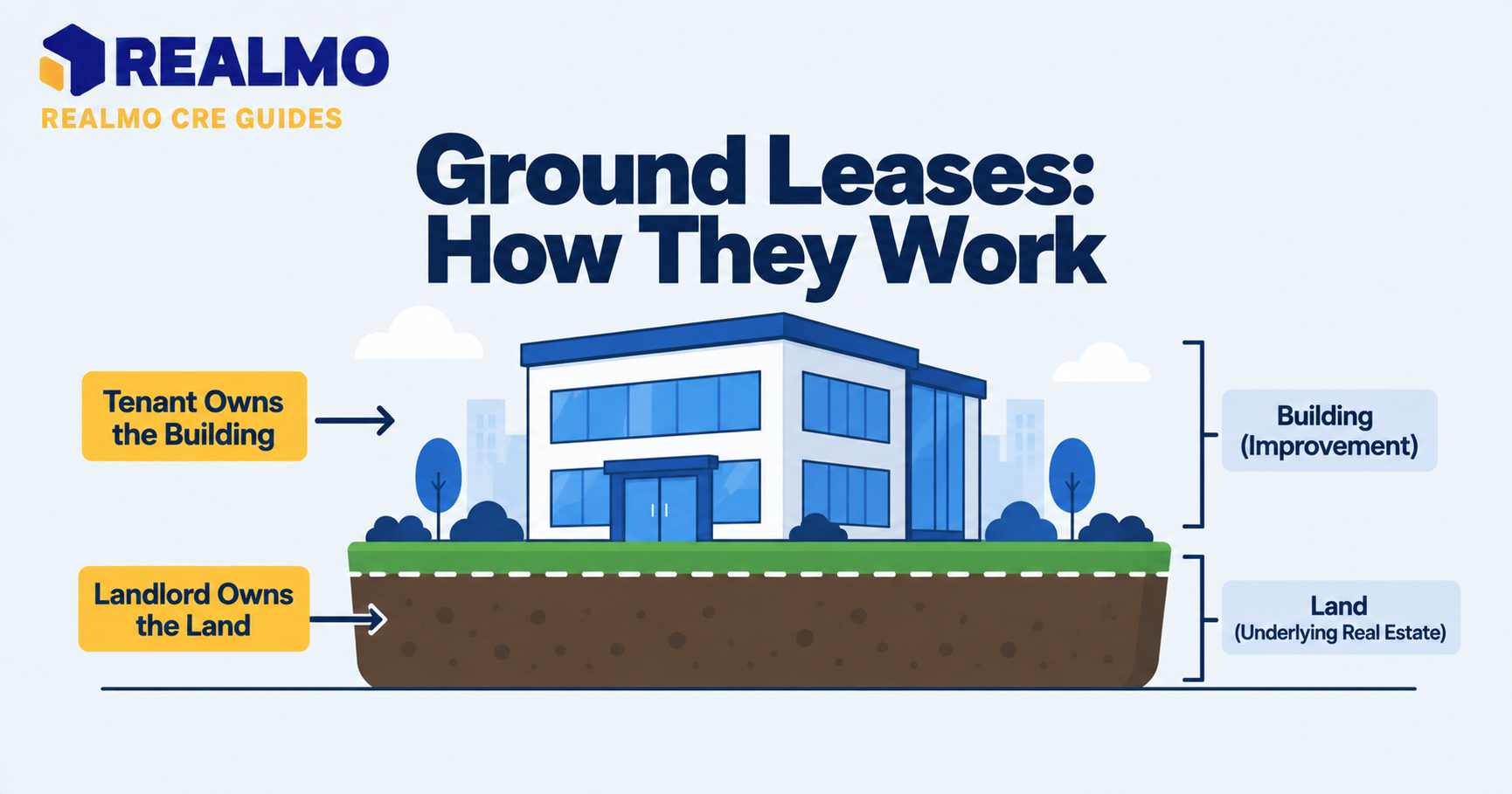
A ground lease is a long-term lease of land. The tenant builds and owns the improvements during the term, then transfers them to the landowner at expiration. Terms run 49 to 99 years. The landowner keeps fee title to the dirt. The tenant holds a leasehold estate that can be mortgaged, sold, and sublet.
Why ground leases change deal economics
An investor prices a leasehold interest in a Manhattan office tower with 34 years left on the land lease. Per square foot, it looks 40% cheaper than nearby fee-simple sales. That gap is not a discount. It is the market pricing a wasting asset. At year 34 the building reverts to the landowner, and the leasehold is worth nothing.
Lenders read it the same way. A leasehold mortgage cannot amortize past lease expiration. Most leasehold lenders want the term running at least 10 years beyond loan maturity. That rules out almost any lease with under 20 years left. So the reversion date sets the deal before the rent roll does. An investor who underwrites net operating income first and reads the lease second will overpay.
How a ground lease splits land and building
Two estates exist at once. The landowner holds the fee interest in the land and collects ground rent. The tenant holds a leasehold estate and holds title to the improvements for the term.
That split has hard consequences. The tenant depreciates the building it constructs over 39 years as nonresidential real property under MACRS (IRS Publication 946). The land itself is never depreciable, which is one reason a landowner is content to hold it. Ground rent is deductible to the tenant as an operating expense.
At expiration, the reversion happens automatically in most forms. The landowner takes the building free of charge, unless the lease specifies a purchase option or a payment for improvements. Check that clause before anything else. A 75-year lease signed in 1975 is now a short-dated instrument.
Subordinated vs. unsubordinated ground leases
Subordination decides who eats the loss when the tenant defaults.
In an unsubordinated ground lease, the landowner’s fee position sits ahead of the leasehold mortgage. If the tenant stops paying, the landowner can terminate the lease and recover the land with the building on it. The leasehold lender’s collateral evaporates unless it cures the default first. Institutional landowners, pension funds, universities, and land trusts insist on this structure.
In a subordinated ground lease, the landowner agrees that the leasehold mortgage comes first. A foreclosing lender can wipe out the fee owner entirely. Developers get far more debt proceeds this way. Landowners charge for the risk through higher rent, a percentage of gross revenue, or a share of refinance proceeds.
What makes a ground lease financeable
A financeable ground lease is a drafting standard, not a market label. Leasehold lenders look for a defined set of mortgagee protections, and their absence kills the loan.
The lender wants written notice of any tenant default and an independent cure period, usually 30 days beyond the tenant’s own. It wants the right to a new lease on identical terms if the ground lease is rejected in a bankruptcy under Section 365 of the Bankruptcy Code. It wants control over casualty and condemnation proceeds, so insurance money rebuilds the asset instead of paying off the landowner. And it wants a bar on amendment or voluntary termination without its consent.
Remaining term matters as much as the language. A 99-year lease in year 12 finances like fee simple. The same lease in year 71 finances like nothing at all.
How ground rent resets over a 99-year term
Four rent mechanics show up in US ground leases. Flat rent for the full term, which appears in older leases and destroys the landowner’s real return. Fixed percentage bumps, such as 2% a year or 10% every five years. CPI indexation, sometimes with a floor and a cap. And fair market revaluation at 25- or 30-year intervals.
Revaluation is where leaseholds blow up. The appraiser values the land as if vacant and unimproved, then applies a stated capitalization rate written into the lease decades earlier. The building the tenant paid for is ignored. Land values in a Class A submarket can rise many multiples over 30 years while the contract rent stayed flat, so a single reset can multiply ground rent several times in one day. Buy a leasehold five years before a reset and the reset is the deal.
Stepped or prepaid rent brings Section 467 of the Internal Revenue Code into play, which forces accrual timing that may differ from cash payments.
Worked example: leasehold value vs. fee value
All figures below are illustrative and rounded for clarity.
A single-tenant retail property produces $1,000,000 of NOI before ground rent. Ground rent is $250,000 with fixed 2% annual bumps. The lease has 55 years remaining and is unsubordinated.
Step one: value the property as if fee simple. At an illustrative 6% cap rate, $1,000,000 gives $16.7 million.
Step two: value the fee position. The landowner receives $250,000 of contractual, escalating income with the building as security. That is bond-like, so it prices tighter. At an illustrative 5%, the fee position is worth $5.0 million.
Step three: value the leasehold. Cash flow after ground rent is $750,000. The leasehold carries reversion risk and reset risk, so it prices wider. At an illustrative 8%, it is worth $9.4 million.
Result: $5.0 million plus $9.4 million equals $14.4 million, against $16.7 million as fee simple. The $2.3 million gap is what divided ownership costs.
Interpretation: the two positions rarely sum to the whole. Ask who captured the difference and why.
One common error: applying the fee-simple cap rate to leasehold cash flow. With fewer than 30 years left, cap-rate math stops working at all. Switch to a discounted cash flow with a terminal value of zero.
Ground lease structures carry tax and title consequences that turn on state law and lease language. Confirm treatment with a licensed attorney and CPA before signing.
Tax treatment of a leasehold position
A leasehold interest with 30 years or more remaining is treated as like-kind to a fee interest in real property under Treasury Regulation 1.1031(a)-1(c). That single threshold shapes exit planning. An investor who wants to roll a leasehold into a 1031 exchange has to watch the clock: at 29 years and 11 months, the option is gone.
Costs paid to acquire the leasehold are amortized over the remaining term rather than depreciated over 39 years. Improvements the tenant builds follow the 39-year schedule unless the remaining term is shorter.
Common mistakes with ground lease deals
- Underwriting the leasehold like fee simple. The exit assumption is wrong from day one, and the internal rate of return is fiction.
- Missing the next rent reset. A reset four years out can consume most of the cash flow the buyer paid for.
- Assuming the lender will accept the lease as written. Missing mortgagee protections send a deal back into renegotiation with the landowner, who has no reason to agree cheaply. Deals die here.
- Treating improvements as permanently owned. They belong to the landowner at expiration unless a purchase option or compensation clause says otherwise.
- Ignoring assignment and change-of-control clauses. Landowner consent rights can block a sale or a recapitalization.
Realmo’s property records show ownership and current use for 9M+ US commercial properties, which helps confirm whether land and building sit with the same owner before a broker call.
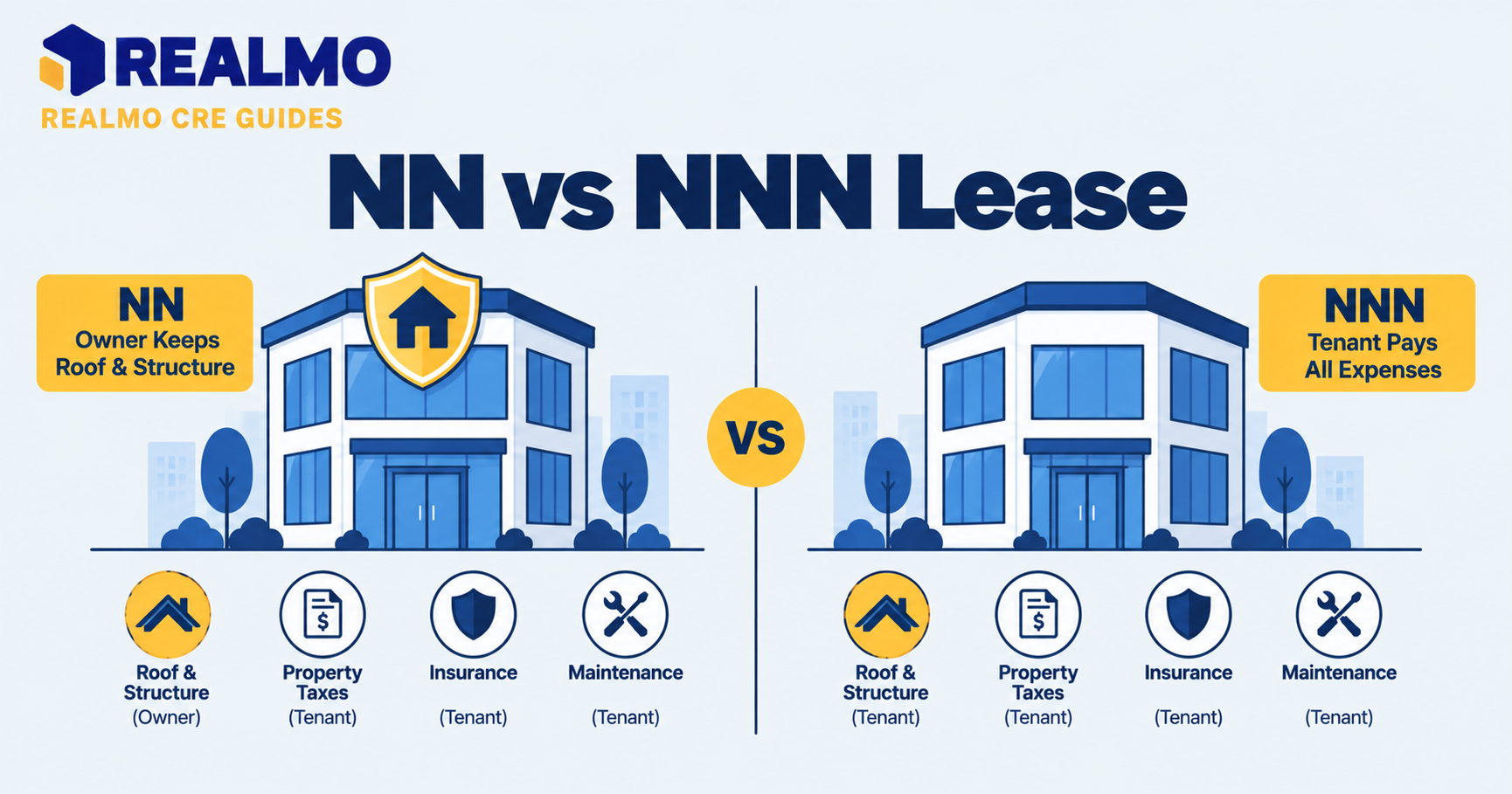
Related terms: leasehold improvements, sale-leaseback, triple net lease, subordination agreement, reversionary interest, fee simple.
Ground lease FAQ
What happens at the end of a ground lease?
The land and everything built on it revert to the landowner. The tenant walks away with nothing unless the lease grants a purchase option, an extension right, or compensation for improvements. Some leases require the tenant to demolish the building and restore the site at its own cost.
Can you get a mortgage on a ground lease property?
Yes, on the leasehold estate. The lease must contain mortgagee protections, and lenders want the remaining term to extend well past loan maturity. Unsubordinated leases without lender cure rights are usually unfinanceable at institutional terms.
Why would a landowner sign a 99-year ground lease?
It produces long-dated income secured by a building someone else paid for, without operating risk, capital expenditure, or leasing exposure. The owner keeps the land, which does not depreciate for tax purposes, and takes the improvements back at expiration.
Is a ground lease cheaper than buying land?
It removes the land purchase from the capital stack, so less equity goes in at closing. Rent, escalations, and reset exposure replace that cost over the term. Whether it is cheaper depends on the reset formula and the hold period.