Commercial Leases: Complete Guide
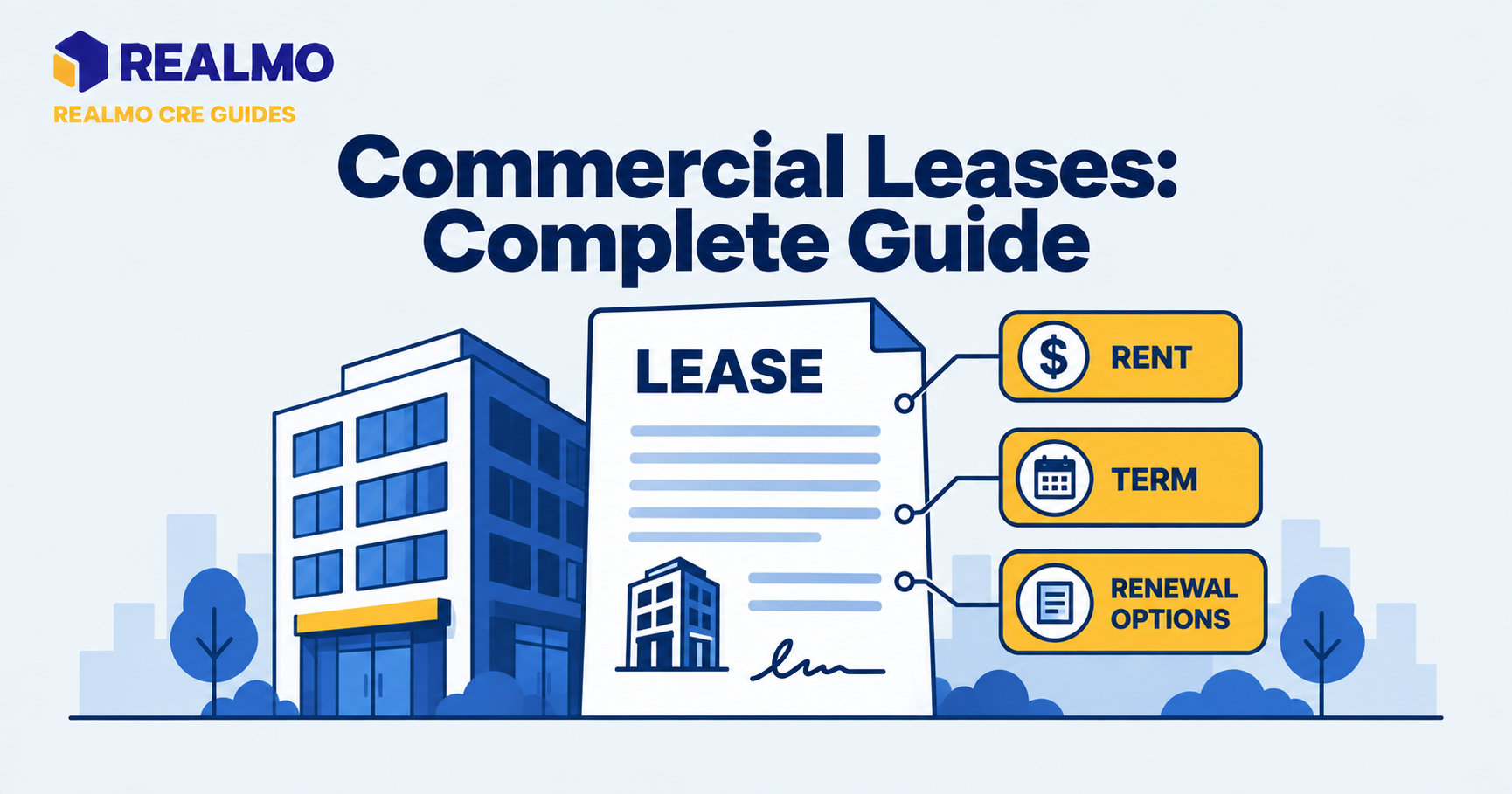
A commercial lease is a binding contract that gives a business the right to occupy space it does not own. In exchange, the tenant pays rent and takes on defined operating obligations. It covers office, retail, and industrial property. Terms are negotiated deal by deal, with no consumer-protection floor beneath them.
Why a five-year lease is a five-year liability
Sign a five-year lease on 5,000 square feet and you have created a multi-year obligation, not a monthly bill. A 12-person agency that outgrows the suite in year two still owes rent through year five. The landlord’s remedies on default usually include acceleration of remaining rent, draw on the security deposit, and enforcement of any personal guaranty.
The obligation also shows up in your books. Under FASB ASC 842, leases longer than 12 months sit on the balance sheet as a right-of-use asset and a matching lease liability. Your lender sees that number when you apply for a line of credit.
No federal cooling-off rule applies here. Commercial tenants are presumed to be sophisticated parties, so the document controls.
What a commercial lease makes you responsible for
Rent is the smallest part of the document. A commercial lease also allocates operating expenses, repairs, insurance, compliance, and the condition of the space on the day you leave.
Six allocations decide your real cost:
- Base rent and how it escalates
- Operating expenses, taxes, and insurance, either bundled into rent or billed separately as CAM charges
- Maintenance and replacement of HVAC, roof, structure, and parking areas
- Insurance limits, waiver of subrogation, and who names whom as additional insured
- Compliance work, including accessibility upgrades under ADA Title III for public-facing space
- Surrender condition: whether you restore the space or hand it back as built
That last item surprises tenants most. A restoration clause can require you to demolish the improvements you paid to install. On a 6,000 square foot office build-out, that obligation lands in your final month, when you are also paying for a new space.
Read the maintenance clause against the age of the building. A 30-year-old single-tenant industrial box with an original rooftop unit is a different risk from a two-year-old shell.
Gross, net, and modified gross rent compared
Three rent structures cover almost every U.S. deal. They differ in one respect: who absorbs increases in operating costs.
A full-service gross lease bundles taxes, insurance, and building operating costs into one rate. The landlord carries the increase risk, and prices that risk into the quoted rate. Most multi-tenant office space is quoted this way.
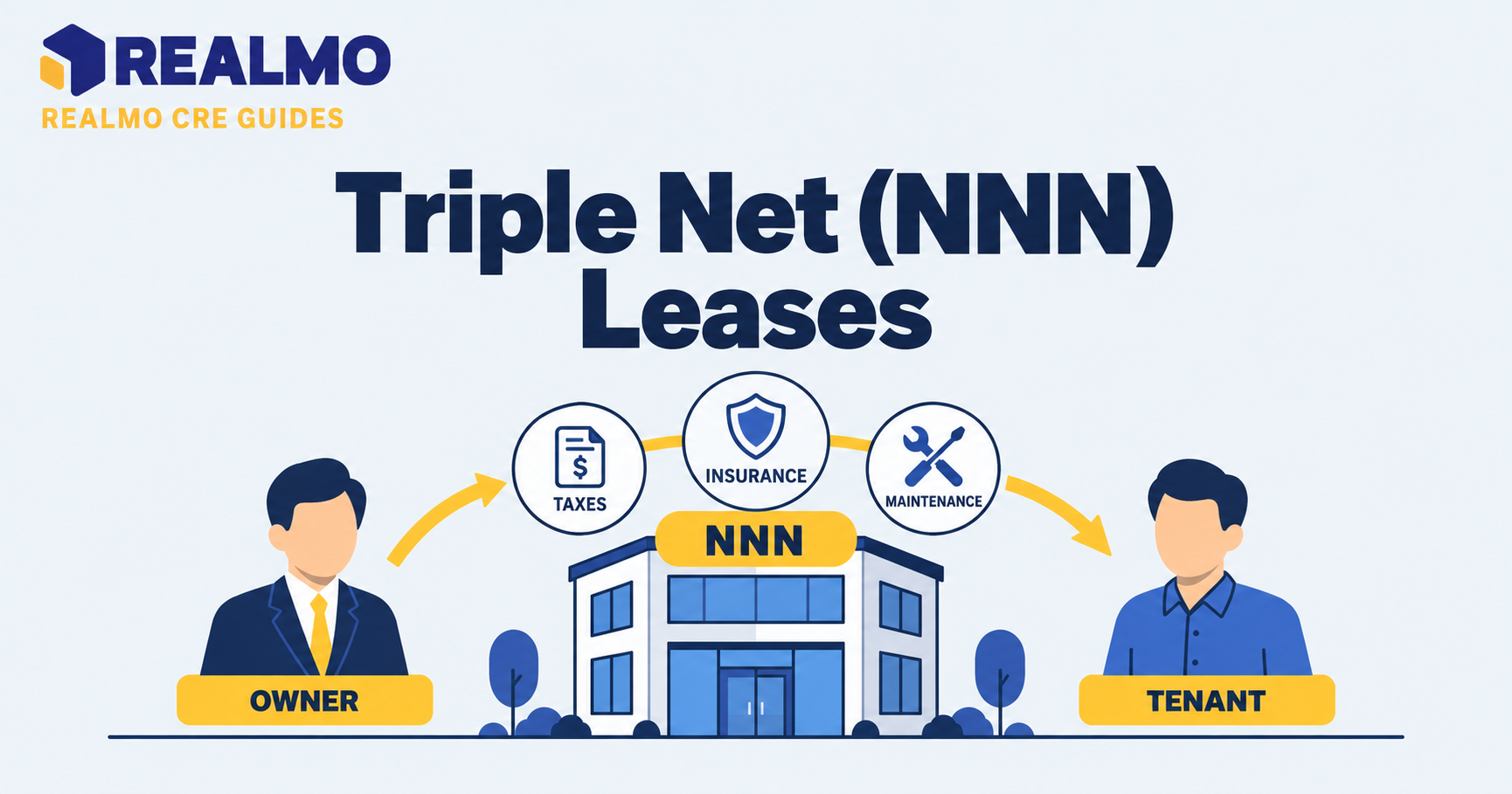
A triple net (NNN) lease separates them. You pay base rent plus your pro rata share of taxes, insurance, and common area maintenance. Single-tenant retail and industrial deals run on this structure. The quoted rate looks lower, and the total is not.
Modified gross sits between the two. The landlord covers a defined list, you cover the rest, and the split is whatever the parties wrote down. Because the label carries no fixed meaning, the expense exhibit governs.
Compare structures on gross occupancy cost per rentable square foot, not on the headline rate. A NNN rate quoted against a building with deferred maintenance and a pending tax reassessment is not the bargain it looks like.
How load factor inflates the square feet you pay for
You rent more square feet than you can use. Rentable square footage adds your share of lobbies, corridors, and restrooms to the usable area inside your suite. The ratio between the two is the load factor, defined under ANSI/BOMA Z65.1 for office buildings.
Illustrative example. A suite measures 8,000 usable square feet in a building with a 1.18 load factor. Rentable area becomes 9,440 square feet. At an illustrative rate of $30 per rentable square foot, annual base rent is $283,200. The same rate applied to usable area would be $240,000.
The gap is $43,200 a year, or $216,000 across a five-year term. Nothing improper happened. The landlord measured to a published standard, and you paid for common areas you use every day.
Your first email to the leasing broker should confirm the measurement standard and load factor. A full-floor tenant and a multi-tenant-floor tenant in the same building can carry different load factors. The difference should show up in the negotiated rate.
Escalations, base years, and expense caps
Base rent moves on a schedule you agree to at signing. Fixed annual bumps of 2% to 4% are customary in U.S. office and industrial leases. Index-linked escalations tied to CPI transfer inflation risk to you, without a ceiling unless you negotiate one.
Gross leases handle operating costs through a base year. Year one expenses set the benchmark, and you pay your share of increases above it.
Illustrative example. Base year expenses run $10.00 per square foot. Next year they reach $10.60. On 5,000 rentable square feet, your share of the increase is $3,000.
Two details decide whether that mechanism is fair. First, gross up variable expenses in a partly vacant building to full-occupancy levels. Otherwise, the base year is artificially low and later increases are overstated. Second, caps: a cap on controllable expenses protects you from management fee and landscaping increases, while taxes, insurance, and utilities stay uncapped. Ask for audit rights with a defined window, commonly 90 to 120 days after the reconciliation statement arrives.
Before you counter a landlord’s term sheet, compare asking terms on comparable space nearby. Realmo’s listings and Location Insights show both the space and the submarket around it.
Clauses tenants regret not negotiating
The economic terms get the attention. The clauses below decide what happens when your business changes.
Assignment and subletting. A blanket landlord consent right means you cannot sublet slow-moving space or transfer the lease in a sale of your company. Ask for consent not to be unreasonably withheld, plus a carve-out for affiliates and change of control.
Personal guaranty. Many landlords require one from an owner of a small business. Negotiate a burn-down that reduces exposure after good payment history. Another option is a “good guy” guaranty limited to unpaid rent through surrender. Guaranty structures differ sharply in what they expose.
Holdover. Stay past expiration without a signed extension and rent commonly resets to 150% or 200% of the last month’s base rent, plus consequential damages. Construction delays make this real.
Relocation. Office landlords reserve the right to move you to comparable space. Cap the disruption: landlord pays all costs, moves you once, and only to a floor and configuration you approve.
Exclusive use and co-tenancy. Retail tenants live on these. An exclusive stops the landlord from leasing to a direct competitor in the center. Co-tenancy gives you rent relief or a termination right if the anchor goes dark.
SNDA. A subordination, non-disturbance and attornment agreement keeps your lease alive if the landlord’s lender forecloses. Without non-disturbance, a foreclosure can wipe out your occupancy and your build-out investment.
Estoppel certificates. You will be asked to sign one during a sale or refinancing, usually within 10 business days. What you certify becomes binding, so read it against the actual lease file.
Lease law and lease accounting are state-specific and fact-specific, so have a licensed attorney and a CPA review the document before you sign.
TI allowance, free rent, and who owns the build-out
Landlord concessions come in two forms: a tenant improvement allowance and free rent. Both are priced into the deal. A landlord funding a larger allowance will push for a longer term, a higher rate, or both. This is because the capital has to amortize over the lease.
Free rent abates base rent for a defined number of months. Confirm whether operating expenses are abated too. In most NNN deals they are not, so you still pay taxes, insurance, and CAM during the free period.
Improvements paid by the landlord belong to the landlord and stay at expiration. Improvements you pay for usually become the landlord’s property at surrender as well, unless the lease lets you remove specific trade fixtures. Anything installed and left behind may still be subject to the restoration clause.
Before design starts, confirm how the allowance is paid and which party carries overrun and permit-delay risk. A tenant-managed build-out gives you control of the general contractor and cost, but it also puts schedule risk on you.
The eight leasing topics that decide your cost
This hub breaks the subject into the decisions you make in order, from term sheet to surrender.
Types of commercial leases. Gross, modified gross, net, double net, triple net, and absolute net sit on a spectrum of expense risk. The comparison guide explains what each label means in practice and why office and industrial deals use the same words differently. It also shows how to compare occupancy cost.
Triple net lease mechanics. NNN dominates single-tenant retail and industrial. The detailed breakdown shows what falls inside “net” for a tenant and where roof and structural obligations land. It also distinguishes absolute net from ordinary NNN after major failures.
CAM charges and reconciliation. Common area maintenance is the line item tenants dispute most. The CAM guide covers pro rata share, admin fees, expense caps, gross-up language, and audit rights. It explains how to review charges within the contractual window.
Rentable versus usable square feet. Measurement decides your rent before rate negotiation starts. The RSF and load factor guide covers BOMA standards, why full-floor and multi-tenant-floor load factors differ, and how remeasurement clauses can raise your rent mid-term.
The letter of intent. Most economics are settled in the LOI, not the lease. The LOI guide lists the points to include. This items become expensive to reopen once the lease draft arrives, and how non-binding language still shapes the negotiation.
Tenant improvements and build-out. The TI allowance guide covers allowance sizing, turnkey versus allowance delivery, draw schedules, landlord oversight fees, and end-of-term treatment. Each item can change move-in cost.
Retail lease clauses. Percentage rent, exclusives, co-tenancy, and continuous operation clauses only appear in retail. The percentage rent guide explains the natural breakpoint. Divide annual base rent by the percentage rate; $120,000 at 6% sets a $2,000,000 breakpoint in this illustration.
Subleasing and assignment. Space needs change faster than lease terms. The sublease and assignment guide explains liability, recapture rights, and profit-sharing on sublease rent. It also shows why tenants can remain liable after an approved transfer.
Related terms
- Triple net lease (NNN)
- Load factor
- CAM charges
- Base year and expense stop
- Tenant improvement allowance
- Letter of intent
- SNDA
- ASC 842 lease accounting
FAQ
What is the average length of a commercial lease?
Small office and retail suites are commonly leased for three to five years in U.S. markets. Industrial and anchor retail deals run ten to fifteen years, with renewal options beyond that. Term length tracks capital spending. The more a landlord funds toward your build-out, the longer the term needed to amortize that investment.
Can I get out of a commercial lease early?
Only through a mechanism written into the document or negotiated later. Common exits include a termination option with a fee, a sublease or assignment right, and a co-tenancy or casualty clause. Without one, you remain liable for the balance of the term. Landlords sometimes accept a buyout when demand for the space is strong.
What is the difference between a gross lease and a triple net lease?
A gross lease bundles taxes, insurance, and operating costs into one rate, so the landlord absorbs increases. A triple net lease charges base rent plus your pro rata share of those three expense categories, billed separately and reconciled annually. NNN quoted rates look lower because they exclude costs you still pay.
Do I have to personally guarantee a commercial lease?
Landlords request guaranties from small businesses without an established balance sheet. It is negotiable. Alternatives include a larger security deposit, letter of credit, or burn-down guaranty tied to payment history. A “good guy” guaranty can instead cover rent only until proper surrender.