Tenant Improvement Allowance: How TI Money Works
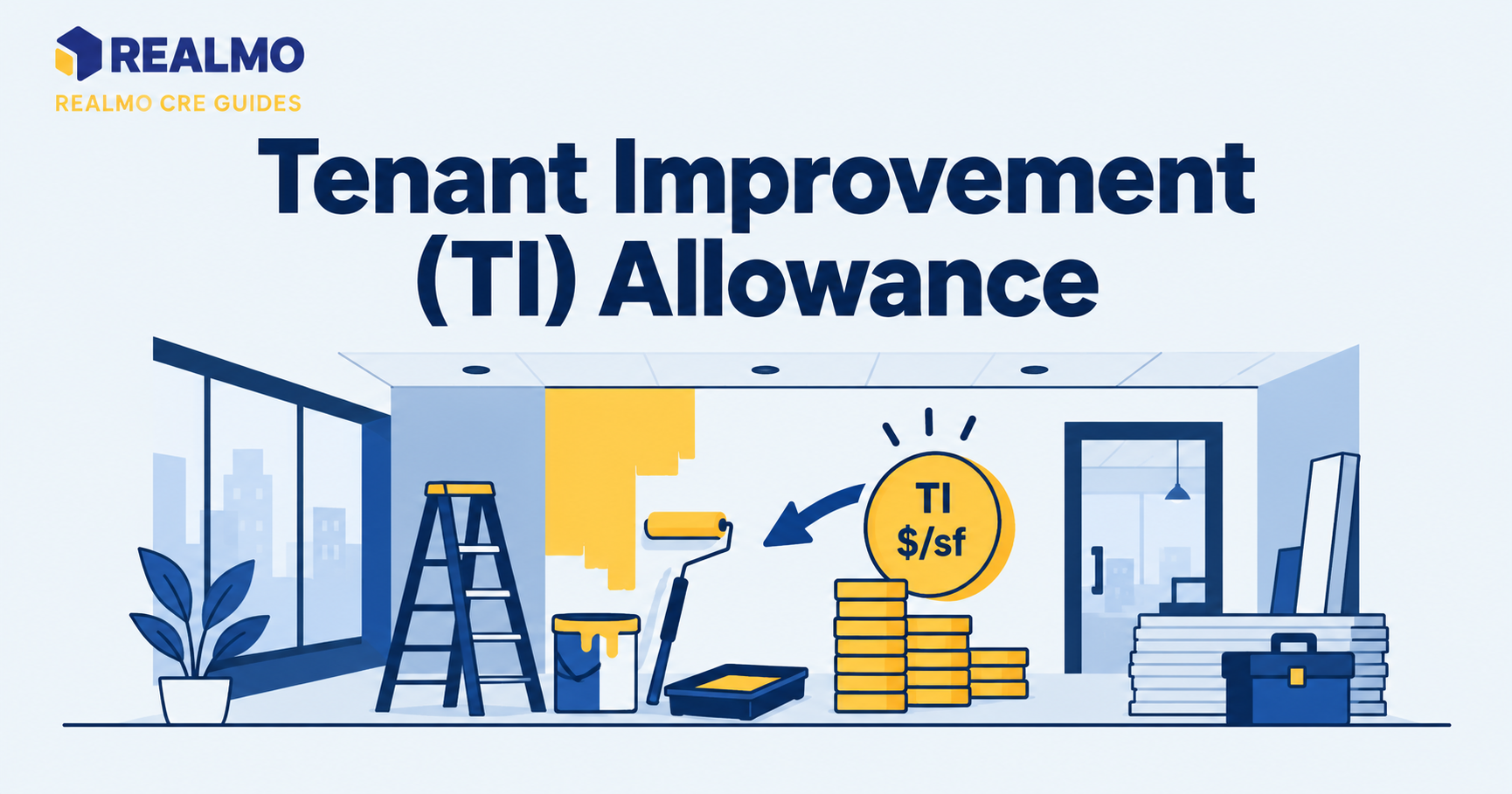
A tenant improvement allowance is money a landlord contributes toward building out leased space, quoted in dollars per rentable square foot or as a lump sum. It pays for walls, flooring, lighting, HVAC distribution, and finishes inside your premises. Anything above the allowance comes out of your pocket or gets added to rent.
Why your TI allowance sets your real move-in cost
A dental practice signs 4,000 square feet at a rent it can carry. Then the contractor’s bid lands at $210,000. The letter of intent promised $30 per square foot, or $120,000. The remaining $90,000 is due in cash before the first patient walks in.
That gap kills more deals than the rent number does.
Allowance size tracks three things: lease term, tenant credit, and how reusable your space will be after you leave. A seven-year lease from a tenant with audited financials pulls a larger allowance than a three-year lease from a first-time operator. Open office plan? Reusable. Twelve exam rooms with plumbing in each one? Not reusable, and the landlord prices that in.
How landlords price the allowance per square foot
The allowance is quoted on rentable square feet, not the space you can actually occupy. On a 4,000 rentable square foot suite with a 15% load factor, you get roughly 3,400 usable feet to build out, but the allowance is calculated on all 4,000. Check the rentable versus usable definition in the lease before you compare two proposals.
Landlords treat TI as capital they must earn back through rent. The math runs on net effective rent: base rent, minus free rent, minus allowance, minus commissions, spread across the term. A landlord who gives $50 per square foot on a five-year deal is committing $10 per foot per year of concession. Push the term to ten years and the same dollars cost half as much annually, which is why longer terms unlock more TI.
Turnkey build-out, TI allowance, or free rent
Three structures move the same economics around, and they carry different risk.
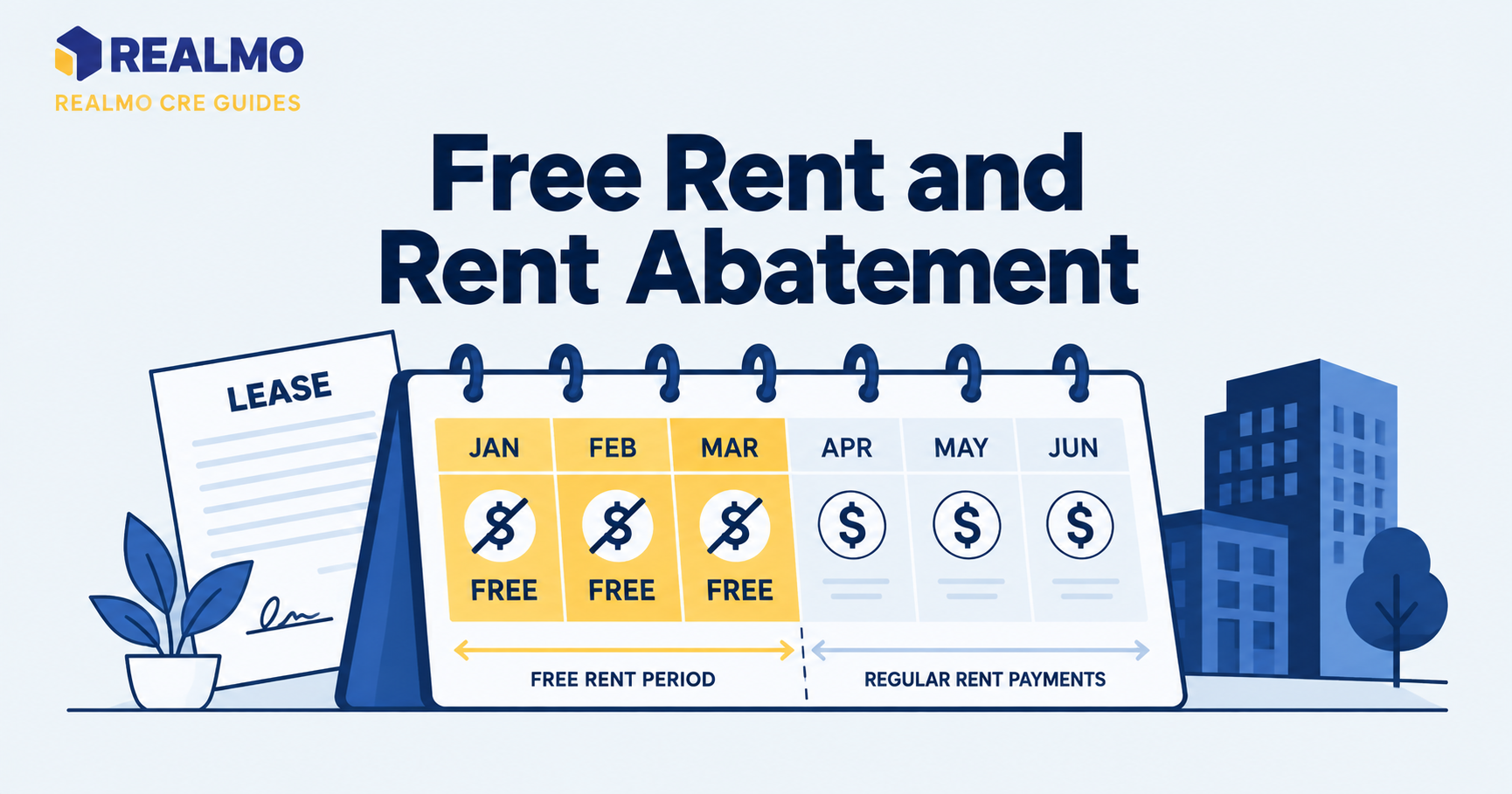
Turnkey means the landlord builds to an approved plan and eats cost overruns. You give up control of the contractor and the finish schedule. Allowance means you control the build and absorb every dollar over budget. Free rent gives you cash flexibility with no construction obligation at all, useful when the space already fits your operation.
Second-generation space with existing offices and a working kitchen may need paint and carpet. In that case, ask for abatement instead of TI you can’t spend.
What the allowance pays for and what it won’t
Hard costs sit inside the allowance almost everywhere: demolition, framing, drywall, doors, ceiling grid, lighting, flooring, HVAC distribution, sprinkler heads, electrical rough-in, paint, and millwork.
Soft costs are negotiable and get fought over line by line. Architectural drawings, engineering, permits, and the landlord’s construction management fee all draw from the same pot unless you carve them out. That management fee is a percentage of hard costs, written into the work letter, and it reduces what reaches your contractor.
Furniture, phone and data cabling, security systems, signage, moving costs, and specialty equipment fall outside standard TI language in most U.S. office and retail leases. Some landlords allow a stated slice of the allowance for those items. Ask for it in the LOI, because adding it after lease execution costs you leverage you no longer have.
Delivery condition drives the whole budget. A cold shell has no HVAC, no ceiling, and no distributed electrical. A warm shell has base building systems in place. When you shortlist spaces on Realmo, read the delivery condition in each listing before you compare allowance numbers side by side.
How TI dollars reach your contractor
Most work letters pay on reimbursement, not up front. You fund construction, then submit invoices, unconditional lien waivers from the general contractor and subs, a certificate of occupancy, and signed plans. The landlord funds within a stated number of days after that package is complete.
Monthly draws are the better structure for tenants without deep working capital. You submit for progress payments as trades finish, which keeps you from carrying the entire build on a credit line.
Two dates matter. The first is the outside date to complete construction and submit for reimbursement. Miss it and unused allowance is forfeited in most leases. The second is your rent commencement date, which may start before the build is done. Negotiate an offset right: if the landlord fails to fund on schedule, you deduct the amount from rent with interest.
Worked example: funding an over-standard build-out
Illustrative figures only.
A tenant leases 5,000 rentable square feet on a seven-year term at $30 per square foot in base rent. The landlord offers $50 per square foot in TI, or $250,000. The contractor’s bid, including permits and the landlord’s management fee, comes to $340,000.
Shortfall: $90,000.
The landlord agrees to fund the excess and amortize it into rent at 8% over the 84-month term. The monthly payment on $90,000 at 8% over 84 months is about $1,403. That’s roughly $16,834 per year, or $3.37 per rentable square foot.
Effective base rent becomes $33.37 per square foot, and total repayment reaches about $117,800.
Interpretation: you converted a $90,000 cash requirement into rent, and paid roughly $27,800 for the privilege. If your bank lends against the same build-out below 8%, borrowing is cheaper. If the landlord’s rate exceeds your cost of capital, negotiate the rate down or shrink the scope instead.
Common error here: comparing a $50 allowance on seven years against a $40 allowance on five years and calling the first one better. Per year of term, they’re nearly identical.
Who owns the improvements and who depreciates them
Improvements paid with landlord money usually stay with the building at lease expiration, and the landlord depreciates them under the Modified Accelerated Cost Recovery System (MACRS). Improvements you fund yourself and can remove without damage stay yours. The lease decides this, not the invoice.
IRC Section 110 lets a retail tenant exclude a qualified lessee construction allowance from taxable income when the lease runs 15 years or less and the money is spent on qualified long-term real property. Outside that safe harbor, an allowance can be treated as income to the tenant, with the improvements depreciated over the applicable recovery period.
Also check the restoration clause. If the lease requires removing specialty alterations at expiration, budget that cost on day one, not in year six.
Tax treatment of allowances turns on lease drafting and property type. Have a licensed CPA or tax attorney review your specific deal.
Common mistakes tenants make with TI allowances
- Signing the LOI with an allowance number but no work letter attached. The work letter defines building standard finishes, and “building standard” carpet can cost half of what your plans assume.
- Ignoring the construction management fee. It comes off the top and shrinks your usable budget before a single wall goes up.
- Accepting reimbursement-only funding without a credit line in place. Contractors want progress payments, and a stalled job delays rent commencement in your favor only if the lease says so.
- Letting the outside date pass. Unused allowance disappears, and permitting delays in dense markets consume months.
- Building for today’s headcount. Reconfiguring in year three comes entirely out of pocket.
Related terms
Work letter · Net effective rent · Rentable vs. usable square feet · Base building condition · Free rent period · Mechanic’s lien · Restoration clause · Letter of intent
FAQs
How much tenant improvement allowance can I ask for?
Ask for the full cost of a code-compliant build to your plan, then negotiate down. What you get depends on lease term, your financial statements, and how much reuse value the finished space holds for the landlord. Normalize every offer to dollars per square foot per year of term before comparing proposals.
Do I have to pay back a tenant improvement allowance?
Not the base allowance. It’s a landlord concession recovered through your rent over the term. Amounts the landlord funds above the stated allowance are different: those get amortized into rent with interest, and you repay them monthly. Read the rate and the amortization period in the work letter.
What happens to unused TI allowance?
Most work letters forfeit it after the construction outside date. Some allow the balance to offset base rent, and some let you apply it to cabling, furniture, or moving. That right exists only if you negotiate it into the lease before signing.
Does the allowance cover architect fees and permits?
Only when the work letter says so. Soft costs including drawings, engineering, permit fees, and the landlord’s construction management fee are all negotiable inclusions. Landlords prefer to keep them inside the allowance, which reduces the money reaching your contractor.
Is a tenant improvement allowance taxable to the tenant?
It depends on structure. IRC Section 110 provides an exclusion for retail tenants under leases of 15 years or less when funds are spent on qualified long-term real property. Outside that provision, allowances can be treated as income with corresponding depreciable improvements. Confirm treatment with a licensed tax professional.