Effective Gross Income vs Potential Gross Income
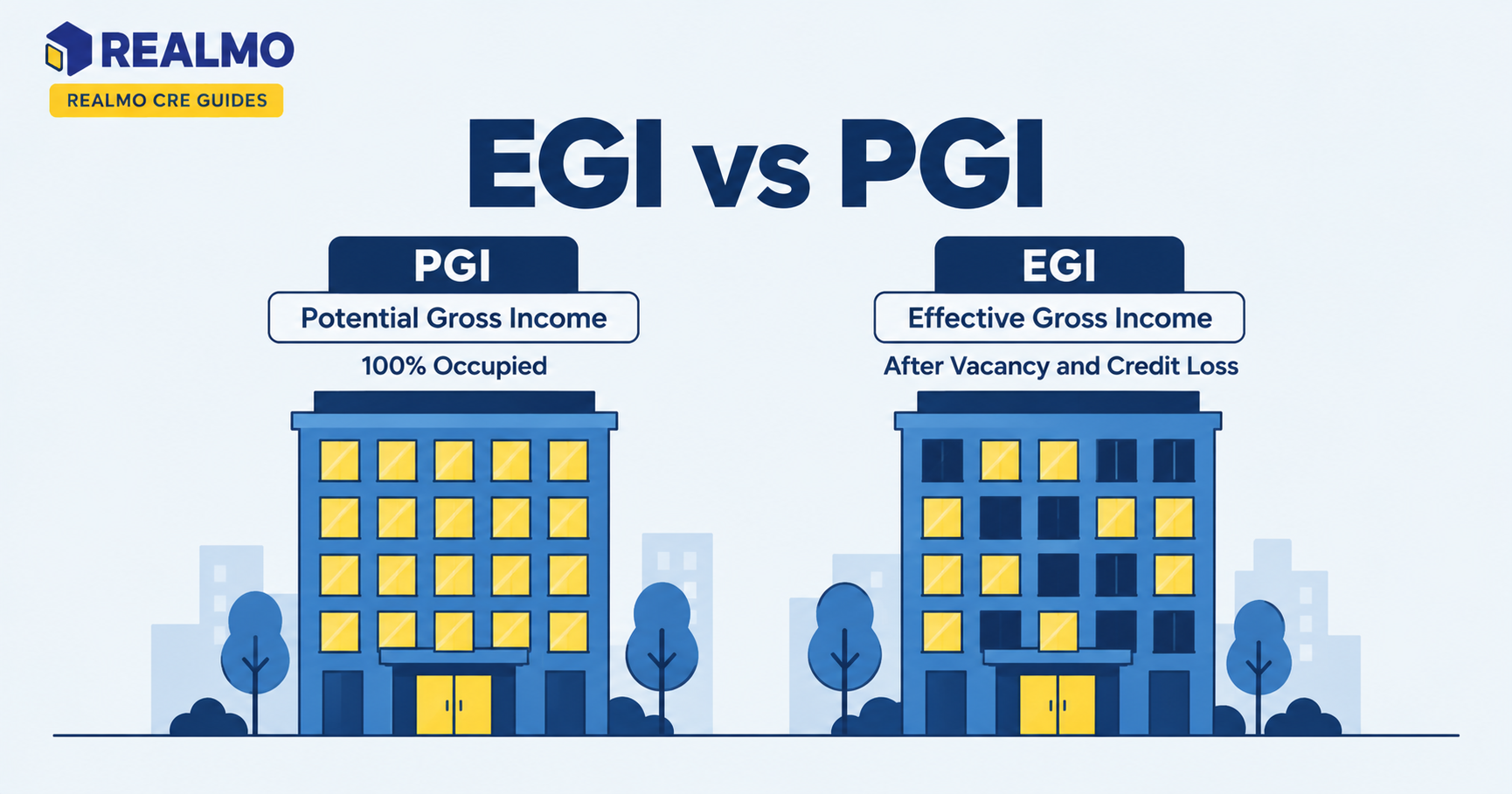
Effective gross income (EGI) is the revenue a commercial property realistically collects after vacancy, credit loss, and concessions are subtracted from potential gross income (PGI), with other income added back. PGI assumes every square foot is leased at market rent for twelve months. EGI reflects what actually reaches the operating account.
Why the gap between PGI and EGI decides your loan
You own a 20,000-square-foot strip center and you are refinancing. Your rent roll shows a nice number at the top: every suite leased at asking rent, twelve months, no interruptions. The lender never underwrites that number. The lender underwrites what remains after a vacancy factor, a credit-loss allowance for the tenant who pays late every third month, and the free rent you granted to fill the end cap.
That difference, eight to twelve points of collection drag in a stabilized asset, and far more in a lease-up, flows straight into net operating income, and then into the debt service coverage ratio the lender uses to size your loan. An owner who budgets from PGI plans capital projects against money that will never arrive. An owner who budgets from EGI knows what the property funds.
What potential gross income actually assumes
PGI is a ceiling, not a forecast. It answers one question: if every unit in the building were occupied at market rent for a full year, with no interruption, and no discount, how much rent would the property produce?
Two adjustments trip up owners here. First, PGI is normally struck at market rent, not contract rent. If your in-place leases were signed three years ago, and the submarket has moved, the difference is loss to lease (or gain to lease when in-place rents sit above market). Second, PGI covers all leasable space, including the suite you use as management office. Space you occupy still carries an opportunity cost, and appraisers will include it.
What effective gross income subtracts and adds
The formula is short:
EGI = PGI − vacancy loss − credit loss − concessions + other income
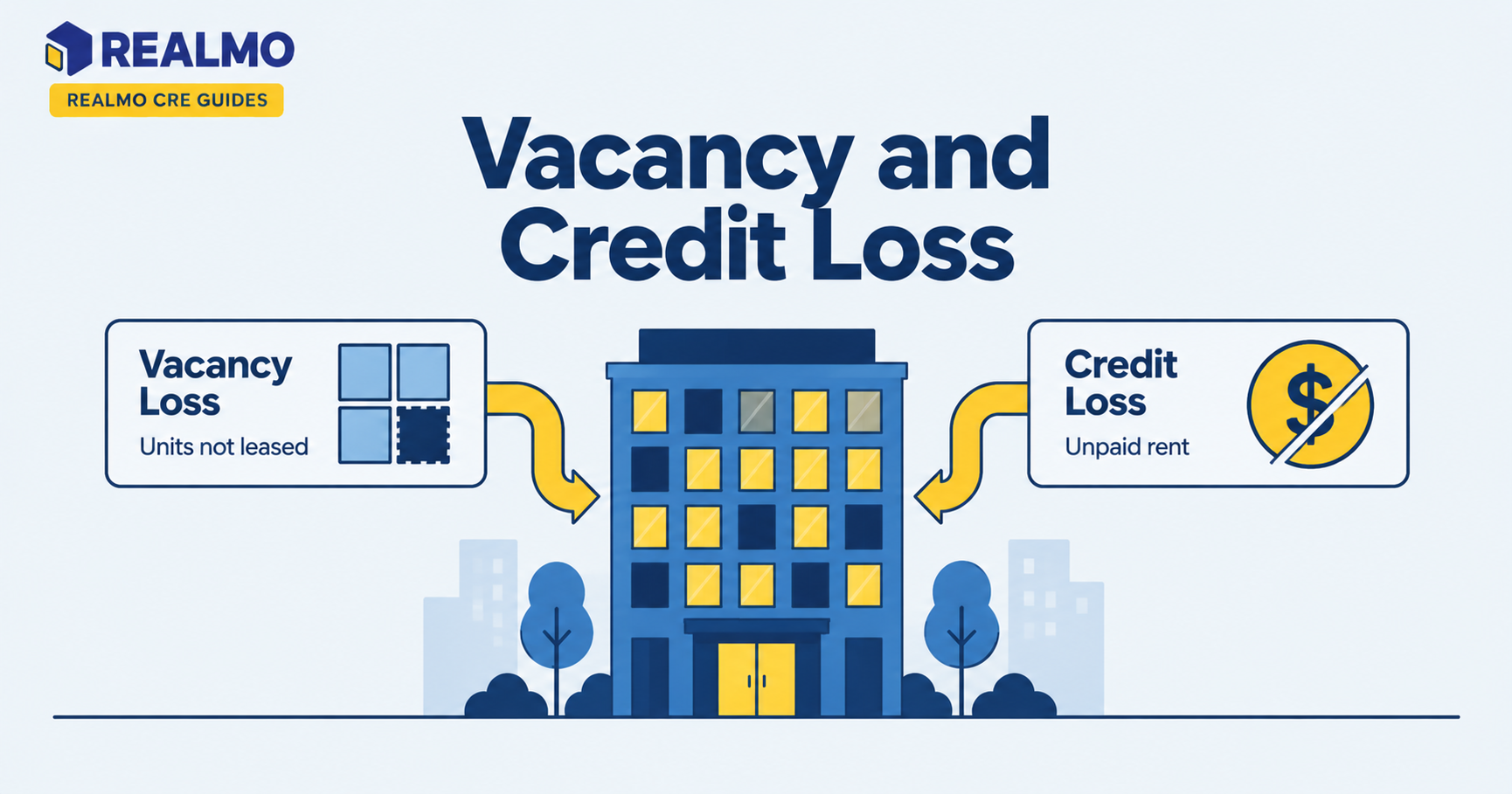
Vacancy loss is space that sits empty. Credit loss is rent billed to occupied space that is never collected, the tenant who defaults, skips, or settles for less on the way out. Concessions are rent given away to signed tenants: free-rent months, stepped abatement, or a moving allowance credited against rent rather than paid in cash.
Other income is everything the asset earns that is not base rent: expense reimbursements, parking, storage, signage, and rooftop antenna rent, late fees, percentage rent above breakpoint. In multifamily underwriting, other income can run to a meaningful share of collections through utility billback and amenity fees.
Where the industry disagrees on structuring the stack
Convention varies, and both versions appear in credible models. Some analysts define PGI as base rent only, apply vacancy and credit loss to base rent, then add other income to reach EGI. Others build a gross potential revenue line that already includes reimbursements and ancillary income, then apply loss factors to the whole.
Neither is wrong, but the two produce different-looking vacancy percentages from identical properties. When you compare your asset to a broker’s pro forma or a lender’s underwriting. Confirm which convention is in use before you conclude that someone’s vacancy assumption is aggressive.
Worked example: PGI to EGI at a strip center
The figures below are illustrative round numbers, not market data.
A 20,000-square-foot NNN center is quoted at $24 per square foot.
| Line | Amount |
|---|---|
| PGI (20,000 SF × $24) | $480,000 |
| Vacancy loss (7%) | −$33,600 |
| Credit loss (1%) | −$4,800 |
| Concessions (free rent on one suite) | −$10,000 |
| Collected base rent | $431,600 |
| Expense reimbursements (net of vacant-space share) | +$96,000 |
| Signage and percentage rent | +$6,000 |
| Effective gross income | $533,600 |
Interpretation: collected base rent is 90% of PGI, so roughly ten points of the top line evaporate before a single expense is paid. That collection ratio, not the raw rent roll, is the number to track quarter over quarter , a ratio that slides while asking rents hold usually means concessions are buying occupancy.
The common error in this exact calculation is treating reimbursements as a fixed number. When a suite goes dark, the owner absorbs that suite’s share of CAM, taxes, and insurance. Vacancy hits twice: lost base rent and lost recovery. Modeling recoveries at 100% while modeling occupancy at 93% overstates EGI every time.
Mistakes that quietly inflate effective gross income
- Using contract rent as PGI. In a rising market this understates the ceiling and hides loss to lease; in a falling one it flatters the asset. Either way the vacancy percentage you calculate against it is not comparable to anyone else’s.
- Amortizing concessions instead of showing them. Spreading twelve months of free rent across a ten-year term produces a smooth revenue line, and a cash shortfall in year one, when the loan still needs servicing.
- Skipping credit loss in a stabilized building. Full occupancy is not full collection. An asset with one thin-credit tenant carries collection risk that a flat vacancy factor does not capture.
- Counting non-recurring income. A one-time lease termination fee or insurance recovery inflates EGI, and any buyer capitalizing that number is capitalizing an event that will not repeat.
- Ignoring the vacant suite you occupy. Management space excluded from PGI makes the property look fully leased while producing no rent.
Location Insights on RealmoRent comps and submarket occupancy patterns are what discipline these assumptions. Property-level data such as Location Insights on Realmo can help you sanity-check the rent level you are. Using as your ceiling before you build the rest of the stack.
Valuation, lending, and tax treatment of these line items vary by jurisdiction, and deal structure, confirm your approach with a licensed appraiser, accountant, or attorney before relying on it.
Related terms
- Net operating income (NOI)
- Gross potential rent
- Vacancy rate
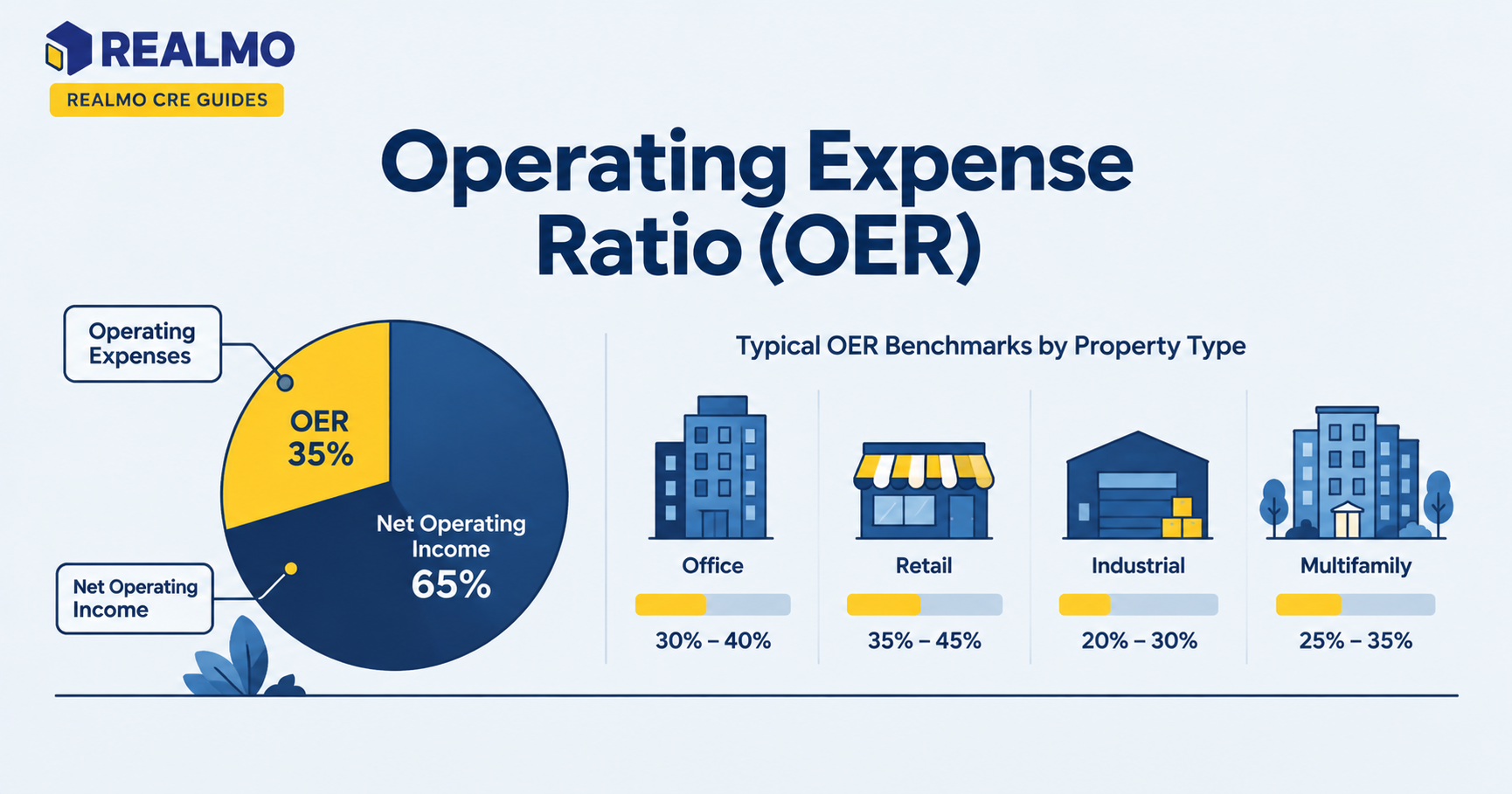
- Operating expense ratio
- CAM reimbursements
- Debt service coverage ratio
FAQ
Is effective gross income the same as net operating income?
No. EGI is the revenue line; NOI is what remains after operating expenses are deducted from EGI. The sequence runs PGI → EGI → NOI. Confusing the two overstates income by the full operating expense load, which for many property types is a substantial share of collections.
Does effective gross income include expense reimbursements?
Yes, in most models. Reimbursements from NNN or modified gross leases are treated as other income and added after loss deductions. Reduce them for vacant space, since the owner pays the recoverable expenses on any suite that is not leased.
How do I calculate effective gross income from a rent roll?
Start with market rent on all leasable space to get PGI, subtract a vacancy factor, a credit-loss allowance, and any concessions in the period, then add reimbursements and ancillary income. Use the same period basis, annualized or trailing twelve months, for every line.
Why is my EGI lower than the broker’s pro forma?
Pro formas commonly assume stabilized occupancy, market rent on rollover, and no concessions. Your actuals include real downtime and real discounts. Ask which vacancy and credit-loss factors the pro forma applied, and whether reimbursements were reduced for vacant space.