How to Read a Commercial Listing
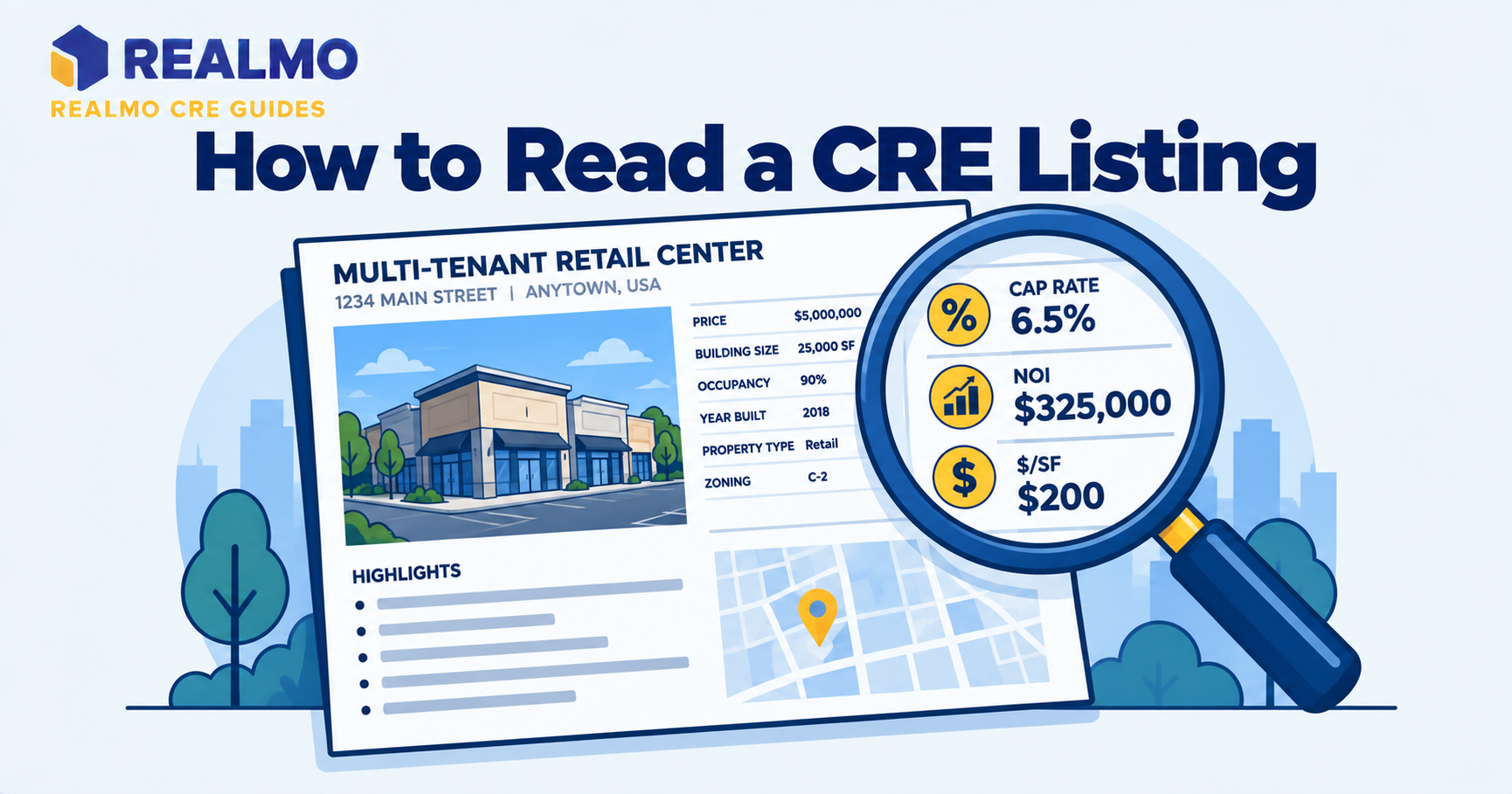
Learning how to read a commercial listing means converting broker shorthand into your real annual obligation. That shorthand covers asking rent, lease type, rentable square feet, term, tenant improvement (TI) allowance, and availability. The headline rate is one input among several. Lease structure, measurement standard, and escalations usually move your total cost more than the quoted number does.
Why the headline rate misleads tenants
A four-person consulting firm needs roughly 3,500 usable square feet. Two listings look obvious on paper: one asks $28.00/SF, the other $35.40/SF. The cheaper space is quoted triple net, so operating expenses land on top of base rent. The pricier one is full service, so the landlord already absorbed taxes, insurance, and janitorial into the rate. Adjust for expenses and for how each building measures its floors. The two spaces then cost within a few cents of each other per usable foot.
That gap between the advertised number and the check you write every month is where tenants lose money. A listing is a marketing document written by the landlord’s tenant representation counterparty, not a cost disclosure. Reading it correctly is the first negotiation you win.
How to read a commercial listing, line by line
Start with the property type and building class, because they set expectations for everything else. Class A office in a central business district carries different operating expenses and escalation norms than a flex industrial bay in a suburban park.
Next, find the space identifier: floor, suite number, and whether the space is contiguous with adjacent vacancy. Contiguity matters if you expect to grow, since it determines whether an expansion option is physically possible.
Then read availability date and current condition. “Available now, second generation” means an existing build-out you may be able to reuse. “Shell condition” or “cold dark shell” means you are funding walls, HVAC distribution, lighting, and flooring yourself.
Finally, check the term the landlord will accept. A listing showing “5–10 years” is telling you shorter deals get repriced or declined outright.
What asking rent means: per year or per month
Office and retail rates are usually quoted per square foot per year. Industrial rates in much of the West Coast, and many retail listings, are quoted per square foot per month. A $2.95 listing and a $35.40 listing can describe the same rent.
Confirm the period before you compare anything. When a listing shows “$2.95 NNN” for a warehouse and “$35.00 NNN” for another, you are comparing a monthly quote to an annual one. That gap alone is not a twelve-fold difference in price.
Also look for escalations. Annual increases of a fixed percentage, or bumps tied to a published index, compound over a full term. They change your average rate materially by year five.
NNN, modified gross, full service: who pays what
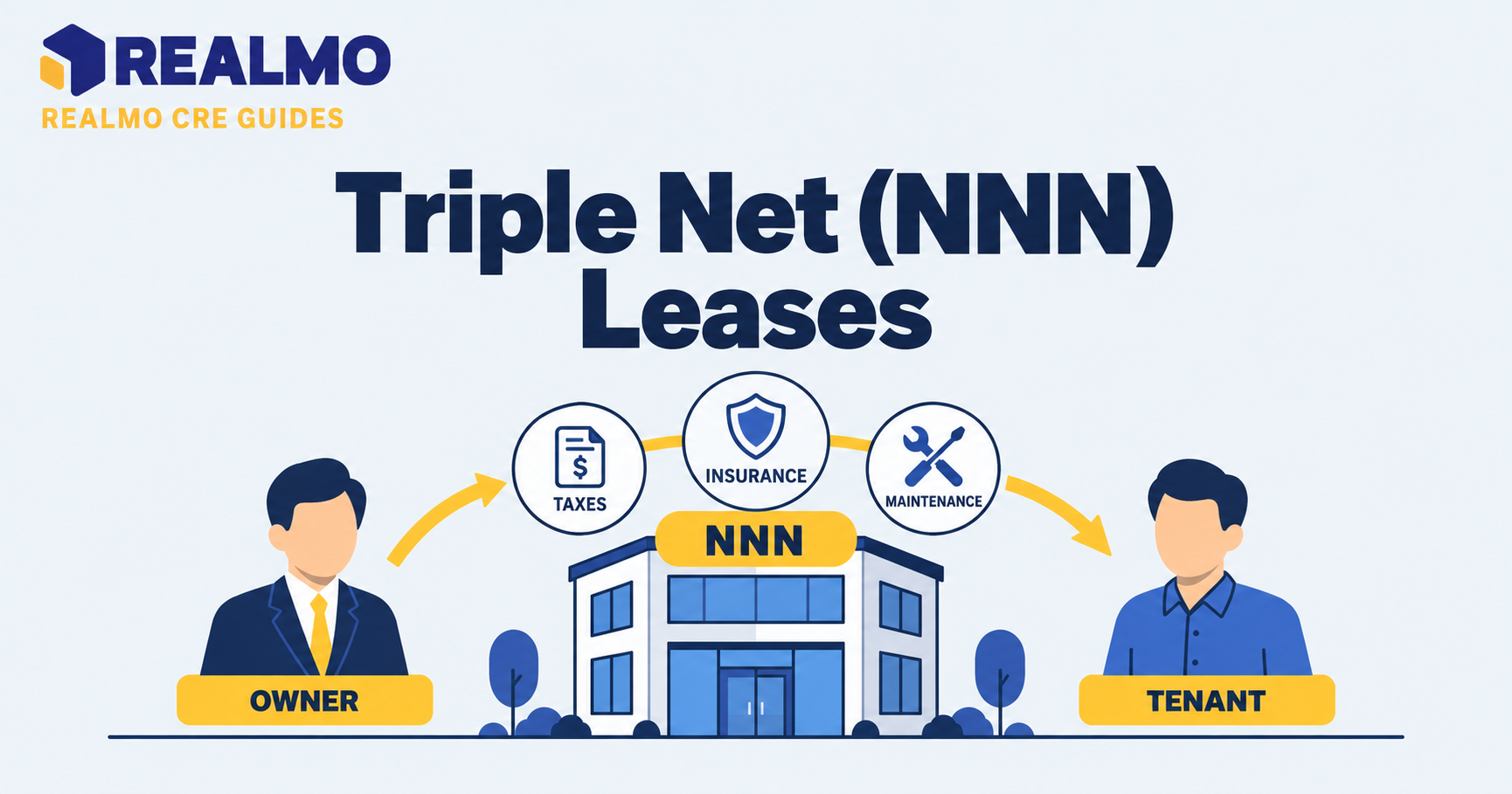
The lease structure determines which operating costs sit outside base rent. Under a triple net lease, the tenant reimburses property taxes, building insurance, and common area maintenance. That figure is quoted separately, per foot, sometimes labeled NNN, CAM, or TICAM (taxes, insurance, and common area maintenance). Under a full service gross lease, those costs are inside the rate, but the landlord usually passes through increases above a base year.
Modified gross sits between the two, and the split varies by deal. Read the listing footnote first. If it is absent, ask which specific expenses are included, whether utilities are separately metered, and how management fees are calculated.
Estimated expense loads appear on listings as a number that is exactly that: an estimate, subject to reconciliation after year-end. Ask for two or three years of actual reconciliations before signing.
Rentable vs usable square feet and load factor
Listings advertise rentable square feet, calculated under the ANSI/BOMA Z65.1 standard to include your share of lobbies, corridors, and restrooms. Usable square feet is what your furniture occupies. The ratio between them is the load factor. It commonly runs from the high single digits in single-tenant buildings to the high teens or more in multi-tenant towers with generous common areas.
Two listings at identical rents can deliver meaningfully different amounts of workspace. Always request a test fit or a space plan before you accept the stated rentable figure as your basis for comparison.
Worked example: comparing two spaces on true cost
Illustrative figures only. Listing A offers 4,000 rentable square feet at $28.00/SF/year NNN, with estimated operating expenses of $9.50/SF and a 12% load factor. Listing B offers 3,800 rentable square feet at $2.95/SF/month full service, with an 18% load factor.
Convert Listing B first: $2.95 × 12 = $35.40/SF/year. Now total each. Listing A costs 4,000 × ($28.00 + $9.50) = $150,000 per year. Listing B costs 3,800 × $35.40 = $134,520 per year.
Then reduce both to usable space. Listing A delivers 4,000 ÷ 1.12 = 3,571 usable feet, so your cost is $150,000 ÷ 3,571 = $42.00 per usable foot. Listing B delivers 3,800 ÷ 1.18 = 3,220 usable feet, or $134,520 ÷ 3,220 = $41.78 per usable foot.
The $7.40 headline gap collapses to about twenty cents. Interpretation: Listing B costs slightly less per usable foot but gives you 350 fewer usable feet, which may not fit your headcount. The frequent error here is treating the full service rate as fixed for the term. Expense increases above the base year still get billed back, so model both spaces across all years, not year one.
Run the same math on effective rent after free rent and TI allowance, and the ranking can flip again.
Common mistakes tenants make reading listings
- Comparing a monthly quote to an annual one. You either dismiss a viable space or budget for a twelfth of your real rent.
- Treating an NNN rate as all-in. Operating expenses commonly add a substantial fraction on top of base rent, and a budget built on base rent alone breaks in month one.
- Ignoring load factor. You sign for rentable feet and discover the space fits fewer desks than the last one you toured.
- Reading “TI negotiable” as free build-out. Allowances are negotiated against term length and credit, and shell space can require capital that dwarfs a year of rent savings.
- Missing the delivery date. If the space delivers after your current lease expires, you pay holdover rent, usually at a steep premium.
Realmo listings publish property analytics next to the marketing copy: ownership records, current and suggested use, and Location Insights. You can check who actually controls the building before you invest time in a tour.
Lease terms are legally binding and vary by state; have a licensed broker or real estate attorney review any document before you sign.
Related terms
Triple net lease (NNN) · Load factor · Tenant improvement allowance · Effective rent · Commercial lease types · Letter of intent (LOI) · Common area maintenance (CAM)
Frequently asked questions
What does NNN mean on a commercial listing?
NNN means triple net: the quoted rate covers base rent only, and the tenant separately reimburses property taxes, building insurance, and common area maintenance. The listing usually shows an estimated NNN figure per square foot. That estimate is reconciled against actual costs after year-end, so your final bill can differ.
Is commercial asking rent quoted per month or per year?
Both conventions exist. Office and most retail listings quote annual rent per square foot; industrial listings in many western markets and some retail listings quote monthly. Multiply a monthly figure by twelve before comparing spaces, and confirm the convention with the listing broker rather than assuming.
Why is the square footage on the listing larger than the space I toured?
Listings quote rentable square feet, which adds your proportionate share of lobbies, corridors, and shared restrooms to the area you occupy. The difference is the load factor. Request a test fit so you know how much usable area you are actually renting.
Does the listed rate include utilities?
Rarely in triple net deals, and inconsistently in modified gross ones. Full service rates commonly include building utilities but not tenant-metered consumption or after-hours HVAC. Ask which meters serve the suite and how after-hours use is billed, since those charges are not usually disclosed on the listing.
Is asking rent negotiable?
Asking rent is a starting position. Concession packages usually move further than the face rate: free rent, tenant improvement allowance, and escalation caps. Landlords protect the headline number for valuation purposes, and give value elsewhere in the deal instead.