Commercial Real Estate Auctions & Pre-Foreclosure: An Investor’s Playbook
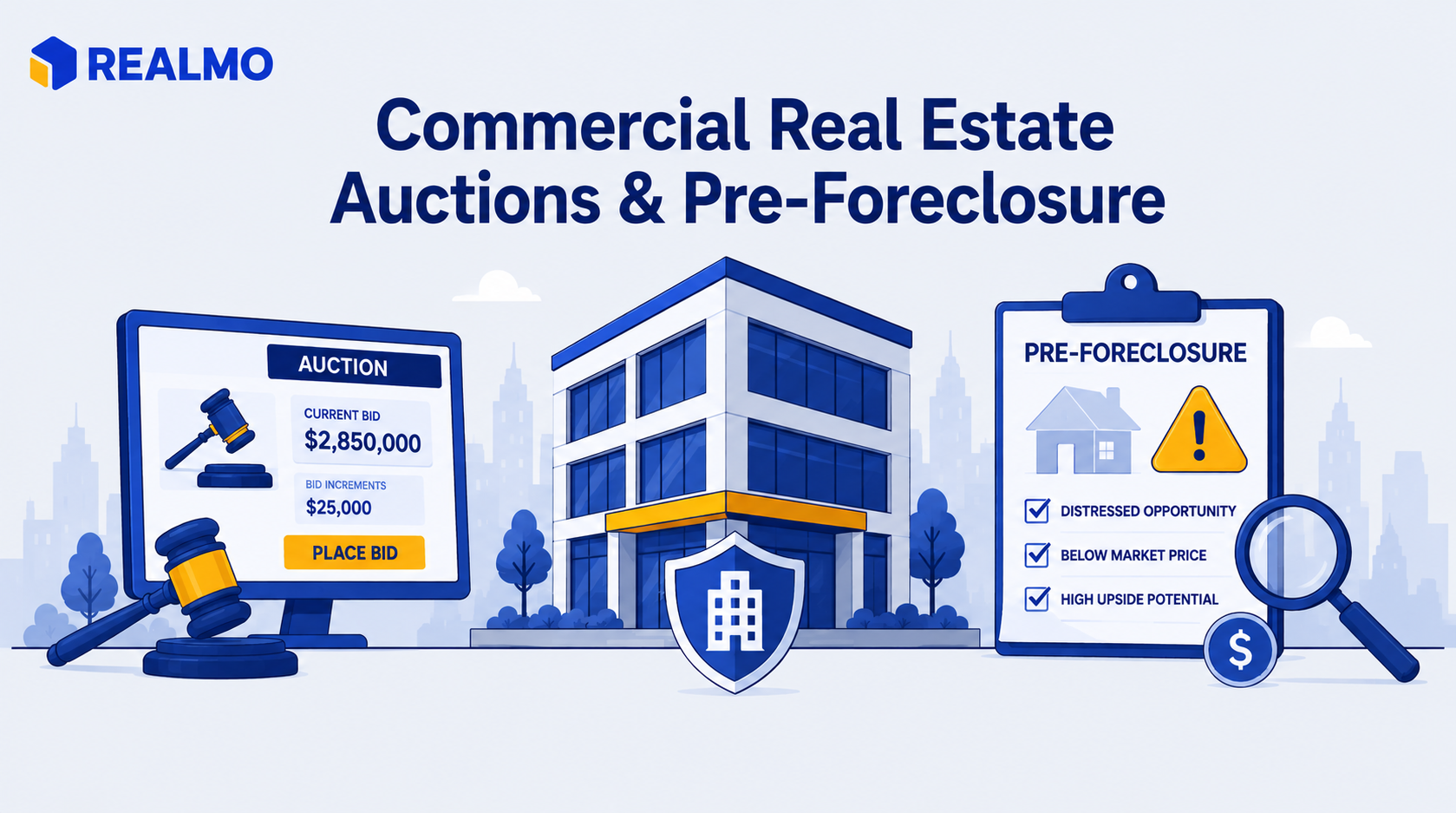
The same asset can reach an investor through a public commercial real estate auction or a private pre-foreclosure negotiation before the sale date. Pre-foreclosure gives the buyer more room to negotiate price, terms, financing, and diligence; an auction can deliver greater certainty of execution through a defined sale process and deadline.
A commercial real estate auction is a method of sale, and it is not limited to distressed property. Class A and institutional-grade assets now appear on the same online auction platforms as foreclosure and trustee-sale opportunities. This guide explains how both acquisition paths work, how bid formats and buyer’s premiums affect the deal, and what investors need to verify before committing capital.
Two Paths to a Distressed Commercial Asset
A CRE auction is not a property category but rather an alternative to the traditional listing process. It’s a public, rules-driven sale:
- Terms are fixed in advance
- Bidders compete openly
- Competitive bidding can reveal fair market value
A trustee sale is a foreclosure auction. If the lender takes title instead, the asset becomes REO, or bank-owned property.
Pre-foreclosure is the window between the first default notice and the auction sale. During this period, the owner can negotiate privately with a buyer, so price, timing, and other terms may remain flexible. The potential downside is diligence: liens, title issues, and other claims are yours to uncover before closing. Pre-foreclosure ends at the auction sale date. Once the property reaches the auction block, the negotiation window closes, and the auction rules govern the deal.
Know the Auction Format Before You Register
The format tells you whether the highest bid actually buys the property. Read the terms before registering, because winning can mean different things depending on the structure. Price may be discovered through open bidding, a published floor, or confidential offers.
Absolute, reserve, minimum bid, and sealed bid
- In an absolute auction, the property is going to sell. An absolute auction has no reserve price and sells to the highest qualified bidder, even if the final number disappoints the seller. This makes bid discipline essential. Set your ceiling before bidding starts and don’t let the countdown clock move it.
- A reserve auction is the most common commercial auction type and gives the seller more protection. A reserve auction allows the seller to accept, reject, or counter the final bid if the required price or sale conditions are not met. The flexibility is a big reason sellers use the format.
- A minimum bid auction has a minimum opening bid set by the auctioneer, so buyers know the floor upfront.
- Sealed bids keep competing offers confidential while still generating competition. Sellers may choose this route when a disposition is sensitive, for example, when tenancy, ownership strategy, or deal terms should stay out of public view.
Live, online-only, and the soft close
For a unique property with a mostly local buyer pool, a live on-site auction can make sense. Timed online-only auctions cast a wider net. On LoopNet, owned by CoStar Group, Auctions by Ten-X gives bidders a two-day auction window (Ten-X has been united with LoopNet as part of CoStar’s auction offering). Crexi Auction, another online CRE platform, launched in 2019.
A timed online-only auction may also feature a soft close, which extends the auction end time when last-minute bids arrive. In other words, don’t count on sneaking in a bid at the buzzer. Set your maximum before the window opens and stick to it — the clock can keep moving as long as bidding continues.
Bid Mechanics That Decide the Auction Outcome
Before bidding starts, separate two numbers that are easy to confuse:
- The starting bid is set by the auction platform and publicly disclosed.
- The reserve price is set by the seller and is typically undisclosed to the public.
They’re not the same thing, and a low opening bid tells you very little about the price the seller will actually accept.
From there, bidding moves in increments. A bid increment is the difference between the current bid and the next bid, and a custom bid cannot be lower than the current increment value. On reserve auctions, you may also see a seller bid, which effectively rejects a bid below the undisclosed reserve. It can feel like bidding against a ghost, but the mechanism is there to move bidding toward the seller’s threshold. Once the platform shows “reserve met,” the property will sell to the winning qualified bidder.
Auction windows can be short (roughly two days on LoopNet, for example), so underwriting should be finished before bidding begins. Competitive bidding then does what auctions are designed to do: reveal the market’s price for the asset.
Qualification and Diligence on a Compressed Clock
Registration, proof of funds, and your bid ceiling
Registration comes before bidding, so don’t leave it until auction morning. For each property you want to pursue, you’ll need approved proof of funds, typically through bank or brokerage statements or a bank account verified through Stripe. This proof of funds determines your bid limit. On LoopNet Auctions by Ten-X, for instance, the limit is set 10% above the approved amount.
Pro tip: document more capacity than you expect to spend so registration itself doesn’t cap your bidding room. Manual proof-of-funds documents can take up to 48 hours to approve, while Stripe verification is near-instant. For sellers, this upfront bidder qualification helps reduce fallouts and retrades.
What the data room does and doesn’t cover
Before you can open the data room, you’ll typically need to sign a confidentiality agreement. The room may contain:
- Financials
- Leases
- A property condition report
- A Phase I environmental report
- The PSA
On LoopNet/Ten-X, due diligence is performed upfront, before the auction. This advance work helps compress contracting and closing to about 30 days.
Treat the data room as seller-supplied evidence because it won’t give you a complete answer. A missing document is itself a diligence flag. Check whether:
- Environmental review should go beyond Phase I
- Deferred maintenance falls outside the PCR
- Tenant estoppels confirm the rent roll and lease terms
Order an independent title search rather than relying on the seller’s summary. By auction day, you should know which gaps you can price and which are reason enough to walk away.
The True Cost and Timeline of a Winning Bid
Buyer’s premium, EMD, and closing costs
A $1 million winning bid may cost considerably more than $1 million. The buyer’s premium is added to the winning bid and commonly ranges from 3% to 10%, depending on the auction house and asset. Auctions by Ten-X currently charges a 3% buyer transaction fee. At 5%, that $1 million bid becomes a $1.05 million purchase price before closing costs.
Next comes the cash requirement. An earnest money deposit (EMD) often runs 5%–10% of the purchase price, but some auction terms require 10% and make it non-refundable. Depending on the sale terms and jurisdiction, the buyer may also pay:
- Transfer taxes
- Recordation fees
- Other closing charges
From hammer to escrow
If you win, the clock starts immediately. For example, LoopNet/Ten-X requires the winning bidder to sign the Purchase and Sale Agreement (PSA) within two hours. The seller countersigns, and the earnest money deposit (EMD) must be wired within 24 hours of execution. Once the PSA is ratified and the EMD received, the deal moves into escrow. Have wiring instructions and entity documents ready beforehand — auction day is not the time to form an LLC. List-to-close averages about 96 days on LoopNet and 75 days on Crexi.
The Pre-Foreclosure Window
Pre-foreclosure is the window between the first formal signs of default and the scheduled sale, when an investor may still negotiate directly with the owner before the property reaches auction.
Reading the distress signals early
The formal pre-foreclosure signal depends on the foreclosure process. In many non-judicial cases, a notice of default opens the pre-foreclosure window. In judicial foreclosure, a recorded lis pendens signals pending litigation and puts a cloud over title. These filings become public records that investors can track through local land records and data providers. A notice of trustee sale later precedes the actual trustee sale.
For commercial property, look even earlier. A maturity default can be the first major distress signal when an owner cannot refinance a loan that has reached maturity, even if scheduled payments were previously current. So loan maturity data can surface trouble before foreclosure filings appear. Other warning signs include:
- Transfer to special servicing
- Tax arrears
- Mounting code violations
4 ways to structure the deal
During pre-foreclosure, the owner generally retains the ability to sell or refinance before foreclosure is completed. This creates several routes for an investor.
- Buy directly from the owner. Negotiate with the property owner and pay off or otherwise resolve the existing debt as part of the transaction.
- Negotiate a short sale. A short sale requires lender approval when the sale proceeds will not fully cover the debt, so you are negotiating with both the owner and the lender.
- Purchase the note. A note purchase acquires the loan instead of the property. For a distressed CMBS loan, the special servicer controls the workout, so that may be the party to approach. Buying the debt can let experienced investors influence the outcome before the property ever reaches auction.
- Pursue a deed in lieu. A deed in lieu transfers title to the lender without an auction. In this structure, the lender takes ownership directly rather than selling the property to an outside buyer.
Each route comes with a different counterparty, approval process, and timeline. Since rights and foreclosure procedures vary by state and loan structure, involve qualified real estate counsel before committing to a strategy.
As-Is Traps: What Survives Your Closing
Auction property is sold as-is, typically under a non-negotiable Purchase and Sale Agreement with no inspection or financing contingencies. However, this doesn’t mean you can’t use financing. The reality is, a failed loan is your problem, and your earnest money deposit may be at risk if you can’t close.
Title deserves the same attention as the building. Junior liens, IRS liens, mechanic’s liens, and unpaid taxes may survive a foreclosure sale, depending on priority, notice, and state law. The IRS, for example, confirms that a federal tax lien can remain when the foreclosing lien is junior to it. A title search helps protect against discovering a surviving lien after you own the asset.
An auction property may also be sold subject to an existing lease, with the buyer stepping into the landlord’s position and rents typically prorated at closing. Occupancy and eviction issues come with the deal. Underwrite the exit before you underwrite the bid.
Conclusion: Your Pre-Bid Checklist
Before bidding, confirm the auction format and reserve structure. Register early, document enough proof of funds to cover your ceiling, pull the full data room, and order independent title and environmental reviews. Set a hard maximum that includes the buyer’s premium, taxes, fees, and other closing costs on top of the bid itself.
Have your purchasing entity, signature authority, and wire instructions ready before the auction opens. And if the asset is still in pre-foreclosure, decide whether negotiating directly can produce better terms than competing at auction. Then browse current auction inventory or set alerts for new distress filings in your target market.