How to Find Cash-Flowing Commercial Property: An Investor’s Guide
Cash flow in real estate is what turns a commercial real estate investment from a promising asset into a business that pays its own way. For a buy-and-hold real estate investor, appreciation is important, but the property’s income must cover its bills long before a future sale delivers a gain. Listings can make this harder to judge by promoting “stabilized” returns based on rent increases, full occupancy, or expense savings that haven’t happened yet.
This guide explains how to read NOI, cap rate, and cash-on-cash return without getting confused. You’ll learn how to separate positive cash flow from optimistic projections, screen deals faster, and build an investment strategy around real profitability rather than a broker’s best-case scenario.
What Cash Flow Really Means in Commercial Real Estate
From gross income to NOI to cash flow before taxes
Start with the money the property can realistically collect. This includes:
- Rental income
- Recurring revenue from parking, storage, signage, laundry, reimbursements, or percentage rent
Subtract vacancy and unpaid rent to reach effective gross income. Asking rent doesn’t count until a tenant is actually paying it.
Next, subtract operating expenses. These usually include:
- Property taxes
- Insurance
- Repairs
- Property management fees
- Maintenance
- Landscaping
- Security
- Any other utility costs paid by the owner.
What remains is net operating income, or NOI:
NOI measures the property’s performance before financing, income taxes, depreciation, and major capital work. To estimate the cash available to the owner, subtract the mortgage payment, reserves, and other expenses and debt service from NOI. The remainder can support cash distributions.
Take a look at this simplified annual statement:
- Effective gross income: $240,000
- Operating expenses: $96,000
- Net operating income: $144,000
- Debt service: $92,000
- Capital reserve: $12,000
- Cash flow before taxes: $40,000
That final figure (not gross rent) is what the investment currently produces.
Positive vs. negative cash flow
- Positive cash flow means the property generates money after normal operations, financing, and sensible reserves
- Negative cash flow means the owner must keep contributing cash
This may be acceptable during a funded renovation or lease-up period, especially when a known vacancy already has a realistic solution.
The problem is a shortfall with no clear endpoint. Weak demand, expiring leases, excessive debt, or persistent vacancy can mean cash flow is negative throughout the hold. Rental property owners should focus on durable net income rather than hope appreciation will rescue the deal. Understanding cash flow means knowing both the amount and the reason behind it.
The Key Numbers: Cap Rate, NOI, and Cash-on-Cash Return
The cap rate: Your first read on yield
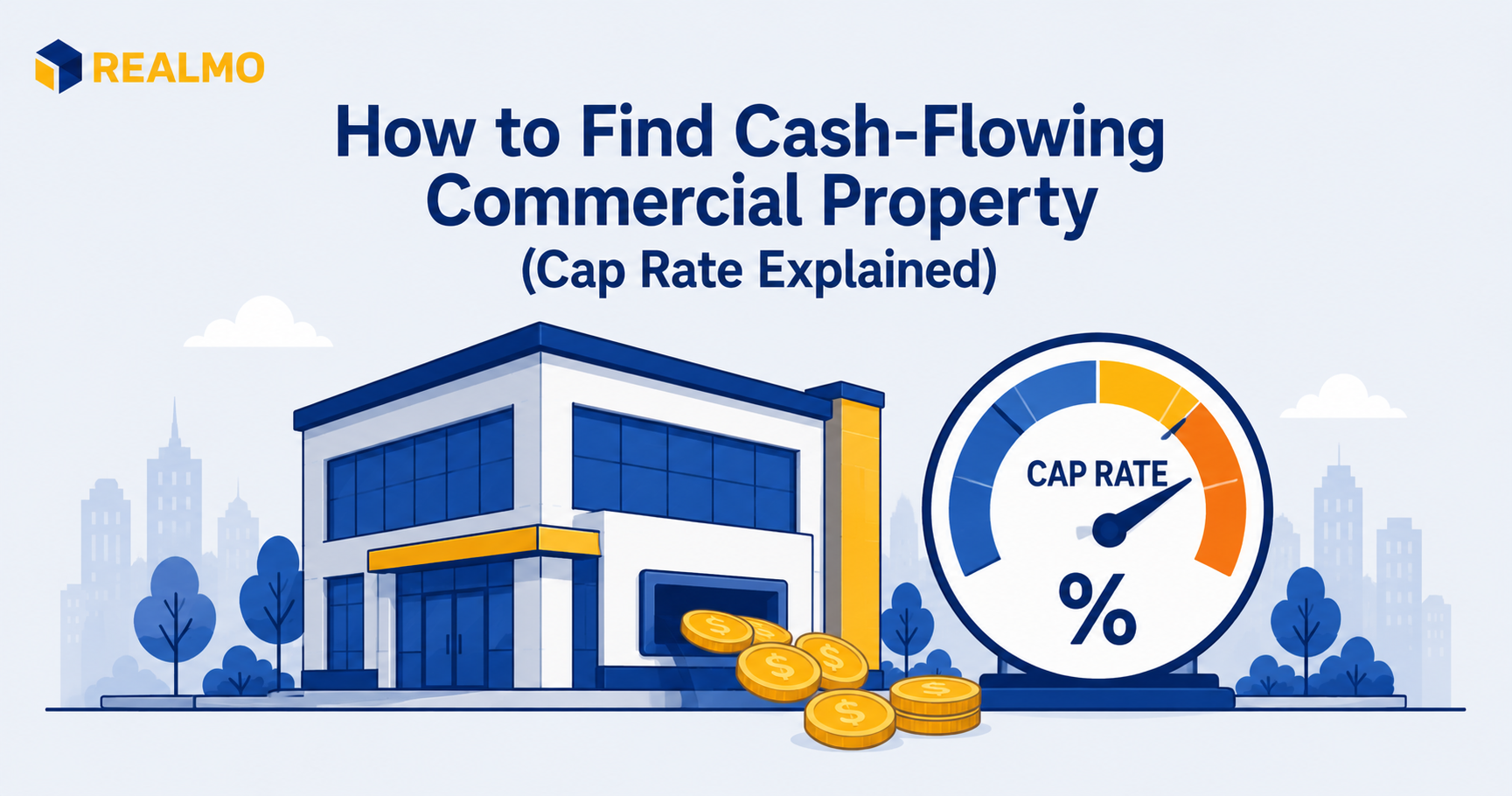
The capitalization rate, or cap rate, shows the property’s unlevered income yield at its current operating level. To calculate it, divide net operating income by the purchase price:
For instance, a property producing $150,000 in NOI and offered at $2 million has a 7.5% cap rate. The metric helps compare assets without letting different loan structures distort the result. You can also work backward: at a 7.5% cap rate, $150,000 in NOI supports a property value of about $2 million.
You don’t need a complicated calculator for an initial review. Use this three-step rental property calculator method:
- Verify annual income using leases and actual collections.
- Subtract normalized operating expenses to calculate NOI.
- Divide NOI by the asking price and compare the result with relevant local sales.
Cap rate is only the opening stage of cash flow analysis. It excludes:
- Mortgage
- Acquisition costs
- Major repairs
- Lease rollover
It can also disguise major differences between commercial properties. A fully leased building with long-term tenants isn’t the same property investment as one with half its leases expiring next year, even when both advertise the same return on investment.
Use cap rate to ask a simple question: what yield does the existing income support? Then investigate how stable that income is and what additional cash the building may require.
What 8%+ cap rate means and when it’s a red flag
An 8% cap rate isn’t automatically attractive. Compare it with similar properties in the same submarket, accounting for:
- Lease length
- Building condition
- tenant quality
- Market conditions
A higher yield may compensate for an above-market rental rate, deferred maintenance, limited buyer demand, or near-term lease expirations.
Be more skeptical when the figure uses projected NOI. The pro forma may assume that vacant space leases immediately, every tenant renews at a higher rate, or operating costs fall after closing. Test these claims against what occupants actually pay and what the local rental market can support. Projecting cash flow is useful, but projected income shouldn’t be priced as though it already exists.
Cash-on-cash return: The levered reality
Cash-on-cash return measures annual pre-tax cash flow against the cash invested:
Unlike cap rate, this cash return reflects the mortgage, down payment, and financing costs. Two buyers can purchase the same building at the same cap rate and earn very different returns because their loan terms differ.
How to Find and Screen Cash-Flowing Properties
Fast filters: The 1% rule and the 50% rule
The 1% rule says monthly rent should equal roughly 1% of the purchase price. In a basic rental property calculator, a $1 million asset would need about $10,000 in monthly rent to pass. Commercial investors should use this carefully because lease structures, reimbursements, vacancy, and operating costs differ sharply by property type.
It can still flag listings whose income looks far too low for the asking price. Treat it as a rough filter, since it’s not an acquisition rule. A long-leased medical office building shouldn’t be screened like a retail strip with several upcoming vacancies.
The 50% rule assumes that roughly half of gross rent may go toward operating expenses before debt. It’s also too broad for reliable commercial underwriting, but it can expose a potential rental property built around an implausibly low expense estimate. Once a listing passes the quick check, replace both shortcuts with actual financial statements.
Real yield vs. pro forma fantasy: Due diligence essentials
Real yield is supported by documents, while pro forma yield is supported by assumptions
Request:
- Trailing 12-month operating statement
- Current rent roll
- Leases
- Delinquency records
- Service contracts
- Utility bills
- Insurance history
- Details of recent capital work
Due diligence should test the physical and tax assumptions too. Inspect the condition of the property, price near-term repairs, and determine whether property taxes may rise after the sale. A low historical tax bill can reset following an acquisition and take a noticeable bite out of NOI.
Then double-check the income. Model:
- Slower leasing
- Lower renewal rates
- Tenant improvement allowances
- Commissions
- A downside vacancy scenario
A 10% vacancy assumption can be a good initial check, but the right figure depends on turnover, lease expirations, tenant concentration, and the rental market. Losing one large tenant may hurt far more than a generic percentage suggests.
Keep current and speculative performance separate. Label in-place rent, contractually committed future rent, and hoped-for rent as different categories. Do the same with documented expenses and proposed savings. Before you buy a property, the potential investment should still work under conservative assumptions. This will help you separate genuine property investment opportunities from listings whose returns require everything to go right.
Realmo can speed up the initial review by bringing listings, property information, location data, and analytical features into one dashboard. Use the platform to reject weak deals right away thanks to AI-powered CRE analytics.

How to Improve Cash Flow After You Buy
There are only a few ways to improve cash flow:
- Raise dependable income
- Reduce controllable costs
- Protect occupancy
- Improve the financing structure
Maximizing cash flow doesn’t mean cutting every expense. Neglecting maintenance or service can drive tenants away and impact cash flow in the wrong direction.
On the income side, review lease escalations, expense reimbursements, parking, storage, signage, and other ancillary revenue. Across multi-tenant rental units, retaining a reliable tenant may be more valuable than demanding the highest possible renewal rate and triggering expensive turnover. Empty space brings lost rent, commissions, improvement costs, and months of uncertainty.
On the expense side:
- Rebid contracts
- Review insurance
- Challenge incorrect tax assessments
- Track energy and maintenance costs
Deferred maintenance is a future bill, usually with a higher price tag.
The right operating model depends on the asset. Self-management may work for a simple building, while an experienced property management team can add value across a larger portfolio. The property owner should compare the fee with collections, tenant retention, maintenance control, reporting quality, and whether the team is managing cash flow effectively.
Conclusion: Buy the Income, Not the Story
Real estate investing rewards optimism, but underwriting needs restraint. Build an investment portfolio around verifiable income, realistic expenses, and debt the property can comfortably support. A profitable rental is the one that still generates acceptable cash after vacancy, financing, repairs, and ordinary operating friction.
Cash flow is important because it pays you throughout the hold and gives the asset room to absorb surprises. Once you’re invested in a property, the market may improve and the property appreciates, but neither outcome is guaranteed. Buy the income that exists, price the risks you can see, and treat appreciation as a bonus rather than the reason the deal works.