Owner-Occupied Commercial Real Estate: How to Buy Your Building with an SBA Loan
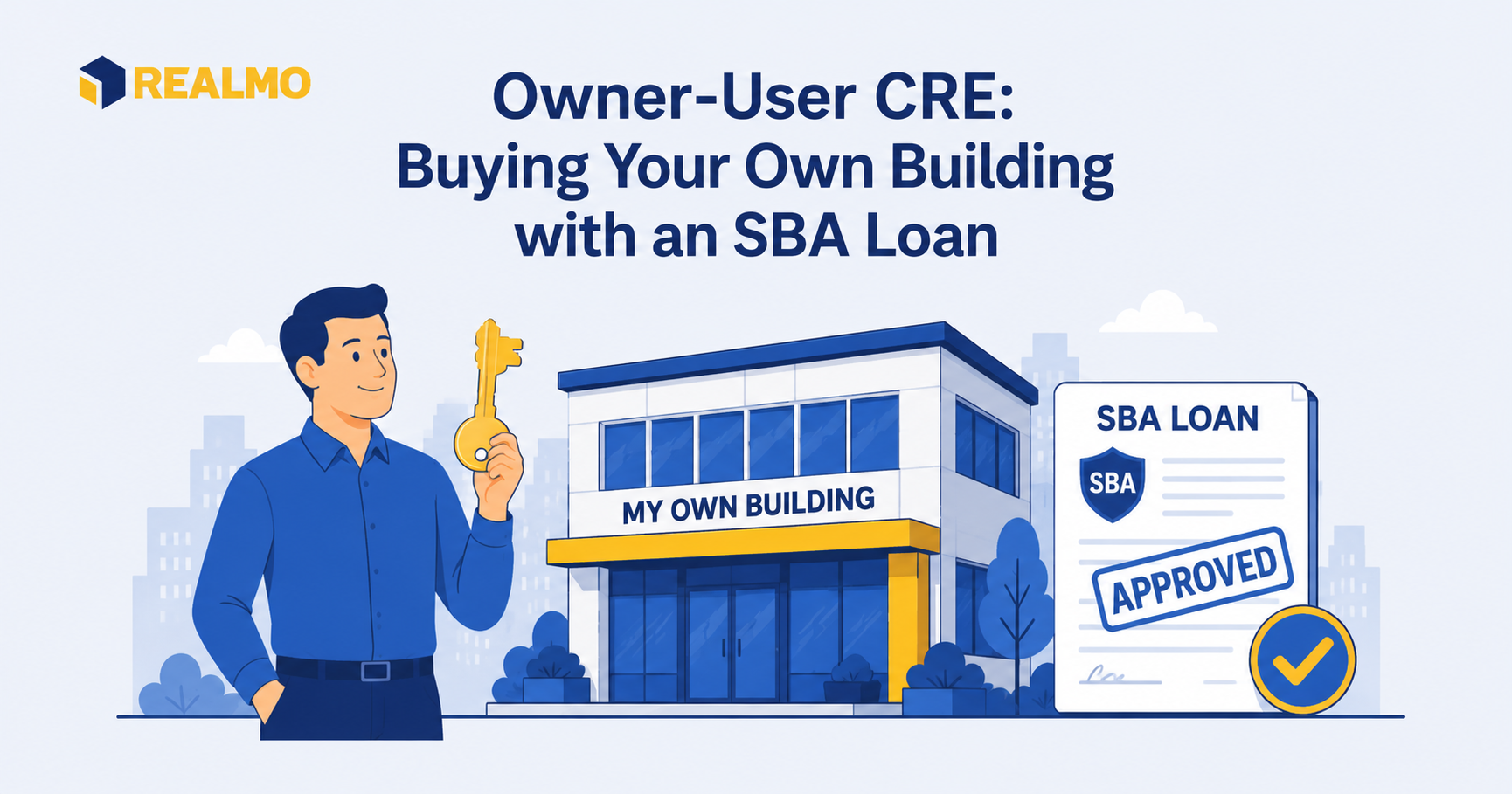
Every rent check you write helps someone else build equity. That’s the basic frustration behind owner-occupied commercial real estate: as a business owner, you’re already paying for space, but a lease doesn’t give you ownership, appreciation, or long-term control. An SBA loan can change that equation by helping you buy a commercial property for your own business, often with a much lower down payment than a conventional commercial real estate loan.
In this article, you’ll learn what qualifies as owner-occupied commercial real estate, how the 51% occupancy rule works, why buying can beat leasing, and how SBA 504 and SBA 7(a) financing compare. We’ll also walk you through the loan process so you can see what it really takes to move from renting space to owning the building your business operates from.
What Is Owner-Occupied Commercial Real Estate?
Owner-occupied commercial real estate, often shortened to OOCRE, is commercial property used primarily by the business that owns it. In other words, your company:
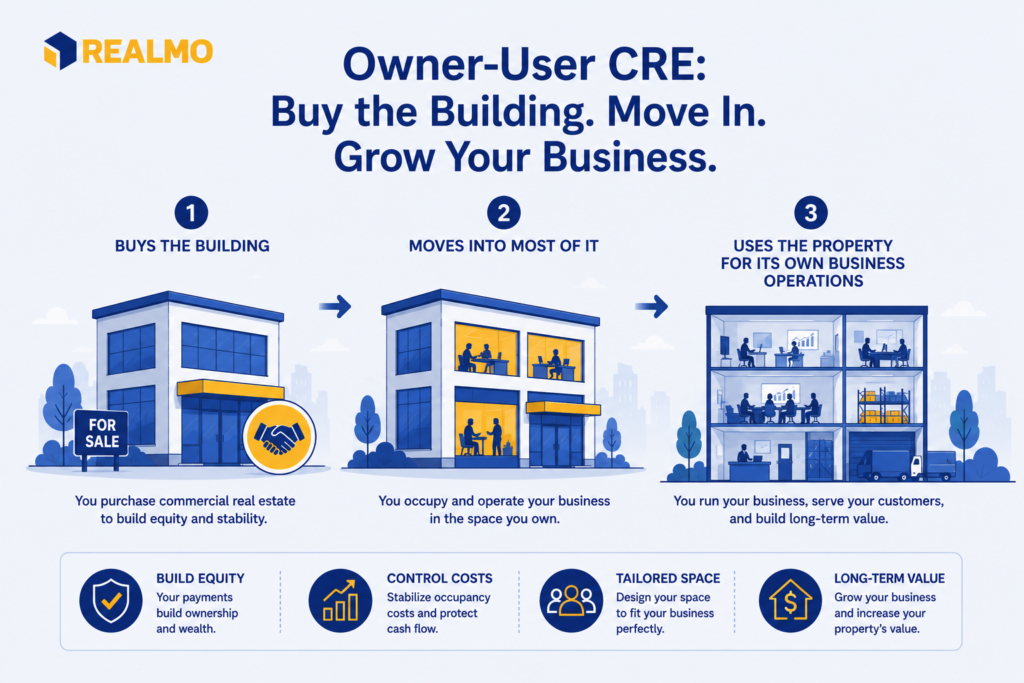
That’s different from buying a property mainly to collect rent. SBA financing is designed to support operating businesses, not passive real estate investment. So the key question is whether your business uses enough of this building to qualify.
The 51% rule
For an existing building, the borrower’s business generally must occupy at least 51% of the rentable property. SBA rules allow the borrower to lease out up to 49% of an existing building, as long as the business occupies and uses no less than 51%.
For new construction, the bar is higher: the borrower must occupy at least 60% and meet additional future-occupancy requirements under 13 CFR § 120.131.
Basically, if your business buys a 10,000-square-foot existing building, it needs to occupy at least 5,100 square feet. The remaining 4,900 square feet can be leased to a tenant, which can help offset the mortgage without turning the deal into a pure investment property.
The rule applies across many types of commercial real estate:
- Office
- Retail
- Medical
- Industrial
- Warehouse
- Flex
- Some mixed-use property types
A small law firm buying an office building, a dental group buying a medical condo, or a manufacturer buying a light industrial facility can all fit the owner-occupied model. Pure multifamily rental property usually doesn’t, because SBA financing generally can’t be used for speculation or investment in rental real estate.
Owner-occupied vs. investment property: Why lenders care
Don’t treat this distinction as bureaucratic trivia. In fact, it directly changes:
- Your rate
- Down payment
- Borrowing options
→ With owner-occupied properties, the lender is underwriting the business first. The borrower’s operating cash flow is what repays the loan.
→ With investment properties, repayment depends heavily on tenant rent rolls, lease rollover risk, vacancy, market rents, and property-level income. This makes the loan feel different from a credit perspective.
As a result, owner-occupied deals can often get better terms compared to investment property financing: lower down payments, longer amortization, and in some cases lower rates. Investment properties commonly require 25–30% down, while owner-occupied loans can often land closer to 10–15%, depending on the loan type, borrower strength, collateral, and lender.
Why Buy Instead of Lease? The Financial Case
Buying your own building isn’t automatically better than leasing. Sometimes leasing is smarter, especially if your company is:
- Growing unpredictably
- Testing a new market
- Preserving cash for operations
However, once your space needs are stable, ownership starts to look very different. You’re no longer just paying for occupancy but also building an asset.
Build equity and stabilize costs
A mortgage payment does two things rent doesn’t. Part of it pays interest, yes, but part of it also reduces principal and builds equity in the property. Over time, this equity can become:
- Part of the business owner’s net worth
- A balance-sheet asset
- Future collateral for refinance and expansion capital
The second advantage is cost control. Say you’re paying $8,000 a month in rent with 3% annual escalations. In year one, that’s $96,000. By year ten, the annual rent is meaningfully higher, and at renewal, the landlord may reset the rate again based on market conditions. With a fixed-rate commercial real estate loan, the mortgage payment is more predictable. Taxes, insurance, and maintenance can still move, but the debt service itself doesn’t jump every time your lease rolls.
This stability is a huge asset in and of itself. After all, occupancy cost isn’t an abstract real estate line item for an operating business. It affects hiring, pricing, cash flow, and planning. When you own the property, you’re not waiting for a landlord to decide what your next five years will cost.
Tax advantages and tenant income
There can also be tax advantages. Depending on how the deal is structured, business owners may be able to deduct:
- Mortgage interest
- Property taxes
- Certain operating expenses
- Depreciation
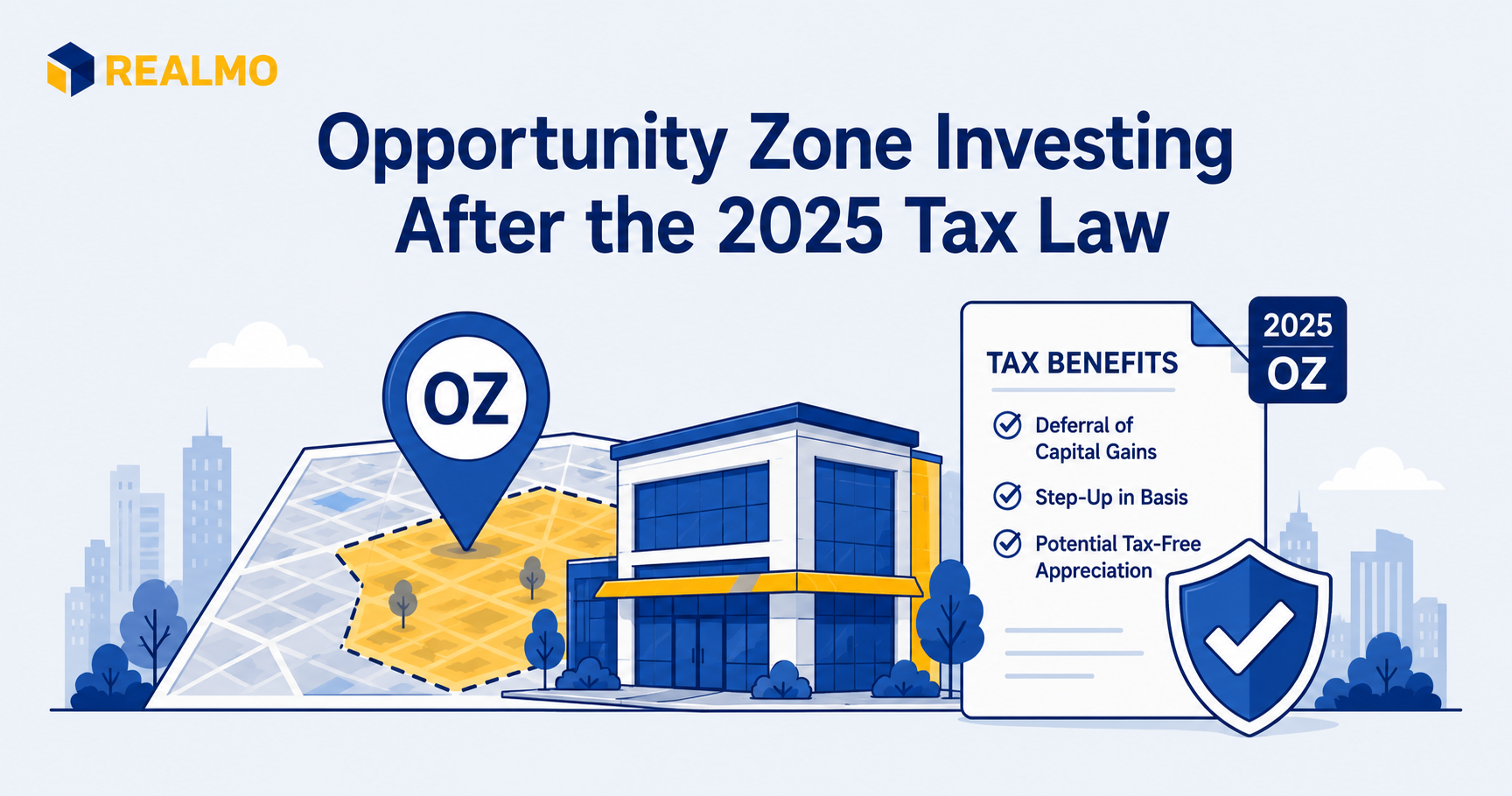
The IRS explains depreciation as a way to recover the cost of business or income-producing property over time, and its business expense guidance maps the current IRS resources for deductible business costs. Talk to a qualified tax advisor before modeling the benefit, because ownership structure, business use, improvements, and tenant income can each change the answer.
If your business doesn’t need the whole building, leasing the unused portion can create rental income to offset your mortgage. That’s often the sweet spot in an owner-occupied deal:
- The business owns the property
- Controls the space it needs
- Uses a tenant to help carry the cost
There’s also a non-financial benefit that owners tend to underestimate until they’ve dealt with enough landlords. When you own the building, you control renovations, signage, layout, expansion, parking improvements, and brand presence. You’re not asking permission every time your business operations change.
SBA Loan Options for Owner-Occupied Properties
For many small businesses, the biggest obstacle to buying a building is the down payment.
SBA financing helps solve this problem. The two main loan programs for owner-occupied commercial property are SBA 504 and SBA 7(a). Both can help a business purchase commercial real estate, but they have quite a few differences.
SBA 504 loans: Fixed rates for real estate purchases
The Small Business Administration describes the 504 program as long-term, fixed-rate financing for major fixed assets that support business growth and job creation.
SBA 504 loans are built for:
- Real estate purchases
- Construction
- Major renovations
- Long-term equipment
The classic 504 structure is the part most borrowers remember:
50% from a conventional lender40% through a CDC/SBA debenture10% from the borrower
The 50/40/10 structure is also reflected in SBA’s own 504 program materials, where a third-party lender provides at least 50%, the CDC provides up to 40% through the SBA-guaranteed debenture, and the applicant contributes at least 10%.
The appeal is obvious: you preserve working capital instead of draining cash into a huge down payment. The SBA portion also has long-term fixed-rate characteristics. SBA’s current 504 page lists 10-, 20-, and 25-year maturity terms, and the program page notes a maximum 504 loan amount of $5.5 million.
A 504 loan is usually strongest when the project is mainly about the building itself: buying, constructing, or improving a long-term property for your company. If you want rate certainty and you’re making a real estate-heavy purchase, 504 is often the purpose-built tool.
SBA 7(a) loans: Flexibility beyond the building
SBA 7(a) is the more flexible option. If 504 is the real estate tool, 7(a) is closer to the Swiss Army knife.
The SBA describes 7(a) as its primary business loan program. It can be used for:
- Acquiring, refinancing, or improving real estate and buildings
- Working capital, equipment, furniture, supplies, ownership changes, and multiple-purpose financing
The maximum 7(a) loan amount is $5 million.
That flexibility is an advantage when the property purchase is only one part of your business plan:
- Maybe you’re buying a building and need $300,000 for renovations
- The space might need specialized equipment
- You might consider buying the business and the real estate together
In these cases, 7(a) can sometimes package more of the project into one loan type.
However, 7(a) loans often come with adjustable rates, while 504 is known for fixed-rate real estate financing on the SBA portion. 7(a) payments stay the same for fixed-rate loans, but variable-rate loans may require a different payment amount when the interest rate changes.
A simple rule of thumb: if it’s a clean real estate purchase and rate stability is the top priority, look hard at 504. If the building is part of a broader financing need, 7(a) may fit better.
Gary Lubarsky, CEO of Realmo
SBA vs. conventional commercial real estate loans
SBA loans are powerful, but they come with paperwork, eligibility rules, use restrictions, and a longer process than many conventional commercial real estate loans.
Banks and credit unions may offer conventional commercial real estate financing with fewer SBA-specific requirements. Strong borrowers with plenty of cash, a tight closing deadline, or a simple purchase may prefer that route, especially if local lenders are offering competitive rates.
The real choice comes down to:
- Cash position
- Timing
- Business needs
→ SBA financing usually wins when the borrower wants a lower down payment, longer amortization, and more capital left inside the business.
→ Conventional loan options may win when speed, simplicity, and fewer restrictions matter more.
SBA also has tools to help borrowers connect with participating lenders. For 7(a), borrowers apply directly through a lender and can use Lender Match to connect with participating SBA lenders.
The Loan Process: From Preparation to Closing
The best SBA borrowers start with the business case and only then follow with a loan application.
Assess your business needs first
Walk through the property like an operator, not just a buyer.
- Will the layout support your team?
- Can customers find it easily?
- Is the zoning right for your use?
- Are there environmental concerns?
- Does the roof have five years left or twenty?
- Are HVAC, electrical, plumbing, elevators, sprinklers, or parking areas likely to need major capital soon?
Then run the full ownership budget. Property ownership doesn’t stop at the mortgage payment. A small business also has to handle property taxes, insurance, utilities, maintenance, repairs, reserves, and sometimes association fees. The deal only works if the total cost fits the business’s cash flow, even if the monthly loan payment looks manageable.
Application, documentation, and timeline
Expect documentation. A lender will usually ask for:
- Two to three years of business and personal tax returns
- Current financial statements
- A personal financial statement
- Debt schedules
- Ownership information
- Projections if the business is newer or changing
- Details on the property itself
The loan process is easier when you talk to an SBA-experienced lender before you make an offer. Prequalification helps you understand your likely budget, down payment, and loan structure. It also makes your offer stronger because the seller can see you’ve already done some financing homework.
SBA closings commonly take longer than a simple conventional bank loan. A realistic expectation is often 45–90 days, depending on:
- The lender
- Appraisal
- Environmental review
- Title work
- Property condition
- How clean your financial package is
The better prepared the borrower is, the less painful the owner-occupied loan process tends to be.
Conclusion: Turning Rent Into Ownership
Owner-occupied commercial real estate can turn a monthly expense into a long-term asset. The 51% rule is the gateway: if your business occupies enough of the building, you may be able to purchase commercial real estate with SBA financing and keep far more cash in the company than a conventional down payment would allow.
SBA 504 and 7(a) loans both support commercial property ownership, but they’re not interchangeable. 504 is often best for real estate purchases where fixed-rate structure and low down payment are the priority. 7(a) is often better when the property is bundled with renovations, working capital, equipment, or an acquisition.
Before deciding on the loan, run your buy-vs.-lease numbers, gather your financials, and talk to a lender who actually understands SBA owner-occupied CRE.