Lease Renewal Option: How Renewal and Extension Rights Work
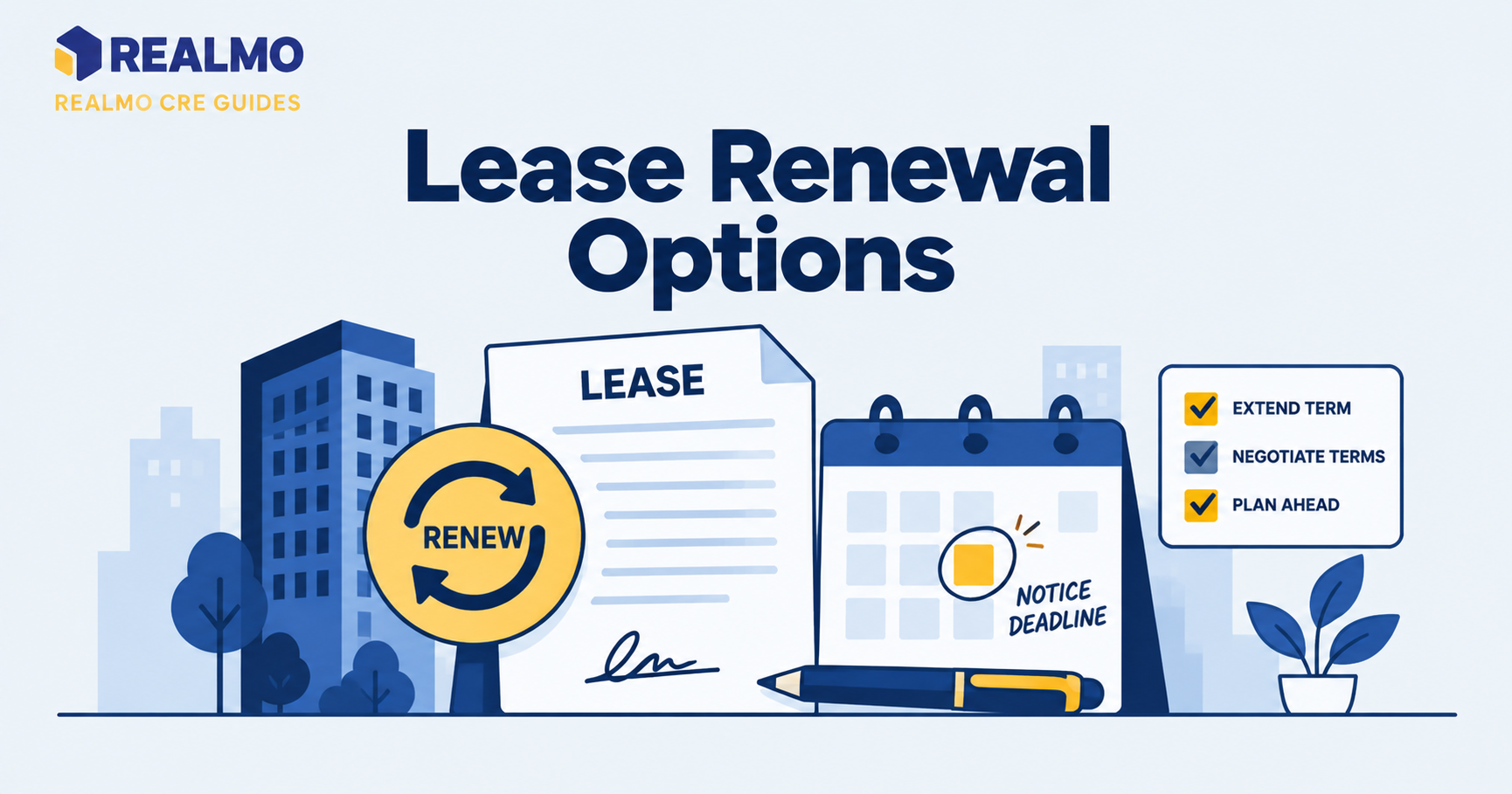
A lease renewal option is a contractual right that lets a tenant continue occupying the premises past the original expiration date, on terms fixed when the lease was signed. The tenant exercises it by written notice inside a defined window. A landlord cannot refuse a properly exercised option.
What a missed notice deadline costs a tenant
A 12,000-square-foot office tenant holds a five-year renewal option with notice due nine months before expiration. The tenant sends the letter three weeks late. By then the landlord has signed a letter of intent with another user for the floor. The option is gone, and so is the negotiating position.
What follows is expensive. The tenant either accepts whatever the landlord now asks, or moves on a compressed schedule with no time to bid contractors. If neither happens before expiration, holdover rent applies, and holdover clauses in office and industrial leases run at 150% to 200% of the last month’s base rent. Some also make the tenant liable for the landlord’s consequential damages to the incoming tenant.
Nine months of lead time turns into a fire drill. The clause never changed. Only the calendar did.
Renewal vs. extension: why the wording matters
An extension continues the existing lease. Nothing new gets signed, the guaranty rolls forward, and the SNDA already recorded stays in place.
A renewal can require a new lease document. That opens the door to a landlord form with updated insurance limits, a broader operating expense definition, or a fresh personal guaranty request. Tenants sign the option believing the terms are locked, then discover the only locked term was rent.
There is a third version that protects nobody: “option to renew on terms to be mutually agreed.” Courts in most states treat that as an unenforceable agreement to agree. If the clause does not state a rent or a mechanism to determine rent, it is a courtesy, not a right.
How rent is set in a lease renewal option
Three mechanics cover almost every lease renewal option in the market.
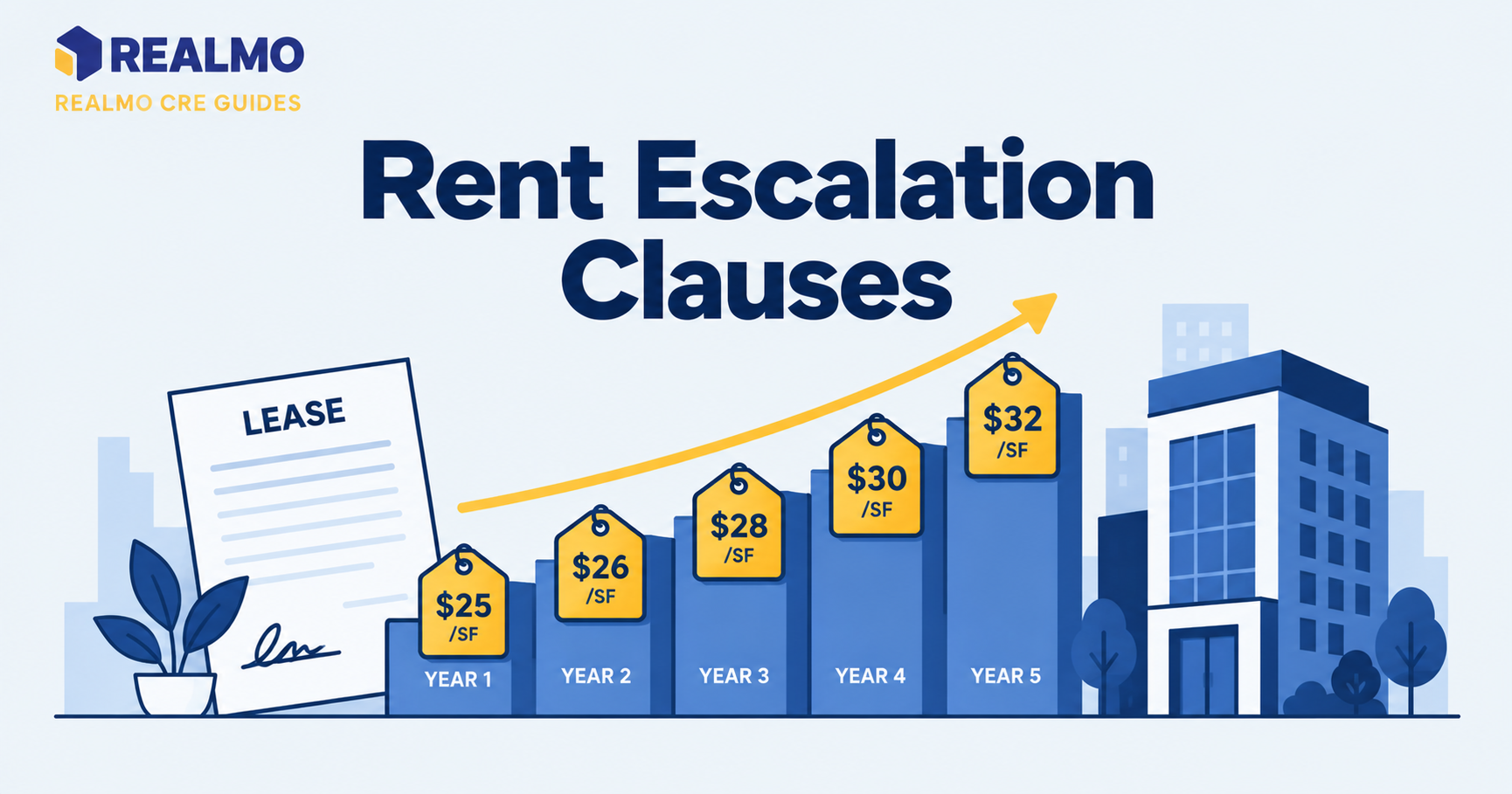
Fixed rent states a dollar figure per square foot for the renewal term. Formula rent escalates the expiring rate by a set percentage, 3% a year being a common structure, or indexes it to CPI. Fair market rent sends both sides to an appraisal process.
Fair market language is where the fights happen. A well-drafted clause answers four questions: which buildings count as comparables, whether the appraiser values the space with or without the tenant’s own improvements, whether landlord concessions such as free rent and tenant improvement allowance get factored in, and what happens when the two appraisers disagree.
The standard tiebreaker is baseball arbitration. Each side’s appraiser submits a number, a third appraiser picks one of the two, and no blending is allowed. That structure pushes both parties toward defensible figures instead of anchors.
Notice windows, delivery, and the timing gap
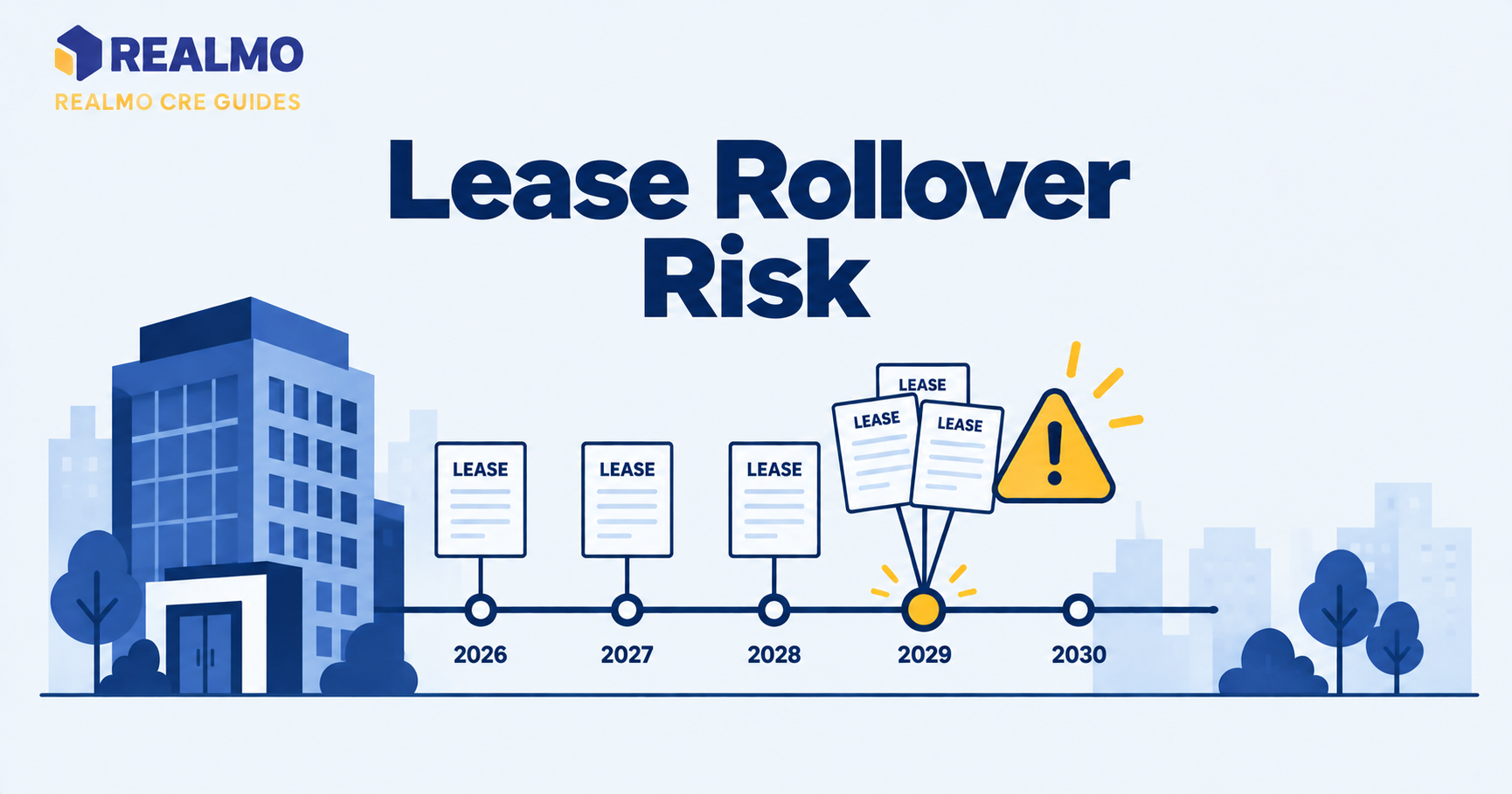
Multi-year office and industrial leases set notice windows of 6 to 12 months before expiration. Small suites and flex space run 90 to 180 days. Retail leases with construction obligations run longer.
Delivery method is not a formality. If the notice clause requires certified mail or a national overnight carrier, an email to the property manager fails the test. Where the lease says time is of the essence, courts enforce the deadline as written. Relief for a late notice exists in some states, but it turns on specific facts, including substantial tenant improvements at risk.
The window also creates a pricing problem. Notice 12 months out means committing to a fair market renewal before knowing what the market looks like at commencement. Tenants counter this by negotiating a rent determination that runs after exercise, with a walk-away right if the number lands above an agreed ceiling.
Worked example: fixed option rent vs. a market deal
Illustrative figures only.
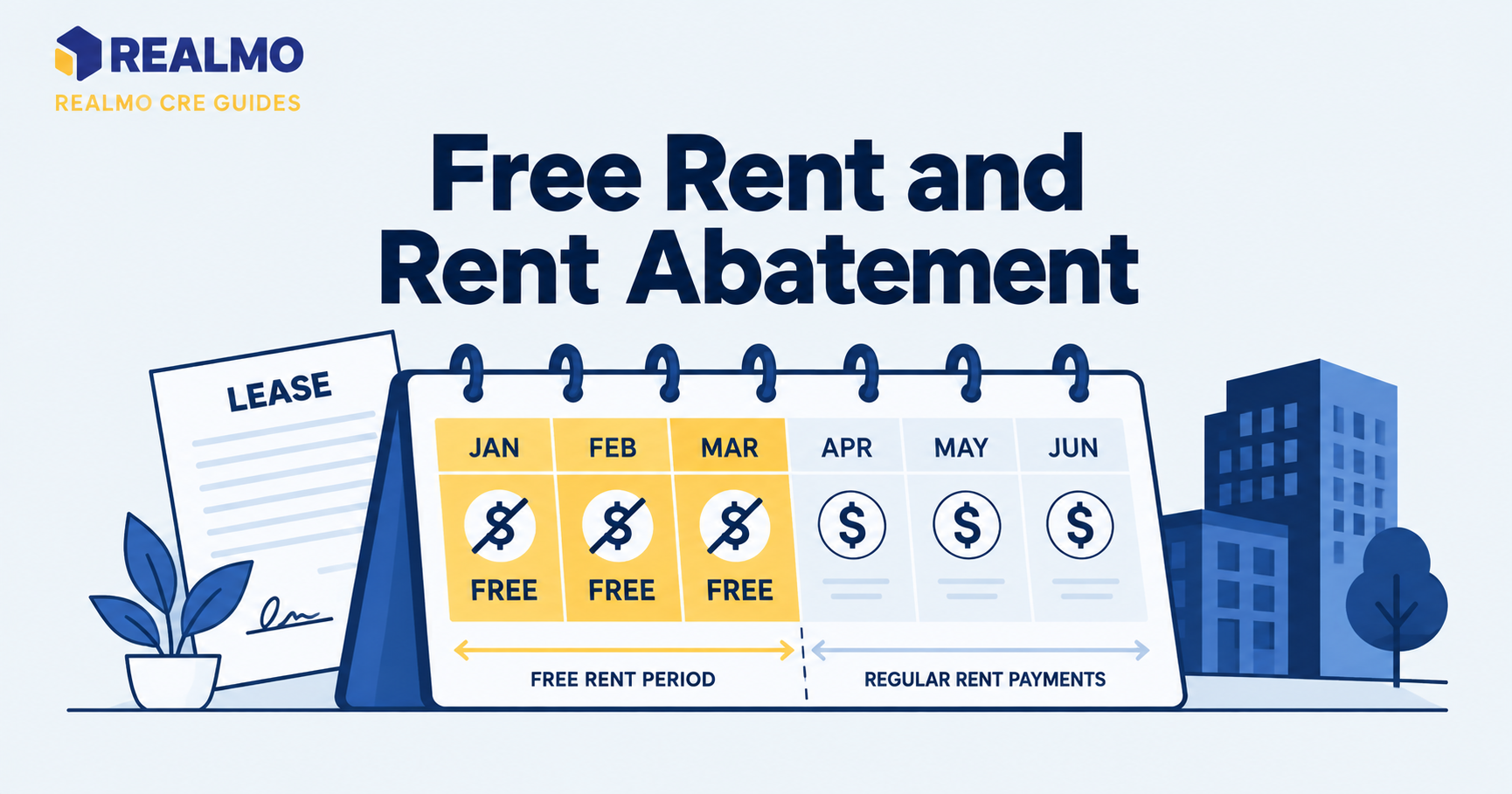
A tenant occupies 20,000 square feet with a fixed renewal option at $28.00 per square foot NNN for five years, no free rent, no allowance. A comparable building quotes $32.00 per square foot, five years, six months free, and a $50.00 per square foot improvement allowance.
Compare on net effective rent, not asking rent.
Option: $28.00 × 5 = $140.00 per square foot over the term. Net effective $28.00.
New space: $32.00 × 5 = $160.00, minus $16.00 of free rent, minus the $50.00 allowance, equals $94.00. Net effective $18.80.
Now add the cost of moving. Cabling, furniture reconfiguration, movers, downtime, and the improvement cost above the allowance total $35.00 per square foot, or $7.00 per year. Adjusted net effective for the new space: $25.80.
The “cheap” fixed option is $2.20 per square foot per year more expensive. On 20,000 feet that is $44,000 a year, $220,000 across the term. Interpretation: a fixed option protects against a rising market, not against a market where landlords compete with concessions. The frequent error is comparing $28.00 to $32.00 and stopping there.
Conditions that can void your renewal option
Most options are conditioned on no default at the time of exercise and at commencement. Tight drafting says “no uncured monetary default beyond applicable notice and cure periods.” Loose drafting says “no default,” which lets a landlord point to a late insurance certificate from 14 months ago.
Options are also personal to the named tenant. Assign the lease, or sublease more than half the premises, and the right can disappear with it. Check how the assignment and subletting clause interacts with the option before any corporate reorganization.
Retail adds occupancy conditions. Going dark, falling below a sales threshold, or breaching continuous operation can strip the option even while rent is current. Lease amendments create a quieter risk: an amendment that restates the term without restating the option can extinguish it.
What to negotiate into the option before signing
Ask for a collar on fair market rent, such as no less than 95% and no more than 110% of expiring base rent. Ask that the appraiser disregard improvements the tenant paid for. Ask for a renewal allowance and a construction period, because five-year-old carpet does not renew itself.
Two more items get conceded more than tenants expect: assignability of the option to affiliates and permitted transferees, and a shorter notice window. Twelve months is landlord-friendly. Six is workable for space under 25,000 square feet. Stacking two options of five years each also costs less at signing than at renewal, when the landlord holds the leverage of your buildout.
Lease terms carry legal and tax consequences. Have a licensed attorney review any option clause before signing.
Common mistakes tenants make with renewal options
- Calendaring the expiration date instead of the notice date. The deadline that matters comes 6 to 12 months earlier, and it belongs in two systems, not one.
- Sending notice by email. If the clause names certified mail, the email is not notice, and the landlord has no duty to remind anyone.
- Treating the option as a floor. A fixed option below market is leverage for a longer renewal with an allowance, not a coupon to redeem quietly.
- Exercising before pricing alternatives. Once notice goes out it is irrevocable, and the landlord knows the tenant is staying.
- Ignoring the amendment trail. Every amendment should restate the surviving options by name and date.
Pricing a renewal starts with knowing what comparable space asks in the same submarket. Realmo’s listing and analytics data covers active availabilities and building-level detail, which gives tenants a check on a landlord’s fair market position before appraisers get involved.
Related terms
Fair market rent · Net effective rent · Holdover tenancy · Tenant improvement allowance · Right of first refusal · Triple net lease · Assignment and subletting · SNDA
FAQ
Can a landlord refuse a lease renewal option?
No, if the tenant exercises it correctly and meets the stated conditions. A properly exercised option binds the landlord. Refusal is only available where the tenant missed the notice window, used the wrong delivery method, sat in uncured default, or breached a condition such as continuous operation or a limit on subleasing.
What happens if I miss the renewal notice deadline?
The option lapses and the landlord regains full pricing freedom. The tenant negotiates from scratch, moves, or falls into holdover at 150% to 200% of base rent. A few states allow equitable relief for a late notice, usually where the tenant has substantial unamortized improvements at stake and the landlord suffered no harm.
How is renewal rent calculated in a fair market option?
Each side appoints an appraiser who values comparable space under the definitions written into the lease. If the two numbers sit within an agreed spread, they are averaged. If not, a third appraiser selects one of the two under baseball arbitration. The clause should state whether concessions and tenant-paid improvements count.
Is a renewal option the same as an extension option?
Not in mechanics. An extension continues the existing lease document with the same guaranty and recorded agreements. A renewal can require signing a new lease, which lets the landlord introduce updated terms. Read which word the clause uses, then read what document the clause says will be signed.