Free Rent Period and Concessions in Commercial Leases
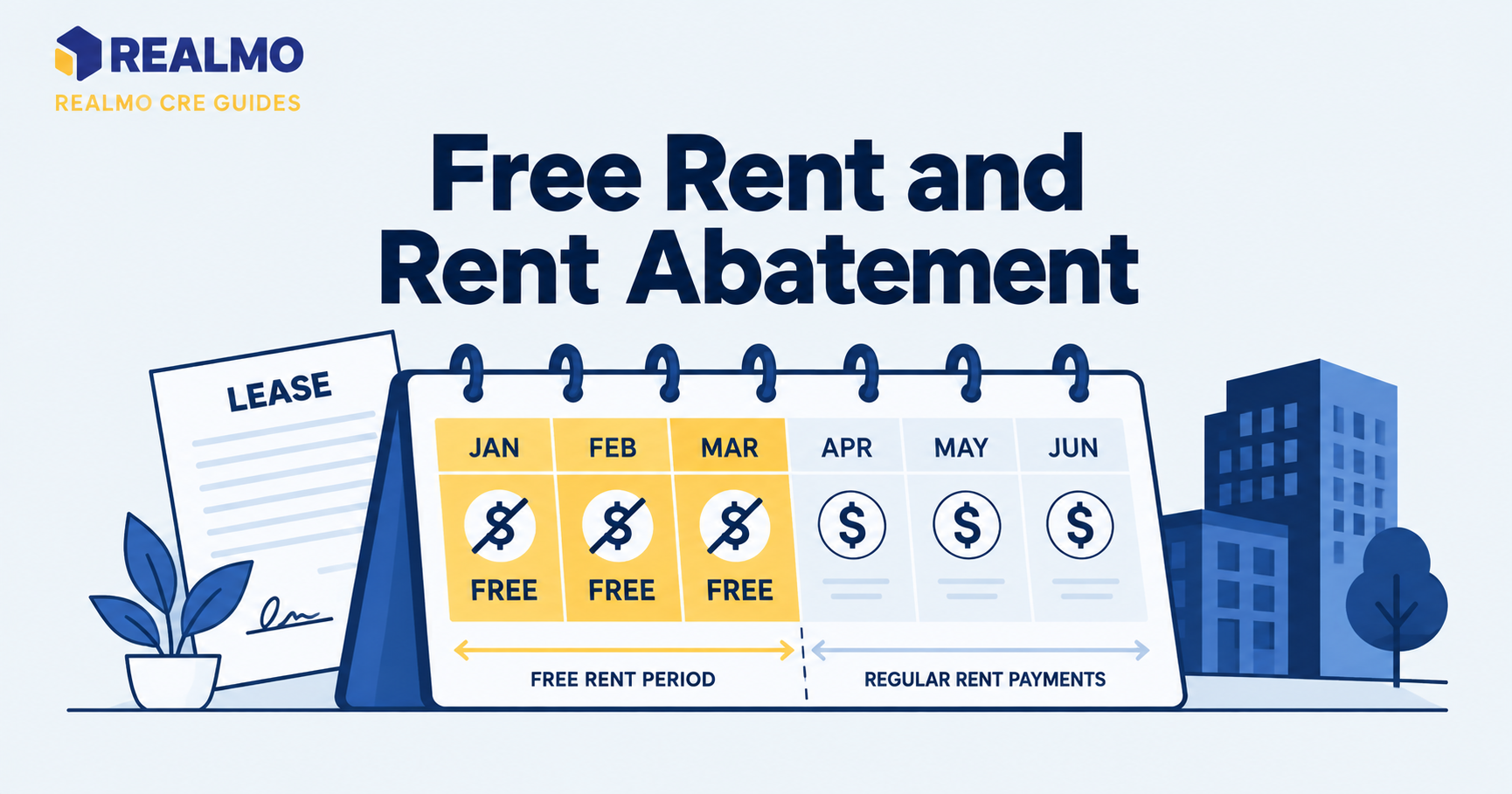
A free rent period is a stretch of months at the start of a commercial lease when the tenant holds the space and pays no base rent. Landlords pair it with other concessions: tenant improvement allowances, moving money, free parking, early access for construction. The rent is abated, not erased from the deal.
Why free rent decides which space you can afford
Say you sign five years on 5,000 square feet at $30 per square foot. Base rent runs $12,500 a month. Six months of abatement keeps $75,000 in your account during the exact stretch when you’re paying a contractor, buying furniture, running cable, and still covering rent at your old address. Timing matters as much as price here. Cash you keep in month two funds the buildout, and cash you save in year four does not.
Landlords understand this better than most first-time tenants do. Abatement is the first thing they offer and the last thing they quantify for you. The face rate stays high in the comparable lease data that sets the market. Your real cost drops. Both sides get to report the number that suits them.
How a free rent period works in a commercial lease
Abatement runs from the rent commencement date, which is rarely the day you sign. Many office and industrial deals give the tenant possession first for fit-out, then start the clock at substantial completion. Get that sequence wrong and you burn free months on an empty shell.
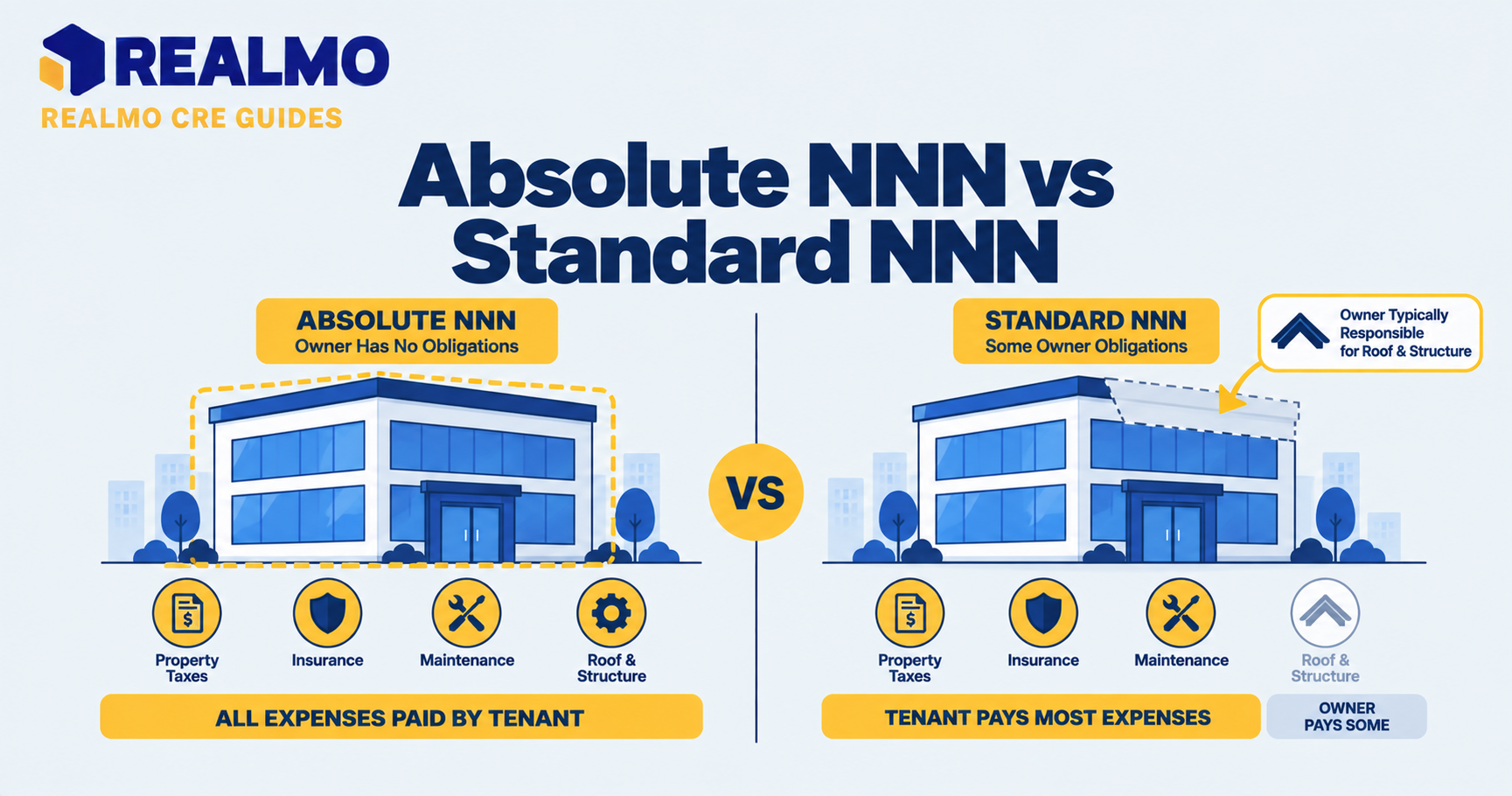
The second question is what the abatement actually covers. Base rent only is the default. In a triple net lease, the tenant keeps paying taxes, insurance, and CAM through the free period, so a “free” month on 5,000 square feet at $8 per square foot of operating expenses still costs $3,333. Full gross abatement covers everything, and landlords give it up slowly.
Structure varies. Consecutive months at the front are standard. Landlords who worry about early default prefer one free month per lease year, which spreads their exposure and keeps you disciplined.
Why landlords give concessions instead of cutting rent
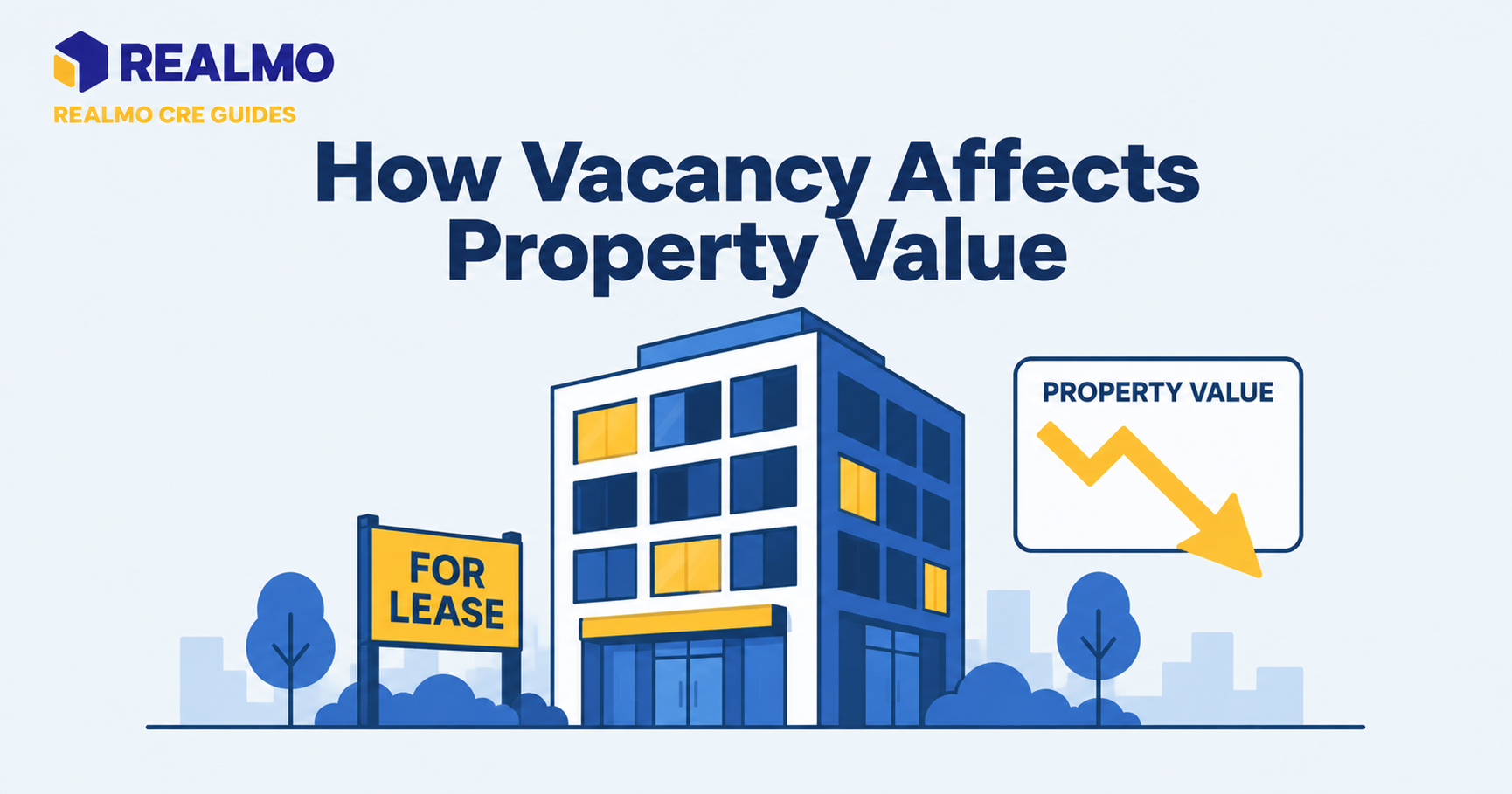
Buildings are valued off in-place net operating income. Cut $2 per square foot on 5,000 square feet and you remove $10,000 of annual NOI permanently. Capitalize that at an illustrative 7% cap rate and the owner just lost roughly $143,000 of asset value. Six months of abatement on the same deal costs $75,000 once.
Lenders reinforce the habit. Loan sizing and debt service coverage tests read the rent roll, and mortgage covenants can set minimum rent levels for new leases. A high face rate with concessions behind it protects the appraisal, the refinancing, and the exit price. Abatement lives in a side letter or a lease exhibit, where the next appraiser may never weight it fully.
What else to ask for besides free months
Free rent is one line in a package. The rest is where tenants leave money behind:
- A tenant improvement allowance, quoted in dollars per square foot, sometimes amortized back into rent at interest
- Turnkey buildout, where the landlord delivers to an agreed plan and eats overruns
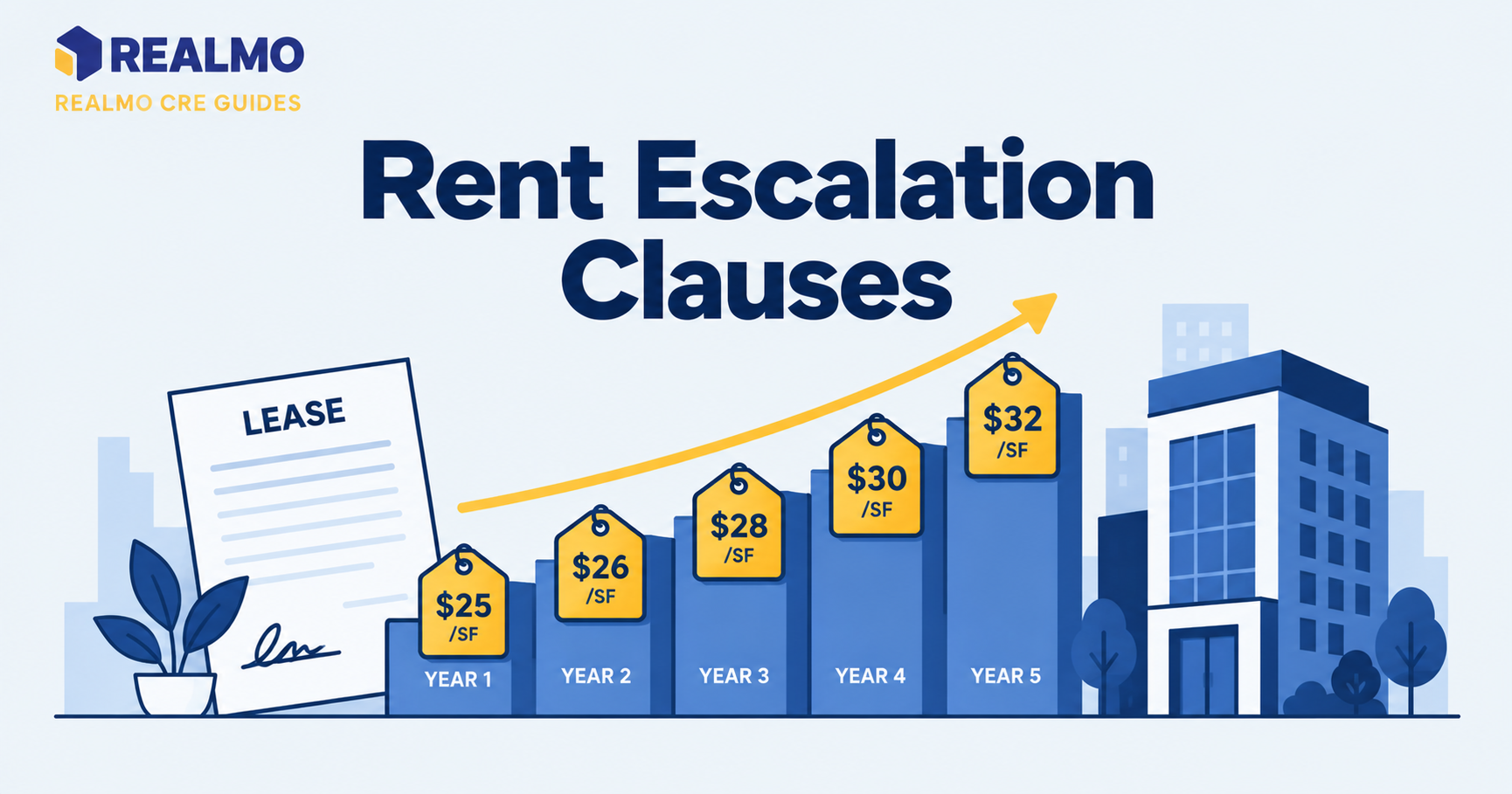
- Reduced annual escalations. Moving from 3% to 2% bumps on a 10-year lease is worth more than two free months
- Free or discounted parking, which matters most in urban product with paid decks
- A termination option, an expansion right, or a renewal at a fixed rate
- Moving and cabling allowances
Escalation is the quiet one. It compounds for the whole term while free rent hits once.
Worked example: comparing two concession packages
Illustrative figures, 5,000 square feet, five-year term, no escalations, no discounting.
Deal A: $30 per square foot full service, four months free, $50 per square foot TI allowance.
Deal B: $27 per square foot full service, no free rent, $20 per square foot TI allowance.
Your buildout is priced at $70 per square foot in both spaces.
Deal A: gross rent is $150,000 a year, $750,000 over the term. Four free months remove $50,000. TI shortfall is $20 per square foot, so you fund $100,000 of construction. Total tenant cost: $800,000, or $32.00 per square foot per year.
Deal B: gross rent is $135,000 a year, $675,000 over the term. TI shortfall is $50 per square foot, so you fund $250,000. Total tenant cost: $925,000, or $37.00 per square foot per year.
The cheaper-looking rent costs $125,000 more. Interpret the result as a starting point, not an answer, because it ignores the time value of money and any TI amortization interest. A full net effective rent analysis discounts each year’s cash flow.
One error shows up constantly here: comparing $30 to $27 and stopping.
Clauses that can take your free rent back
Read the abatement paragraph to its last sentence. Conditional abatement is common, and it says the free rent is earned only if you perform. Default, and the landlord can recapture every abated dollar plus unamortized TI, immediately and in addition to normal remedies.
A $50,000 abatement and a $250,000 allowance can become a $300,000 acceleration claim in month 30. That figure often exceeds the security deposit by a wide margin. Assignment and sublease provisions sometimes carry the same trigger, which limits your ability to exit through a subtenant.
How free rent hits your books and your taxes
Under ASC 842, a tenant recognizes total lease payments on a straight-line basis across the term. Free months don’t produce free months on the income statement. Your P&L shows level rent expense while your bank account shows a gap, and the difference sits in the lease liability and right-of-use asset.
Landlords watch a different rule. Internal Revenue Code Section 467 governs leases with prepaid or deferred rent above a statutory dollar threshold and can force accrual on a schedule that ignores the payment dates. Confirm treatment with a licensed CPA or tax attorney before you structure abatement around a fiscal year.
Common mistakes tenants make with concessions
- Negotiating the face rate first, then asking for concessions. Landlords concede on rate only when there’s nothing left to give. Lead with the package.
- Accepting abatement of base rent in a net lease without checking the operating expense load. On a building running $12 per square foot of pass-throughs, “free” costs you real money every month.
- Letting the allowance expire. TI money is usually disbursed against invoices within a stated window, and unspent dollars revert to the landlord.
- Treating amortized TI as free. At $50 per square foot amortized over 10 years with interest, you’re borrowing from your landlord at a rate you never shopped.
- Signing a letter of intent that fixes rent and stays silent on concessions. The leverage is gone by the time the lease draft arrives.
Asking rents on listing platforms, including Realmo, are face rates. Treat the concession package as a separate negotiation and price it yourself.
Related terms: net effective rent, tenant improvement allowance, rent commencement date, triple net lease, letter of intent, lease comps, security deposit
FAQ
How much free rent can I get on a commercial lease?
Abatement scales with term length and how long the space has been vacant. A 10-year deal supports more free months than a three-year deal, because the landlord amortizes the cost over more rent. Ask brokers what recent deals in the same building included, then negotiate against that, not against the asking rate.
Do I still pay CAM during a free rent period?
In most net leases, yes. Abatement covers base rent unless the lease says otherwise. On a modified gross or full service lease, check whether the free period also suspends your share of operating expense increases above the base year. Get the answer in writing at the letter of intent stage.
Is free rent taxable income to a tenant?
No. Abated rent isn’t income, it’s rent you never owed. Under ASC 842 you still recognize total lease payments straight-line across the term, so your reported rent expense stays level. A cash allowance paid to you can be treated differently. Confirm the treatment with a licensed CPA.
Can a landlord take back free rent if I default?
Yes, when the lease includes a recapture or clawback clause. That language makes abatement conditional on performance and lets the landlord accelerate abated rent and unamortized improvement costs after an event of default. Negotiate a cure period and a cap, or ask for unconditional abatement.
What’s better, free rent or a bigger TI allowance?
It depends on your buildout cost. If your contractor’s price exceeds the allowance, extra TI dollars go further, because you’d fund that shortfall from cash. If the space is close to move-in ready, free months are worth more. Run both packages as total cost over the full term.