Lender Metrics Explained: DSCR, LTV and Debt Yield

Lenders size commercial mortgages on three ratios at once. DSCR in commercial real estate divides net operating income by annual debt service. LTV divides the loan amount by appraised value. Debt yield divides NOI by the loan amount. Each test produces a maximum loan, and the smallest number wins.
Why These Three Ratios Decide Your Proceeds
An owner refinancing a maturing loan on a multi-tenant retail center usually starts with value. The property appraises higher than it did at acquisition, occupancy is stable, and the assumption is that higher value means a larger loan. Then the term sheet arrives sized well below expectations.
The reason is almost never the appraisal. It is that one of the other two tests binds first. If debt service at current pricing consumes too much of the property’s income, DSCR caps proceeds. If the lender considers the appraised value optimistic relative to income, debt yield caps proceeds. An owner who understands which constraint is binding knows what to fix. Raise NOI, reduce loan request, extend amortization, buy down rate, or bring cash to close. An owner who only watches LTV negotiates the wrong variable and loses weeks.
What DSCR Means in Commercial Real Estate
Debt service coverage ratio measures how many times over the property’s income covers its annual mortgage payments.
DSCR = Net Operating Income ÷ Annual Debt Service
Annual debt service means twelve months of principal and interest at the note terms, not interest alone and not the amount actually paid in a partial first year. A DSCR of 1.00x means income exactly equals payments, with nothing left for capital expenditures, leasing costs, or the owner. A DSCR of 1.30x means income exceeds payments by 30%.
Lenders set a floor, and that floor is a cushion against income falling. A 1.25x requirement means NOI can decline roughly 20% before the property stops covering debt. The floor moves with perceived risk: single-tenant assets with long-term credit leases carry lower requirements than short-term-lease assets like self-storage or hospitality, where income can reprice within months. Loan programs matter too. Agency lenders, chiefly Fannie Mae and Freddie Mac multifamily programs, on multifamily, life companies on stabilized core assets, banks on recourse loans, and bridge lenders on transitional deals all use different coverage floors, and a bridge lender may accept sub-1.00x coverage at closing if an interest reserve funds the gap.
DSCR is the only one of the three ratios that reacts to loan pricing and structure. Change the interest rate, change the amortization period, add an interest-only period, and DSCR moves without a single dollar of net operating income changing. That sensitivity is exactly why it binds so frequently when rates rise.
How LTV Sets the Ceiling on Loan Proceeds
LTV = Loan Amount ÷ Appraised Value
LTV protects the lender’s recovery in a foreclosure sale. It answers a single question: if the property is sold under duress, how much cushion exists between the sale price and the outstanding balance?
The denominator is the appraised value from the lender’s own appraiser, ordered by the lender and paid for by the borrower. It is not your purchase price, not your broker’s opinion of value, and not what the property is worth in your model. On an acquisition, most lenders size against the lesser of purchase price or appraised value. This means an appraisal above contract price gives you nothing while an appraisal below it reduces proceeds immediately. On a construction or heavy value-add loan, a parallel test applies: loan-to-cost. This compares the loan to total project cost including land, hard costs, soft costs, and contingency.
LTV is the ratio owners understand best and the one they overweight most. It moves with the appraisal, and the appraisal is largely a function of NOI divided by the cap rate an appraiser selects from comparable sales. When market cap rates compress, appraised values rise and LTV capacity rises with them , even though the property produces exactly the same income. That is the structural weakness lenders learned to price around, and it is why the third ratio exists.
Why Debt Yield Ignores Rate and Amortization
Debt Yield = Net Operating Income ÷ Loan Amount
Debt yield states the unlevered cash return the lender would earn if it took the property back on day one. A 10% debt yield means the collateral generates ten cents of NOI per dollar lent, regardless of what the note says.
This is the ratio with no moving parts. It contains no interest rate, no amortization schedule, no appraisal, and no cap rate assumption. DSCR can be manufactured by stretching amortization from 25 to 30 years or granting an interest-only period. LTV can be manufactured by an aggressive appraisal built on thin comparables. Debt yield resists both. It is the reason commercial mortgage-backed securities (CMBS) lenders and most institutional balance-sheet lenders adopted it widely after the 2008 credit cycle. When loans that had cleared DSCR and LTV tests at origination proved badly oversized once values and interest-only periods rolled off.
Read the ratio as an inverted cap rate on the loan. A 10% debt yield implies the lender is whole at a 10% cap rate on trailing income. If the lender believes the asset would trade at a materially lower cap rate in a distressed sale. Its debt yield floor is doing real work. Floors vary by property type and lender appetite for the same reason coverage floors do. Assets with volatile income and thin buyer pools require more room than long-lease assets with deep institutional demand.
How Lenders Rebuild Your NOI Before Sizing
Two of the three ratios have NOI in the numerator, so the single most consequential number in the entire process is the one most frequently disputed. Lenders do not accept the owner’s NOI. They construct their own underwritten NOI, and it is nearly always lower.
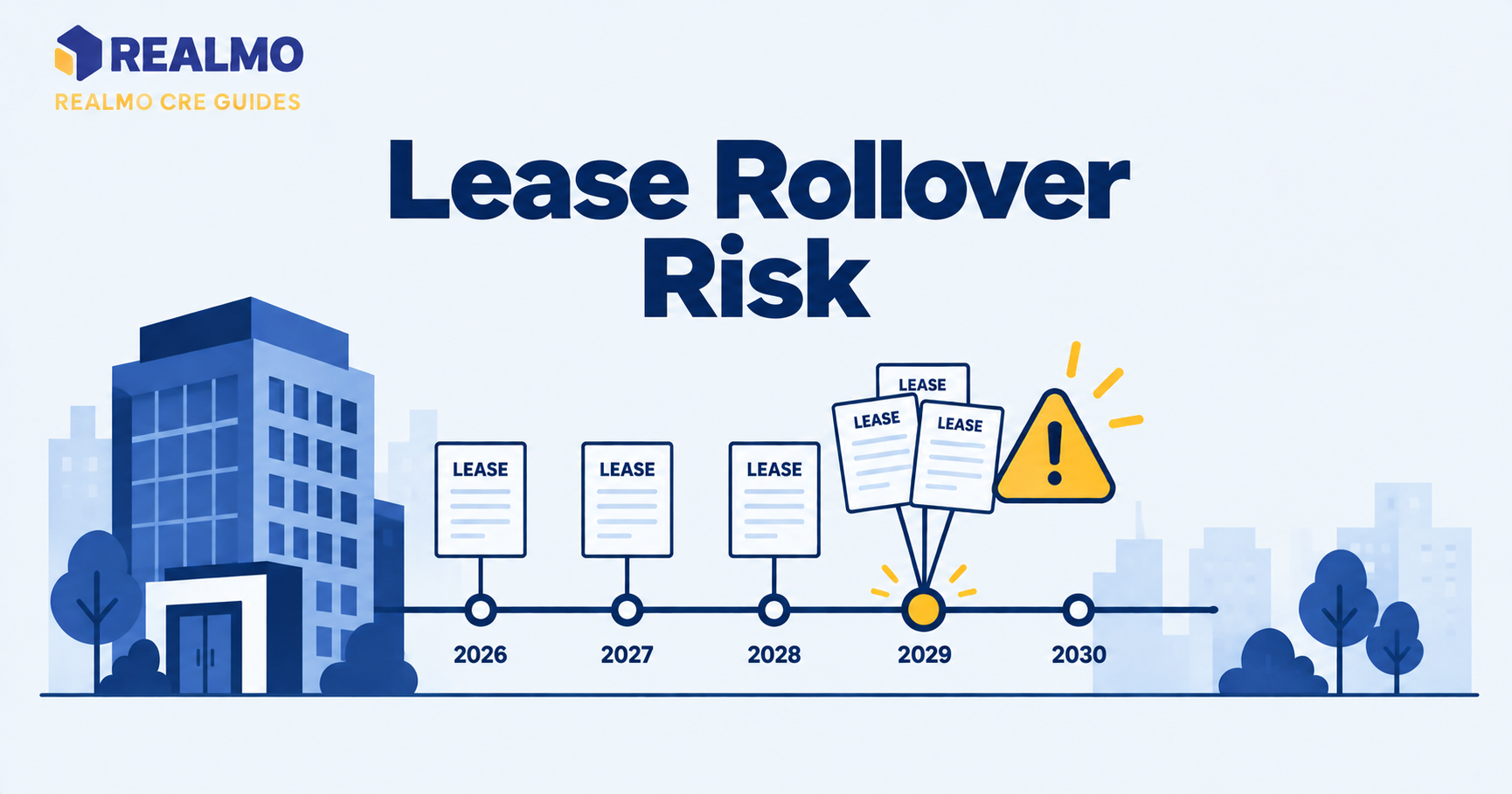
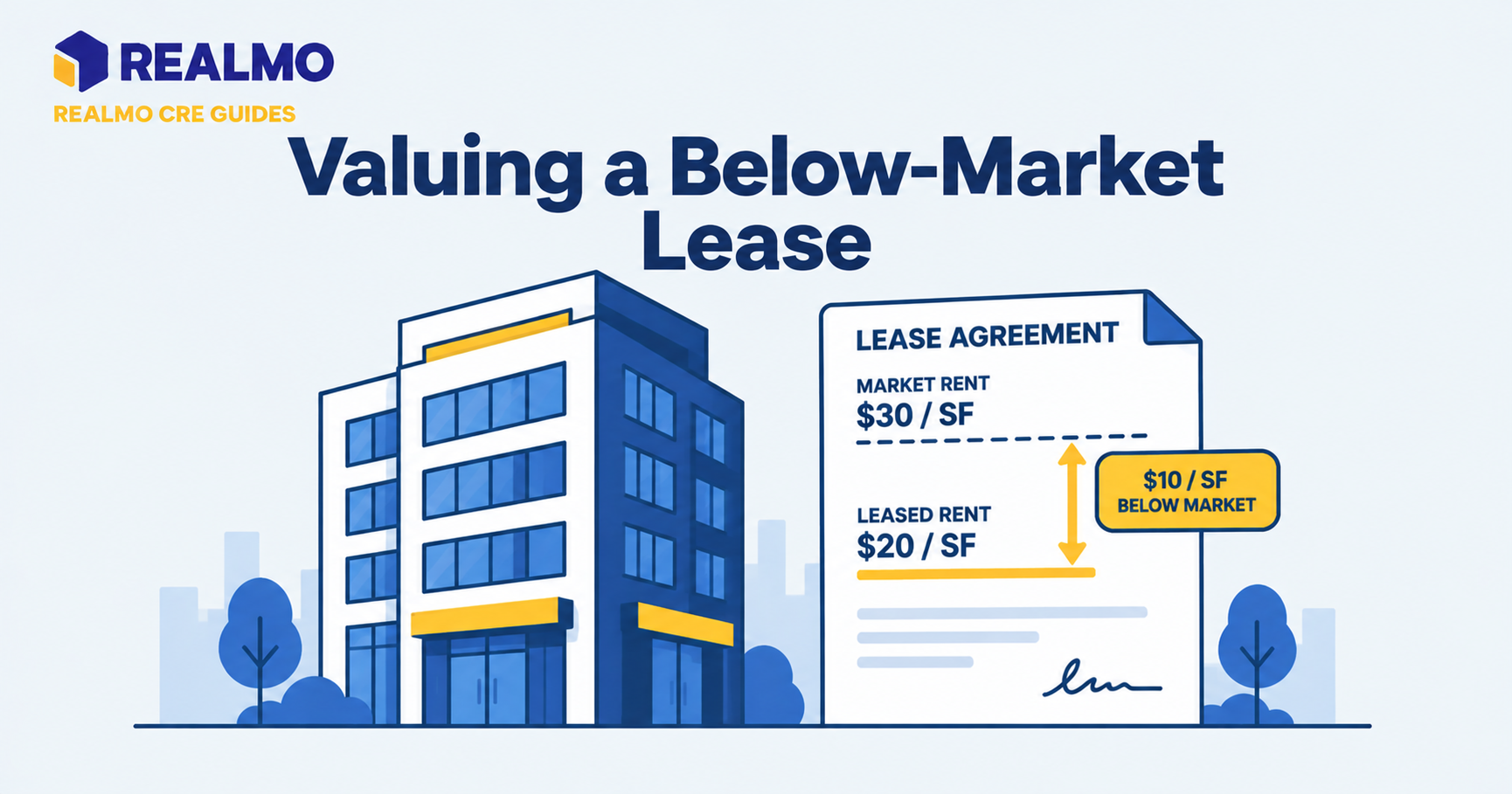
Common adjustments include a vacancy and credit-loss factor even when the property is fully leased. On the theory that no asset stays 100% occupied through a loan term. A management fee is imputed at market rate even when the owner self-manages and books no fee. Replacement reserves are deducted per unit or per square foot, though owners treat capital items as below-the-line. Rents above market are marked down to market, and short-term or percentage rent is discounted or excluded. Tenants whose leases expire inside the loan term may be underwritten at market renewal terms rather than in-place rent. One-time income, a settlement, a termination fee, a reimbursement true-up, is stripped out entirely.
The gap between owner NOI and underwritten NOI is frequently ten percent or more, and because both DSCR and debt yield are linear in NOI, a ten percent haircut is a ten percent reduction in the loan those two tests will support. Reconciling the operating expense schedule and rent roll with the lender’s analyst before the term sheet is issued is cheaper than renegotiating after. Realmo’s property-level valuation and ownership data can help you pressure-test the value and income assumptions you are about to submit, so surprises surface before an appraisal is ordered rather than after.
Which Constraint Binds, and Why It Moves
The three tests are not ranked. They are evaluated in parallel, and the binding constraint shifts with market conditions.
When interest rates are low relative to property yields, debt payments are cheap, DSCR clears easily, and LTV usually binds. Owners in that environment learn to think of financing as a value question. When rates rise while cap rates lag, the normal sequence. This is because transaction pricing adjusts slowly, debt service climbs against flat NOI and DSCR becomes the binding test. Proceeds fall even though appraised values have not. When values run far ahead of income, debt yield binds, because it is the only ratio that refuses to accept the appraisal’s premise.
The practical consequence for an owner is that the fix depends on the constraint. If DSCR binds, longer amortization, an interest-only period, a rate buydown, or a rate cap structure can move proceeds without touching the property. If debt yield binds, only more NOI or a smaller loan will help, since the ratio ignores loan terms by construction. If LTV binds, a second appraisal or better comparable sales support is the lever, along with the option of a mezzanine or preferred equity layer above the senior loan. Asking a lender which of the three tests is driving the sizing is a normal, answerable question, and the answer tells you where negotiation is possible.
Worked Example: Sizing One Loan Three Ways
The figures below are illustrative round numbers chosen to show the mechanics, not market quotes.
A stabilized suburban retail property. Lender-underwritten NOI is $600,000. Appraised value is $8,000,000. The lender’s stated requirements are a minimum 1.25x DSCR, maximum 65% LTV, and minimum 10% debt yield. Assume an illustrative mortgage constant of 7.5%, meaning annual principal and interest equal 7.5% of the loan balance at the quoted rate and amortization term.
- LTV test. $8,000,000 × 65% = $5,200,000.
- DSCR test. Maximum supportable annual debt service = $600,000 ÷ 1.25 = $480,000. Loan = $480,000 ÷ 0.075 = $6,400,000.
- Debt yield test. $600,000 ÷ 0.10 = $6,000,000.
The lender sizes to the lowest result: $5,200,000, constrained by LTV. At that loan amount, actual annual debt service is $5,200,000 × 0.075 = $390,000, so realized DSCR is $600,000 ÷ $390,000 = 1.54x and realized debt yield is $600,000 ÷ $5,200,000 = 11.5%. Both sit comfortably above the floors, which is the signature of an LTV-constrained deal.
Now change one input. Suppose the appraisal comes in at $10,000,000 instead. The LTV test allows $6,500,000, the DSCR test still allows $6,400,000, and the debt yield test still allows $6,000,000. Debt yield now binds, and proceeds are $6,000,000 , a $2,500,000 increase in appraised value produced only $800,000 of additional loan. That gap is debt yield doing precisely what it was designed to do: refuse to lend against value that income does not support.
The common error in this calculation is running it on owner-reported NOI. If the owner’s NOI is $660,000 before the lender deducts a market management fee and replacement reserves, the DSCR and debt yield tests appear to support $7,040,000 and $6,600,000 respectively, and the owner walks into the transaction expecting proceeds the lender never intended to offer.
Loan terms, covenant packages, and their tax consequences vary by lender and jurisdiction. Confirm any specific structure with a licensed attorney, CPA, or mortgage professional before signing.
DSCR Covenants, Cash Traps, and Cure Rights
DSCR is not only a sizing test. In most loan documents it survives closing as an ongoing covenant, tested quarterly or annually against trailing income.
Falling below the covenant threshold rarely triggers immediate default. It triggers a cash management event. Excess cash flow after debt service and approved operating expenses is swept into a lender-controlled account instead of being distributed to ownership. Funds are held until coverage is restored for a stated number of consecutive test periods, then released. A separate, lower threshold usually defines actual default. Loan documents also specify cure rights, most the borrower’s option to post a letter of credit or deposit cash to synthetically restore coverage.
For owners, the operational implication is that a single large tenant vacating can convert a performing asset. Into one that generates no distributable cash for a year or more, even while every payment is made on time. Reading the covenant definitions, how NOI is calculated for testing, whether reserves are deducted. This test periods count toward a cure, matters as much as the headline ratio. The definition of NOI in the loan agreement frequently differs from the definition used in sizing.
Common Mistakes Owners Make With These Ratios
- Calculating DSCR on interest only. Omitting principal inflates coverage. The lender uses full principal and interest at the note rate , and on a loan with an initial interest-only period, frequently sizes to the fully amortizing payment that begins later, so a deal that looks covered at closing is underwritten against a payment you are not yet making.
- Using owner NOI instead of underwritten NOI. Every ratio downstream is wrong by the same percentage, and the discovery usually arrives after the appraisal is paid for and rate lock is being discussed.
- Assuming a higher appraisal means more proceeds. Once debt yield or DSCR becomes the binding constraint, additional appraised value produces nothing. Money spent chasing a better appraisal is wasted if the wrong test is binding.
- Ignoring the covenant after closing. Sizing DSCR to exactly the minimum leaves no headroom, so a single tenant rolling or an insurance premium increase triggers a cash sweep and cuts off distributions.
- Forgetting other debt in the coverage calculation. Ground rent, equipment financing, PACE (Commercial Property Assessed Clean Energy) assessments, and existing subordinate debt may be included in the denominator, quietly lowering the ratio the lender computes.
Related Terms
- Net Operating Income (NOI)
- Cap Rate
- Loan-to-Cost (LTC)
- Amortization Schedule
- Mezzanine Debt
- Loan Covenants
- Breakeven Occupancy
- Cash-on-Cash Return
Frequently Asked Questions
What is a good DSCR for a commercial loan?
Most stabilized commercial loans require coverage above 1.20x, with the exact floor set by property type, lease duration, tenant credit, and loan program. Longer-lease, credit-tenant assets carry lower requirements; shorter-lease assets like hotels and self-storage carry higher ones. Borrowers want meaningful headroom above the floor so an ongoing covenant is not tripped by normal income volatility.
What is the difference between debt yield and cap rate?
How does interest-only affect DSCR?
Interest-only removes principal from annual debt service, which raises the computed ratio at the same loan amount and can increase proceeds. Many lenders anticipate this by sizing to the fully amortizing payment even when the loan opens interest-only, so the borrower does not receive proceeds that the eventual amortizing payment cannot support.
Can you get a commercial loan with a DSCR below 1.0?
Yes, on transitional or construction financing, where the property does not yet produce stabilized income. These loans fund an interest reserve to make payments until the business plan generates coverage, and they price for that risk. Permanent lenders on stabilized assets rarely originate below 1.0x coverage.
Why do lenders use debt yield if they already have DSCR and LTV?
DSCR can be improved by extending amortization or adding interest-only periods, and LTV depends on an appraiser’s cap rate selection. Both can be stretched. Debt yield contains no rate, no amortization term, and no appraised value. So it produces a stable measure of income relative to loan size across market cycles.
How does interest-only affect DSCR?
Interest-only removes principal from annual debt service, which raises the computed ratio at the same loan amount and can increase proceeds. Many lenders anticipate this by sizing to the fully amortizing payment even when the loan opens interest-only. So the borrower does not receive proceeds that the eventual amortizing payment cannot support.