Lease Rollover Risk
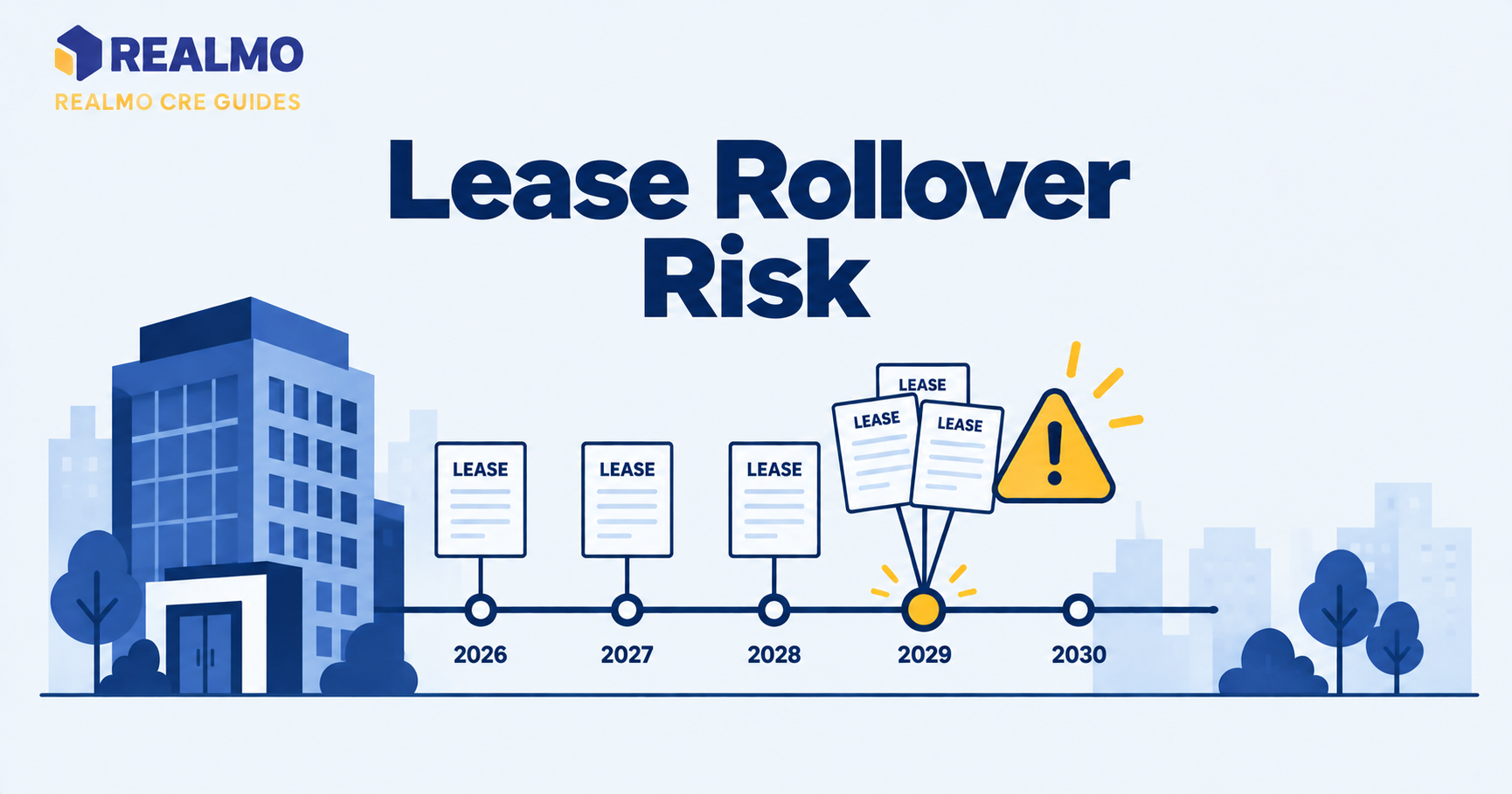
Lease rollover risk is the chance that income drops when leases expire and tenants leave, renew at lower rents, or demand costly concessions. It rises when several leases end in the same year, when one tenant carries most of the rent roll, or when the submarket absorbs space slowly.
Why rollover risk changes what a building is worth
Two flex buildings can produce the same net operating income and trade at very different prices. The first has five tenants, staggered expirations, and no single lease ending before year four. The second has one tenant on 70% of the space with 14 months left. A buyer underwriting the second building has to fund tenant improvements, leasing commissions, free rent, and several months of carry, all inside the first two years of the hold. That capital comes out of the purchase price. The seller sees stabilized income; the buyer sees a bill due shortly after closing. This is the gap that kills deals during the rent roll review more than any other single item.
How to read a lease expiration schedule
Start with a stacking plan and an expiration table. You want two columns for every year of the hold: square feet expiring and the share of base rent expiring. The second matters more. A tenant occupying 15% of the space can carry 30% of the rent if it sits in the best-finished suite.
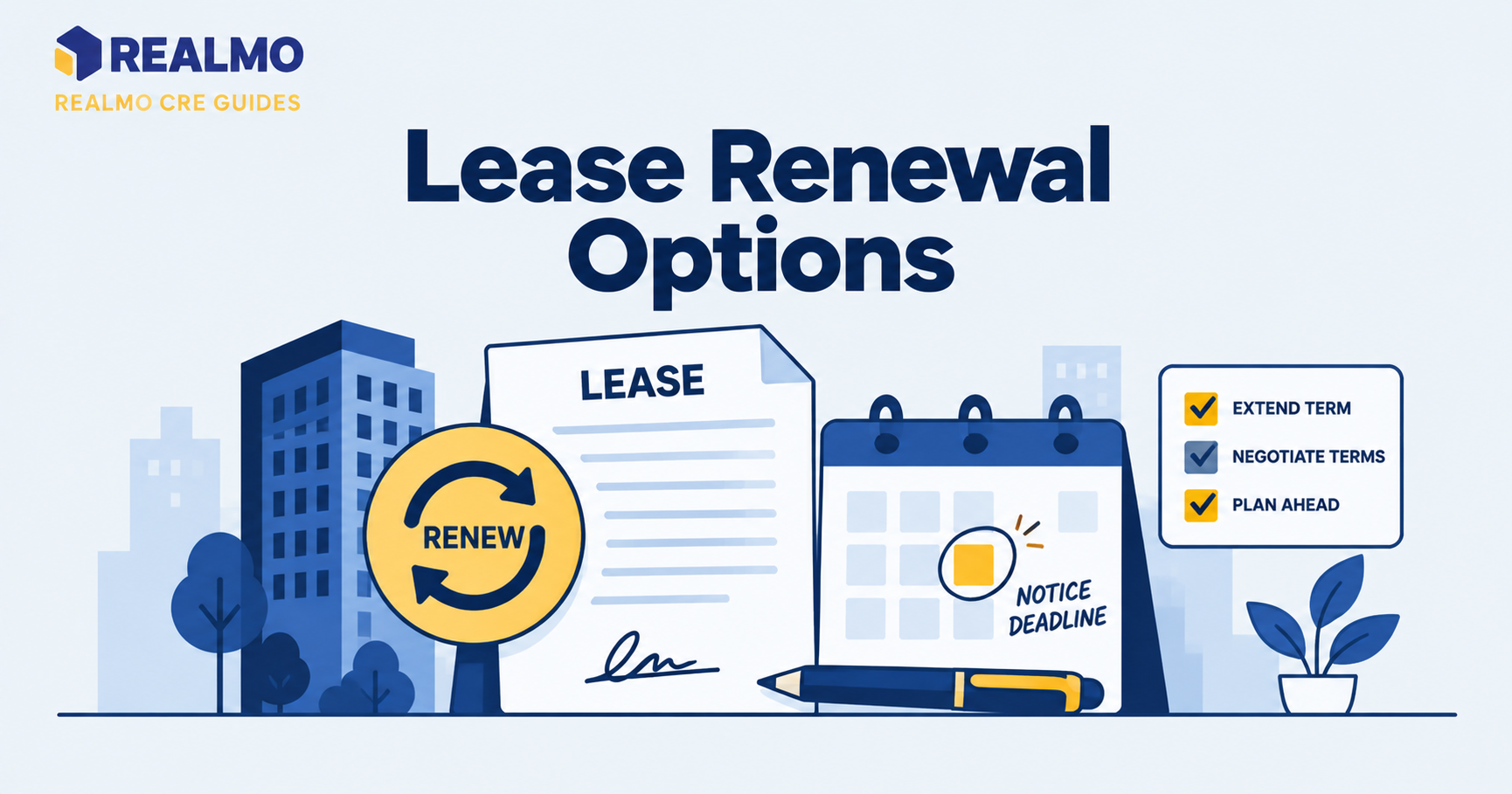
Then check three things. Renewal options and their notice deadlines, because an option at a fixed rate below market is a rent haircut you already agreed to. Tenant credit and business health, since a healthy tenant renews and a shrinking one downsizes. And weighted average lease term, which compresses the whole schedule into one number for comparison across deals.
Sublease listings are the tell everyone misses. When a tenant quietly markets half its floor two years before expiration, the renewal probability in your model is already wrong. Property and tenancy records on Realmo make that easy to spot before you sign a purchase and sale agreement.
What drives lease rollover risk up or down
Lease structure comes first. Five-year terms roll twice as fast as ten-year terms, so a building full of short leases faces more frequent releasing costs even when it stays full. Asset type shapes the rest. Industrial suites re-lease with paint, lights, and dock repairs. Second-generation office space needs demolition, new finishes, and months of construction, which is why office tenant improvement allowances run far above warehouse levels.
Space configuration matters as much as the tenant. A 40,000 square foot box with one restroom core and no demising walls cannot be split, so the whole block goes dark at once. Divisible space with separate entries and metering re-leases in pieces.
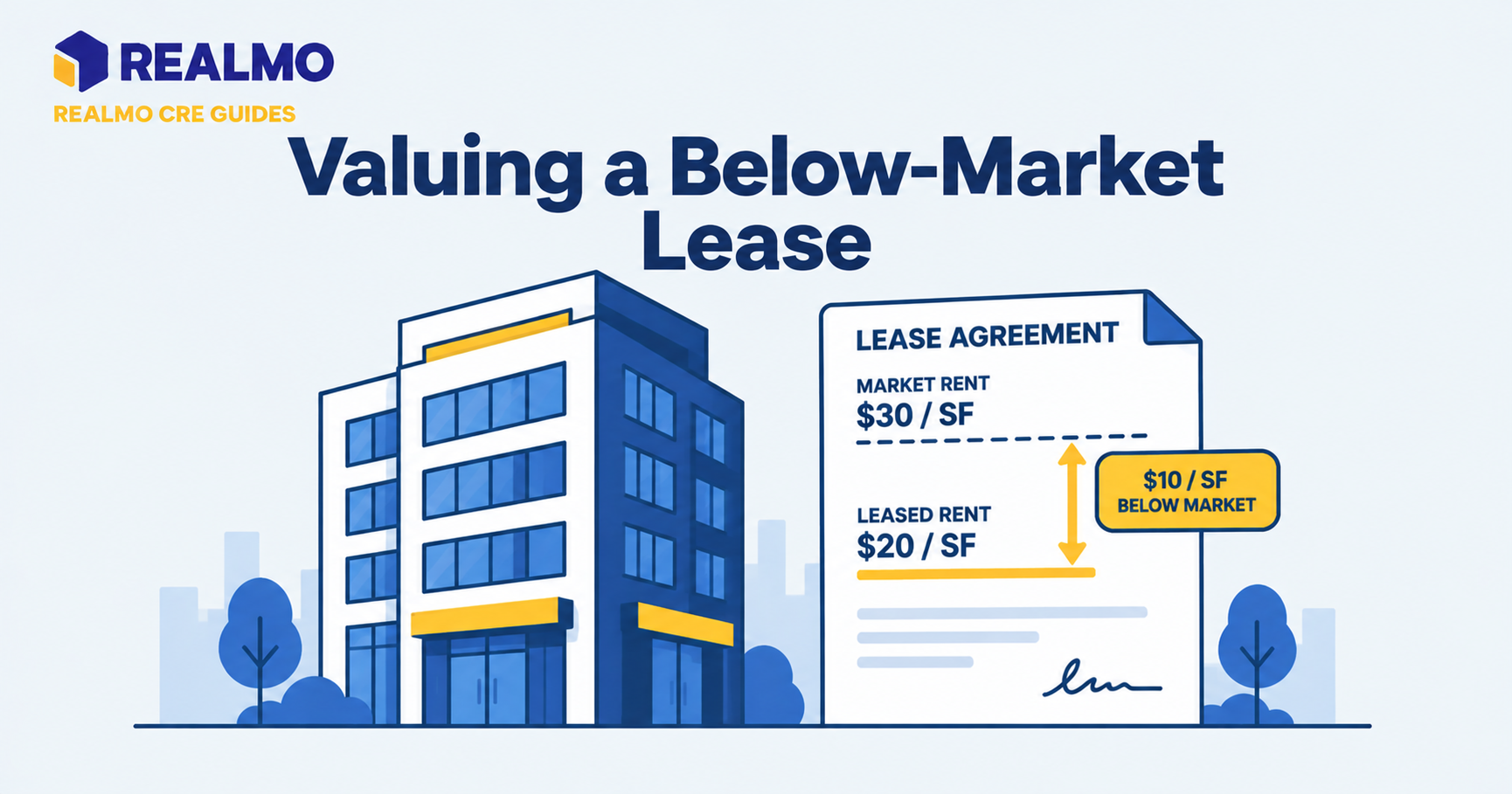
Direction of rents changes the sign of the risk. If in-place rents sit below market, rollover is an opportunity: the mark-to-market gain can outweigh the downtime cost. If in-place rents sit above market, every expiration is a step down, and the current NOI overstates what the building really earns.
Worked example: the cost of one heavy rollover year
Illustrative figures, not market data.
A 60,000 square foot multi-tenant building carries stabilized NOI of $700,000. In year three, 24,000 square feet expires at $20 per square foot NNN, which is $480,000 of annual rent. Underwriting assumes 60% renews and 40% vacates.
- Renewals, 14,400 sf: turnover cost at $10 per square foot equals $144,000, plus commissions of roughly 3% on a five-year term, about $43,200.
- Vacating space, 9,600 sf: nine months of downtime costs $144,000 in lost rent.
- Re-leasing that space: $40 per square foot of TI is $384,000, commissions at roughly 6% of a five-year lease add $57,600, and three months of free rent costs another $48,000.
Total cash requirement: about $820,800. That exceeds a full year of NOI from the entire property.
How to read the result. This is not an expense line. It is a capital event concentrated in 12 to 18 months, and it lands whether or not the leasing goes well. A buyer prices it as a deduction from value, and a lender may hold it back in a reserve at closing. The frequent error is modeling renewals as free. Renewal TI and commissions are smaller than new-lease costs, never zero, and skipping them understates the year by six figures here.
How lenders and buyers price rollover risk
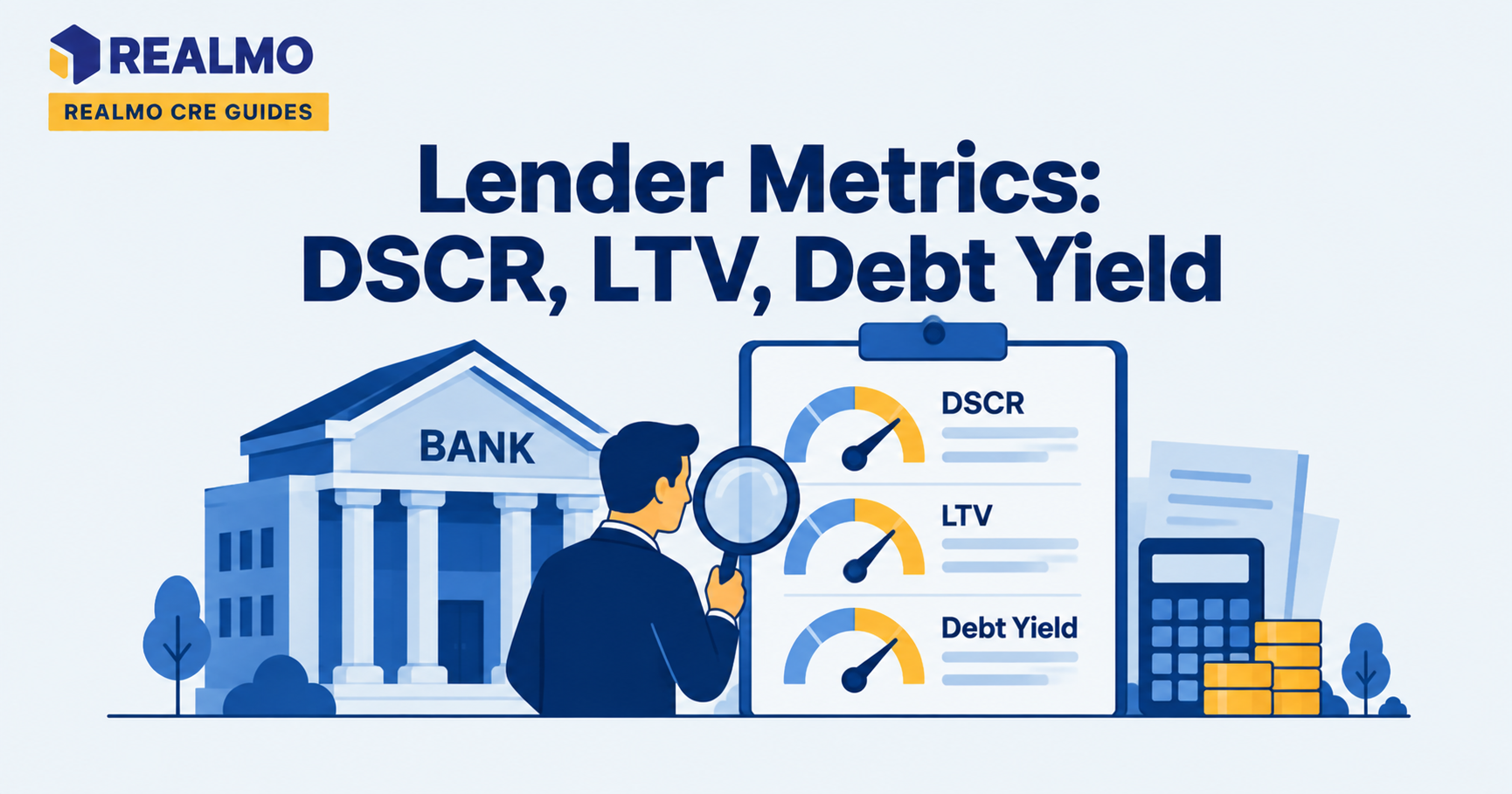
Lenders respond with structure rather than with rate alone. Common tools include an upfront rollover reserve funded at closing, monthly deposits per square foot, and a cash flow sweep that traps excess funds if a major tenant fails to renew by a stated date. Loans on single-tenant assets frequently include a lease expiration trigger tied to the notice deadline, not to the expiration date itself. Miss that distinction and the sweep starts a year earlier than you expected.
Buyers price it through the exit and the hold. They apply a renewal probability to each expiring lease, run downtime and concessions in the year they occur, and carry a general vacancy factor so the model never shows 100% occupancy forever. When rollover clusters near the planned sale date, the exit cap rate assumption gets pushed wider, because the next buyer will face the same schedule.
Ways owners cut rollover exposure before it hits
Staggering is the cheapest defense and it happens at signing, not at renewal. When two tenants want the same five-year term, write one at four years and one at six. Blend-and-extend deals move the risk out early: the tenant gets rent relief now, the owner gets term. Both sides give something up, and both remove a cliff.
Physical work helps too. Demising a large block into two suites with separate entrances raises the tenant pool and lets half the space stay leased through a departure. Watch the lease language on options, notice periods, and relocation rights, because those clauses control the outcome regardless of what the model says. Have counsel review them before you underwrite them.
Common mistakes when analyzing rollover risk
- Measuring expirations by square feet only. Rent-weighted exposure can be double the space-weighted number, and the shortfall shows up in debt service coverage.
- Treating a renewal option as guaranteed income. If the option rent is fixed below market, you have capped your upside; if it is at market, the tenant can still walk.
- Ignoring the notice deadline. Loan sweeps, reserve triggers, and marketing lead time all key off notice dates, which fall 6 to 12 months before expiration.
- Assuming last year’s downtime applies. Re-leasing speed depends on submarket absorption and suite size, and a 3,000 square foot suite behaves nothing like a 30,000 square foot block.
Related terms: rent roll, weighted average lease term, tenant improvement allowance, leasing commission, debt service coverage ratio, net operating income
FAQs
What counts as too much rollover in one year?
There is no fixed threshold, but many buyers flag any single year where more than 20% of base rent expires, and treat 40% or more as a capital event that must be reserved for. The tolerable level depends on submarket leasing velocity, suite divisibility, and whether in-place rents sit above or below market.
How is rollover risk different from vacancy?
Vacancy is space that is empty now. Rollover risk is future income you still collect today but might lose on a known date. A fully occupied building can carry severe rollover risk, which is why occupancy alone tells you almost nothing about the durability of the cash flow.
Do single-tenant net lease properties have rollover risk?
Yes, and it is concentrated rather than reduced. One expiration takes income to zero instead of trimming it. The offset is longer initial terms, stronger tenant credit, and lower operating involvement, so the risk sits further out but arrives all at once when it does.
Can rollover ever help returns?
When in-place rents are below market, expirations let the owner reset to current pricing, and the rent gain can exceed downtime and concession costs. Value-add business plans depend on exactly this. The trade is timing risk: the reset only works if leasing demand holds when the space comes back.