How to Underwrite Commercial Real Estate, Property by Property
To underwrite commercial real estate is to rebuild a property’s income and expenses from primary documents, convert them into forecast cash flows, and test whether those cash flows support the price and the debt. Underwriting produces the buyer’s own numbers , not the broker’s, not the seller’s.
Why Underwriting Decides the Deal, Not the Pitch
An investor receives an offering memorandum for a 40,000-square-foot flex building. The package assumes every vacant suite leases at asking rent. It also carries the seller’s expiring insurance cost and current assessed property taxes. Each assumption can move against the buyer after closing.
Underwriting is the process that catches this before the earnest money goes hard. Rebuild the rent roll from actual leases and the mark-to-market gain may be half of what was advertised. Reassess taxes at the purchase price in a state that reassesses on transfer and the tax line jumps. Add a management fee the seller never charged himself and the net operating income drops again. The price that made sense at the OM’s NOI may fail the lender’s coverage test at yours. That gap , between the story and the model , is the entire reason underwriting exists.
What Underwriting Means in a Commercial Deal
Underwriting sits between the marketing package and the closing table, and it is confused with three other things.
An appraisal is a licensed opinion of value, usually ordered by the lender. It reconciles the income, sales comparison, and cost approaches under the applicable professional standard.
Two methods dominate. Direct capitalization applies a cap rate to one stabilized NOI. Discounted cash flow projects year-by-year cash flows and a residual value. Use DCF when income is uneven. Examples include near-term rollover, lease-up, a below-market anchor rolling in year three, or front-loaded capital spending.
Most institutional underwriting runs both. Direct cap tests current income against current pricing. DCF tests the return if the business plan works. A large gap between them means more value depends on future execution rather than current property income.
How to Underwrite Commercial Real Estate Step by Step
Sequence matters, because each step constrains the next.
Write the business plan before opening the spreadsheet. A stabilized NNN hold, a 30% vacant office lease-up, and a retail repositioning require different assumptions. The NNN deal depends heavily on tenant credit and lease structure. The lease-up deal depends more on leasing assumptions, TI, commissions, and the capital budget.
Build the model in sequence. Rebuild gross potential income from the leases, then apply vacancy and credit loss. Normalize operating expenses and subtract reserves to reach NOI. Size debt against the lender’s binding constraint. Deduct capital items below NOI, set the exit assumption, then compute returns. Back-solving assumptions from a target return turns underwriting into rationalization.
How to Rebuild the Rent Roll and Verify Income
The rent roll a broker supplies is a summary. Underwriting requires abstracting the leases themselves, because the summary drops exactly the fields that change value.
Abstract each lease, not just the rent roll. Capture commencement and expiration dates, current base rent, quoted units, and escalation mechanics. Add remaining free rent, concessions, reimbursements, renewal rights, termination rights, notice dates, exclusives, and co-tenancy clauses. A six-month termination right can change the entire thesis.
Compare contract rent to market rent suite by suite rather than in aggregate. A building can show a large blended mark-to-market gain that is entirely concentrated in one tenant with eight years remaining , meaning the gain is real but unreachable within the hold period. Build a rollover schedule showing what percentage of square footage and of income expires in each year, then ask what happens if the largest expiration in the schedule does not renew.
Vacancy and credit loss are separate deductions. Physical vacancy is empty space. Credit loss is billed rent that never arrives. Examples include a payment plan, a tenant default, or a weakening guarantor. Use the higher structural vacancy assumption when the subject outperforms its submarket.
Verify the model before assumptions harden. Estoppels confirm rent, term, deposits, and landlord-default status directly from tenants. Bank statements or T-12 receipt ledgers test collections. Realmo adds ownership history, prior sale prices, and property-level lease or sale context without a paywall.
How to Normalize Operating Expenses to Market
Historical expenses tell you what the seller paid. Underwriting needs what the buyer will pay, and the two differ systematically.
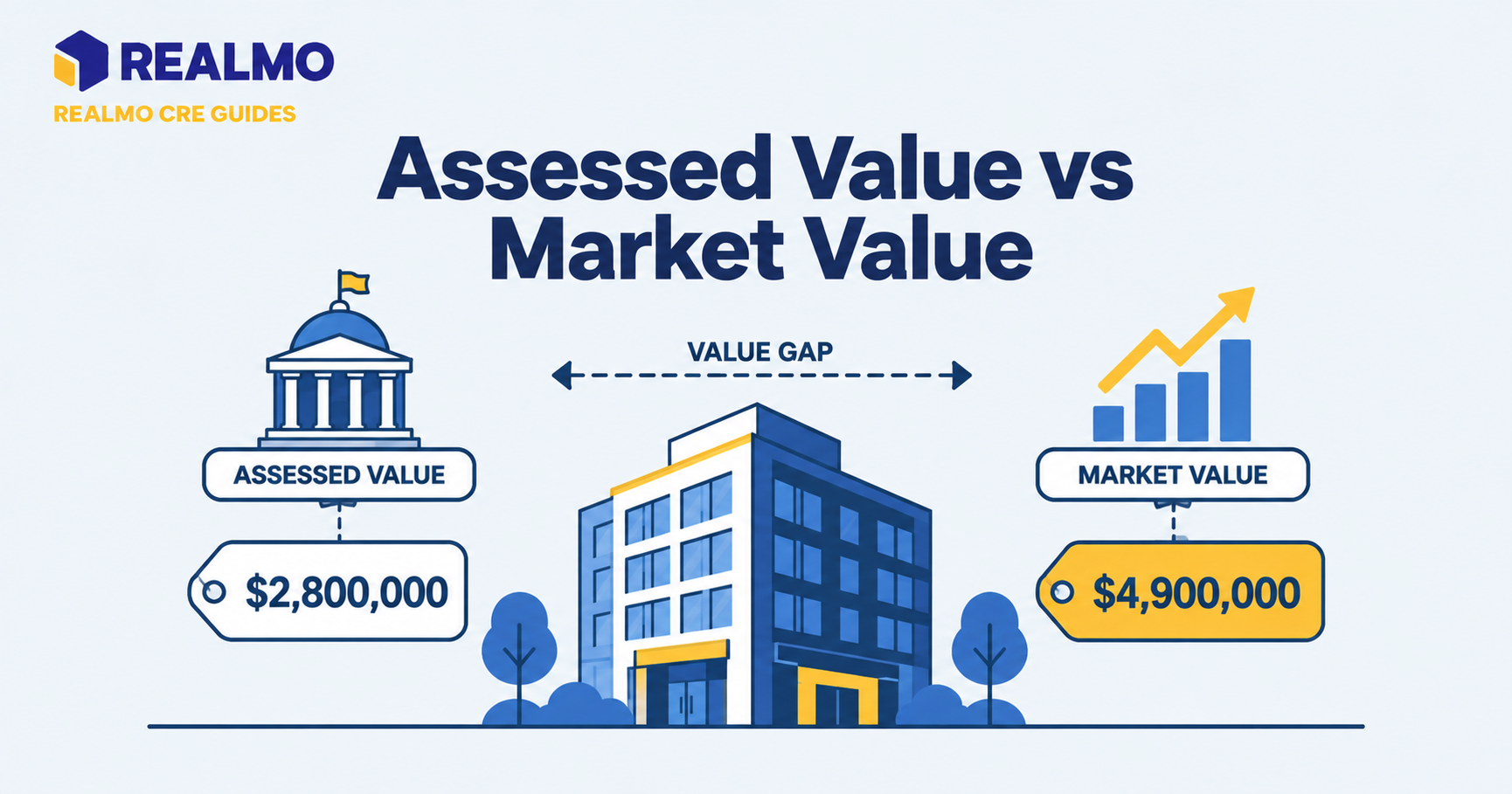
Property taxes can create the largest normalization in a deal. Many U.S. jurisdictions reassess on transfer. Some jurisdictions cap annual assessment growth until ownership changes. A sale can therefore create a large tax step-up.
Insurance is the second. Premiums reset at the buyer’s own placement, with the buyer’s loss history, deductibles, and coverage limits, and coastal or wildfire-exposed assets can price very differently from the seller’s expiring policy. Get a real quote from a broker during due diligence rather than escalating last year’s number.
Management fees belong in the model whether or not the seller charged one. An owner-operator who self-manages has an expense in labor even if it never appears on a P&L, and any future buyer or lender will underwrite a market fee, commonly quoted as a percentage of effective gross income. Leaving it out inflates NOI and therefore inflates the price you can justify.
Separate repairs and maintenance from capital expenditure with a consistent rule, because sellers frequently blur the line. Recurring items that keep the asset running are operating expenses. Roof replacement, parking lot resurfacing, and HVAC unit replacement are capital, and they belong in a capital budget rather than in the R&M line. Replacement reserves , a per-square-foot or per-unit annual allowance for that capital , are treated inconsistently across the industry. Lenders and appraisers commonly deduct reserves above the NOI line; many equity buyers and most brokers present NOI before reserves. Neither convention is wrong, but comparing a reserved NOI to an unreserved cap rate produces a value error, so state which you are using and apply it consistently on both the going-in and the exit.
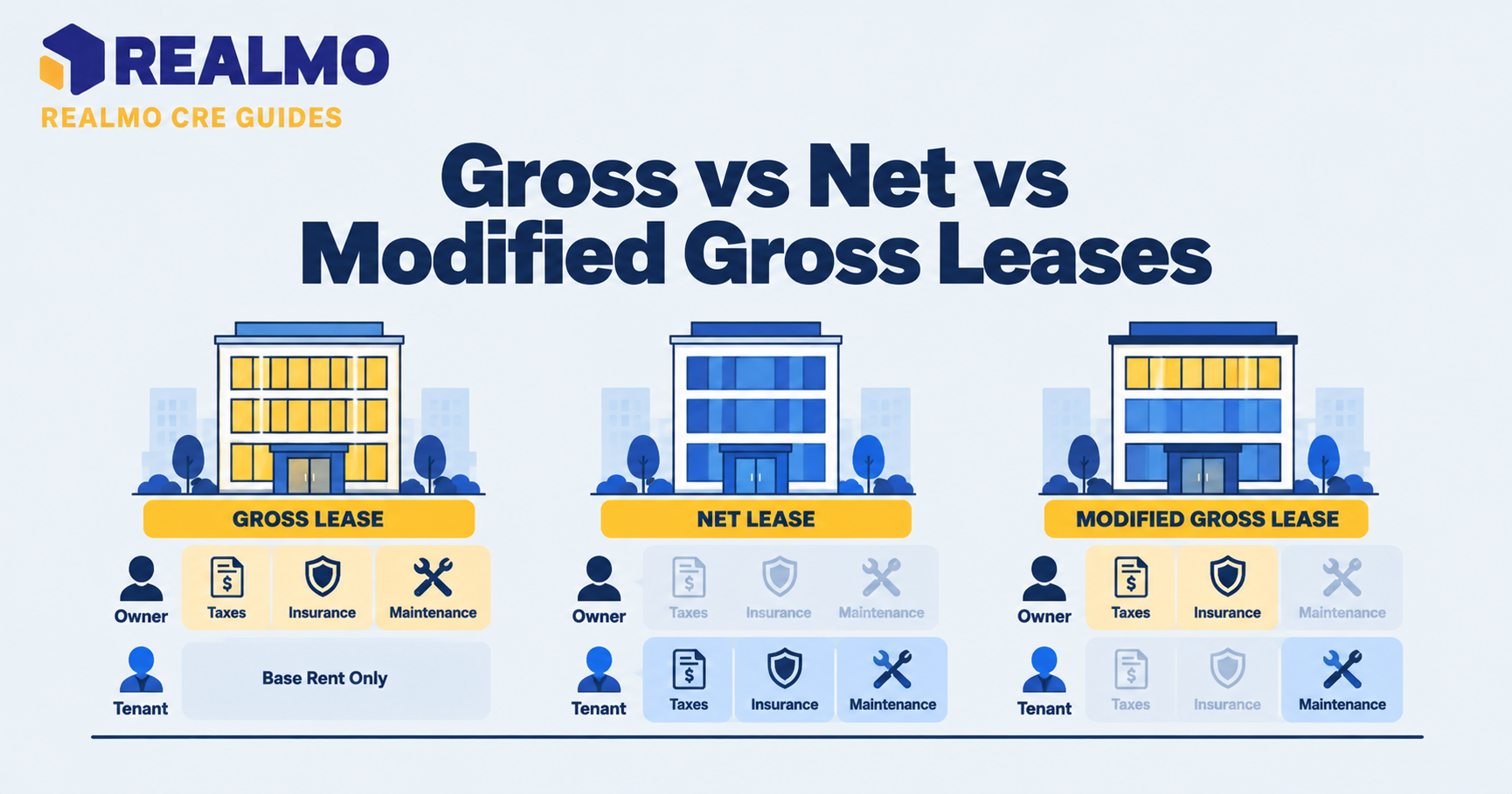
Model the reimbursement clauses in the actual leases. Triple net, modified gross, and full-service gross structures allocate expense risk differently. If a lease contains an expense stop or gross-up, apply its stated occupancy method. Using actual occupancy instead can understate recoveries in a partially vacant building.
How to Size Debt With DSCR and Debt Yield
Lenders constrain proceeds three ways at once, and the loan is sized by whichever constraint binds first, the lowest of the three, not the average.
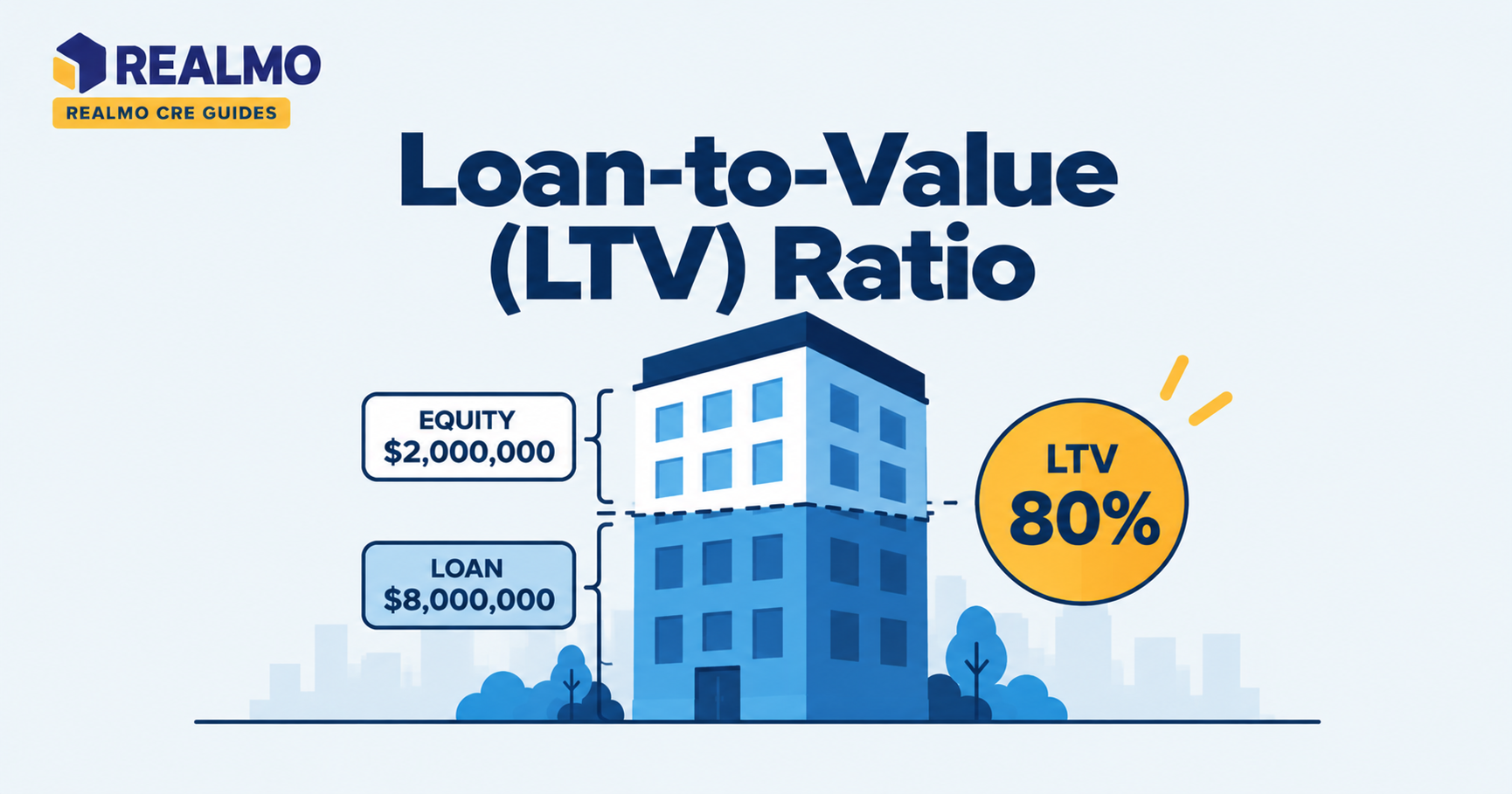
Loan-to-value caps proceeds as a percentage of appraised value. Debt service coverage ratio divides NOI by annual debt service and caps proceeds at the payment the property’s income can cover with a cushion. Debt yield divides NOI by the loan amount and caps proceeds at a level where the lender’s recovery works even if values fall.
DSCR = NOI ÷ Annual Debt Service Debt Yield = NOI ÷ Loan Amount
The difference between the last two is worth understanding, because it explains lender behavior across the cycle. DSCR is sensitive to the interest rate and the amortization schedule; a longer amortization or an interest-only period raises DSCR without changing risk at all. Debt yield ignores rate and amortization entirely and measures the raw return the lender would earn if it took the asset back. When capital markets tighten, debt yield tends to become the binding constraint, and interest-only structures stop rescuing proceeds.
The loan constant, annual debt service divided by the loan balance, is the cleanest way to compare debt cost to asset yield. When the going-in cap rate exceeds the loan constant, leverage is accretive to first-year cash-on-cash return; when it is below, leverage reduces it. This relationship holds regardless of the level of rates, which is why it belongs in an evergreen model while any specific rate does not.
Structure matters as much as sizing. Recourse versus non-recourse changes what happens to the borrower’s balance sheet in a downside. Prepayment protection, yield maintenance or defeasance, can make an early sale expensive enough to override the exit plan. Loan term relative to the rollover schedule determines whether a refinance lands in the middle of a lease-up or after it.
How to Set Exit and Hold Assumptions
The residual value at sale usually accounts for the majority of total return in a levered deal. This makes the exit assumption the single most consequential input in the model, and the least verifiable.
Convention applies the exit cap rate to the NOI of the year following the sale, not the final hold year, because a buyer prices forward income. Deduct selling costs , brokerage commission, transfer taxes where applicable, legal , before computing net proceeds, and repay the outstanding loan balance, which for an amortizing loan is lower than the original principal and for an interest-only loan is not.
Practice splits on the exit cap rate itself. One camp underwrites the exit flat to the going-in cap, arguing that anything else embeds a market call the underwriter has no ability to make. The other expands the exit cap modestly relative to going-in , a spread commonly discussed in the range of 25 to 50 basis points across a typical five-year hold , on the reasoning that the asset is older at exit and that assuming no cap rate movement is itself a directional bet. Both positions are defensible. What is not defensible is compressing the exit cap below going-in without a specific, articulable reason, such as a repositioning that moves the asset into a different quality tier or a tenant credit upgrade that changes the buyer pool.
Hold period should follow the business plan and the loan, not a default five years. A lease-up deal exits when the lease-up is done and the income is proven, because that is when the buyer pool widens. A deal with a ten-year loan and heavy prepayment protection has a natural hold tied to the open prepayment window.
How to Stress Test Before You Sign the PSA
A base case is one scenario. Underwriting requires knowing what breaks first and how much room there is before it breaks.
Stress the variables that move the outcome most. A common grid pairs exit cap rate with rent growth or stabilized occupancy. Read the corners, not only the base case. Calculate break-even occupancy and DSCR at the covenant floor.
Then run the refinance test. Take the projected NOI in the year the loan matures, apply a debt yield and a coverage ratio consistent with conservative lending standards, and check whether the resulting proceeds retire the existing balance. A deal that only refinances at generous terms is a deal with a maturity problem hiding inside it.
Stress the largest tenant separately. If that tenant leaving pushes DSCR below 1.0, the deal has concentration risk. Possible mitigants include lower price, more reserves, a longer loan, an interest-only period, or a rate lock.
Worked Example: Underwriting a 40,000 SF Flex Building
All figures below are illustrative and rounded for clarity. They are not market data and should not be used as benchmarks.
Inputs. A 40,000-square-foot multi-tenant flex building, eight tenants, all leases triple net. Contract base rent averages $14.00 per square foot, producing gross potential base rent of $560,000. Expense reimbursements bill at $180,000, giving gross potential income of $740,000. Purchase price is $7,200,000 with $150,000 in closing costs.
Step 1, Effective gross income. Apply a combined 8% vacancy and credit loss allowance: $740,000 × 0.08 = $59,200. EGI = $740,000 − $59,200 = $680,800.
Normalized operating expenses total $210,000. The inputs are $90,000 of reassessed taxes, $30,000 of insurance, and $60,000 of common area maintenance. Management is about $20,400 at 3% of EGI. Administrative and professional costs add $9,600.
Step 3, Reserves and NOI. Replacement reserves at $0.25 per square foot = $10,000. NOI = $680,800 − $210,000 − $10,000 = $460,800.
Step 4, Going-in cap rate. $460,800 ÷ $7,200,000 = 6.4%.
Step 5, Debt sizing. Assume a loan at 60% loan-to-value: $4,320,000. At an illustrative 6.5% interest rate on a 30-year amortization schedule, annual debt service ≈ $327,700.
Step 6, Coverage tests. DSCR = $460,800 ÷ $327,700 = 1.41. Debt yield = $460,800 ÷ $4,320,000 = 10.7%.
Step 7, Levered cash flow and cash-on-cash. Cash flow before tax = $460,800 − $327,700 = $133,100. Equity invested = ($7,200,000 − $4,320,000) + $150,000 = $3,030,000. Cash-on-cash return = $133,100 ÷ $3,030,000 = 4.4%.
How to read this. The going-in cap of 6.4% sits above the loan constant of roughly 7.6% ($327,700 ÷ $4,320,000)? It does not , the constant is higher, which means this leverage is dilutive to first-year cash flow relative to an all-cash purchase. That is not automatically disqualifying, since amortization builds equity and the business plan may generate NOI growth, but it tells the investor that early returns depend on rent growth rather than on spread.
The capital budget is missing tenant improvements and leasing commissions. Those costs sit below NOI and arrive unevenly. One 8,000-square-foot turnover can consume more than the full $133,100 annual cash flow.
Common Mistakes That Break an Underwriting Model
- Carrying the seller’s property tax bill in a reassessment jurisdiction. The tax line resets on transfer, and the error flows straight into NOI, value, and loan proceeds. Deals have closed and immediately failed coverage tests on this alone.
- Omitting a management fee because the seller self-manages. NOI is overstated by the fee amount, which at a 6% cap rate inflates justified value by roughly seventeen times the annual fee. Every future buyer will underwrite it back in.
- Assuming full renewal probability on rolling leases. Renewals cost less than new leases, but they are not free and they are not certain. Underwriting 100% renewal with zero downtime and zero TI eliminates the largest recurring capital cost in the model.
- Compressing the exit cap below going-in converts a market forecast into return. Residual value drives much of a levered IRR. Even a small cap-rate compression can create a large, unearned increase in the headline return.
- Mixing reserved and unreserved NOI breaks valuation consistency. Applying an unreserved comparable cap rate to reserve-deducted NOI undervalues the asset. Reversing that mismatch overvalues it.
Related Terms
Net operating income · Cap rate · Debt service coverage ratio · Debt yield · Cash-on-cash return · Internal rate of return · Operating expense ratio · Tenant improvement allowance
Underwriting touches tax treatment, entity structure, and lending documentation. Confirm the tax and legal consequences of any specific transaction with a licensed CPA and a real estate attorney in the relevant jurisdiction.
Frequently Asked Questions
What is the difference between underwriting and an appraisal?
An appraisal is a licensed valuation opinion prepared to a professional standard, usually commissioned by the lender. Underwriting is the buyer’s own analysis of income, expenses, debt capacity, and return under a specific business plan. An appraisal answers what the property is worth; underwriting answers whether this price and this loan work for this investor.
How long does it take to underwrite a commercial property?
A preliminary screen on a stabilized asset can take a few hours once the rent roll and trailing financials arrive. Full underwriting continues through due diligence. Estoppels, tax records, insurance quotes, and inspection reports can change the model as they arrive.
What documents do I need to underwrite a deal?
At minimum, collect the current rent roll and every executed lease or amendment. Add T-12 and T-3 operating statements plus two to three years of annual financials. Include property tax records, insurance and loss runs, utility bills, service contracts, and capital expenditure history.
Should replacement reserves be deducted before or after NOI?
Replacement reserve treatment has two conventions. Lenders and appraisers can deduct reserves above NOI. Brokers and equity sponsors can present NOI before reserves. Consistency matters. Apply one treatment to both NOI and the comparable cap rates used for valuation.
What DSCR do lenders require?
There is no single DSCR requirement across U.S. CRE. Asset type, tenant credit, loan program, and credit conditions change the threshold. Lenders size proceeds to the binding constraint among LTV, DSCR, and debt yield. Debt yield can become binding when credit tightens.