Loan-to-Value Ratio in Commercial Lending
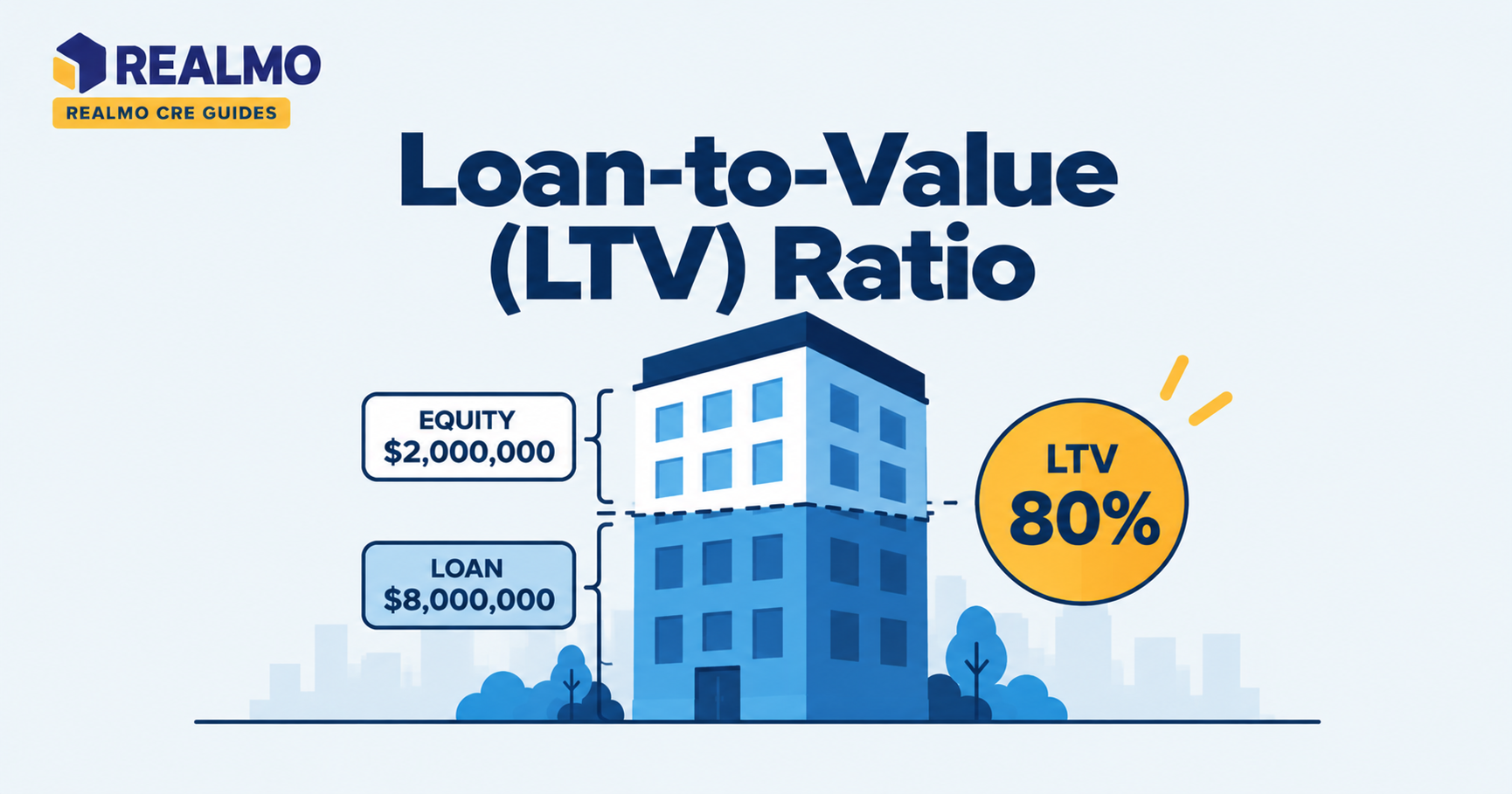
Loan-to-value ratio (LTV) measures loan amount against appraised property value, expressed as a percentage. In commercial real estate, LTV sets the ceiling on how much debt a lender will place on a building. A $2.6 million loan on a $4 million appraised value equals 65% LTV.
LTV = Loan Amount ÷ Appraised Property Value × 100
Why LTV decides what an owner can actually do
An owner with a stabilized retail strip center wants to pull cash out to fund a roof replacement and re-tenant a vacant bay. The building performs well, the rent roll is clean, and the owner assumes the refinance is routine. The lender's appraisal comes back below what the owner expected, and the maximum loan at the lender's LTV cap lands under the existing payoff balance. The owner now needs cash at closing instead of receiving it.
That sequence plays out constantly. LTV governs refinance proceeds, cash-out capacity, and whether a maturing loan can be replaced without fresh equity. It also drives pricing: lower LTV usually earns better spreads and softer covenants because the lender's downside cushion is thicker. Owners who track LTV between financings, rather than discovering it during underwriting, keep control of the timing.
Calculating LTV for commercial real estate loans
LTV divides the loan amount by the property's appraised value:
LTV = Loan Amount ÷ Appraised Value
The denominator is the lender's number, not the owner's. It comes from a third-party appraisal ordered by the lender and reviewed internally, commonly supported by the income approach for income-producing assets and cross-checked against comparable sales. On an acquisition, most lenders use the lesser of appraised value or purchase price, which removes any benefit from a below-market appraisal argument.
Two related ratios frequently appear alongside LTV. Loan-to-cost (LTC) divides the loan by total project cost including acquisition, hard costs, soft costs, and carry , the controlling metric on construction deals where there is no stabilized value yet. Combined LTV (CLTV) adds mezzanine debt, seller financing, or a second position to the senior balance, and lenders test it because subordinate debt raises total risk even when the first mortgage looks conservative. For the full ratio set lenders run together, see commercial real estate investment metrics.
Why appraised value, not asking price, sets your ceiling
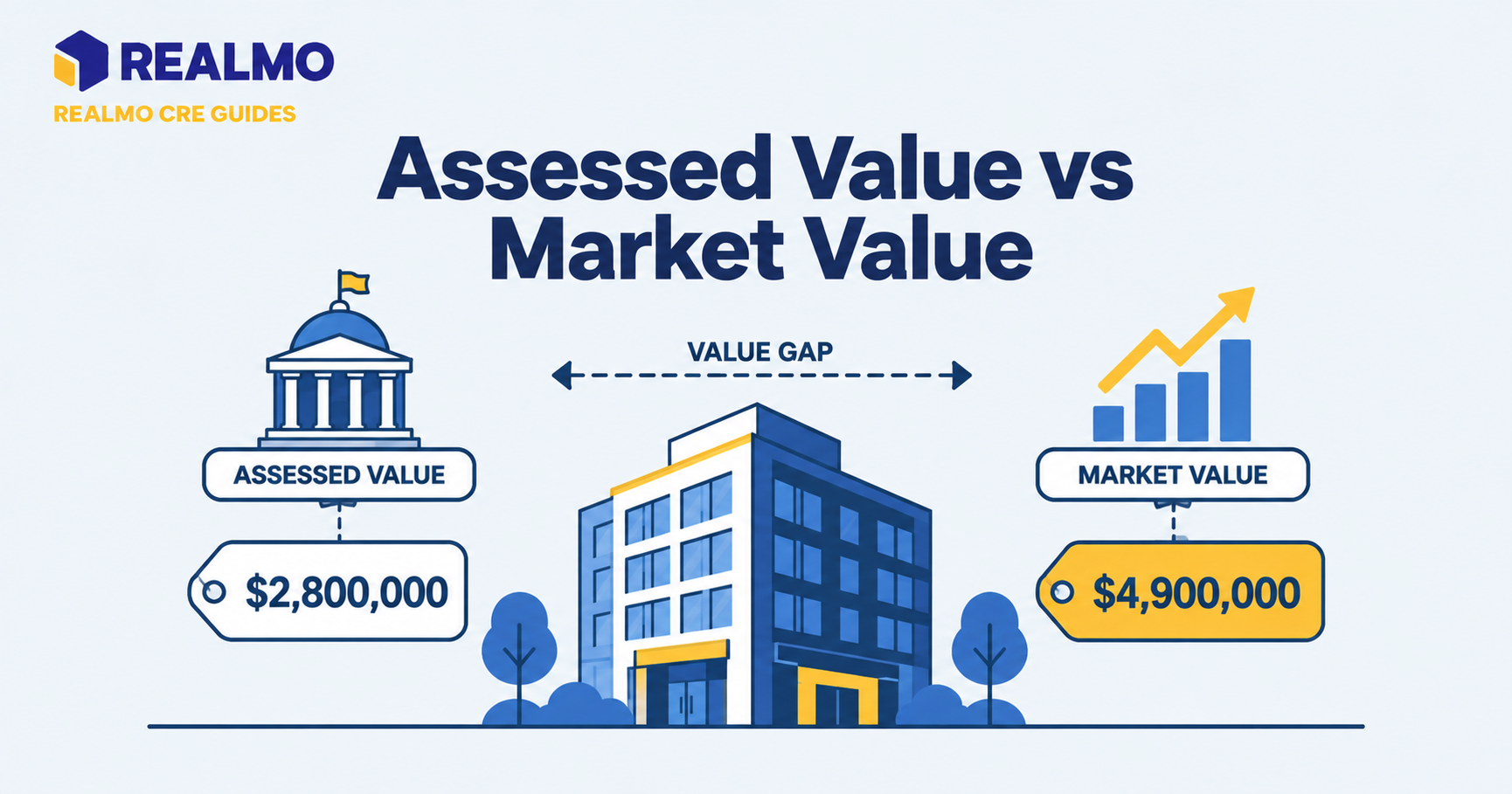
Owners routinely anchor to what they paid, what a neighbor sold for, or what a broker's opinion of value suggested. None of those bind the lender. The appraised value used in the LTV test reflects a specific date, a specific set of comparables, and stated assumptions about vacancy, market rent, and capital needs.
A few conditions push appraised value below owner expectations: below-market in-place rents on long leases, deferred maintenance the appraiser deducts as a capital reserve, short remaining lease terms with a single tenant carrying most of the income, or shifts in the capitalization rate applied to net operating income. Because value sits in the denominator, a modest change in the applied cap rate moves the maximum loan by more than most owners expect.
Forming an early view of value helps. Realmo's property-level value estimates and ownership records let an owner sanity-check the likely appraised range and identify comparable sales before paying for an appraisal, which is useful when deciding whether to refinance now or wait for a lease renewal to season.
LTV limits by property type and lender
There is no universal cap. Lenders set maximum LTV by asset type, borrower strength, and their own capital rules, and the pattern is consistent even as specific thresholds shift.
Stabilized multifamily supports the highest leverage. Agency lenders operating under Fannie Mae and Freddie Mac multifamily programs, along with FHA-insured HUD (Department of Housing and Urban Development) programs, allow more debt than a typical bank. This is because the collateral has deep tenant demand and standardized underwriting. Industrial and grocery-anchored retail with credit tenants sit in the middle. Hospitality and special-purpose assets, self-storage conversions, restaurants, medical with heavy tenant improvements, draw the lowest caps. This is because operating income is volatile and the resale buyer pool is thin.
Lender type matters as much as property type. Life insurance companies price aggressively but underwrite to conservative leverage. Banks and credit unions land in the middle and frequently add recourse. Debt funds and bridge lenders will go higher on total proceeds, usually as loan-to-cost on a business plan rather than LTV on stabilized value, and price accordingly. SBA (Small Business Administration) 504 financing for owner-occupied property reaches high total leverage through a structure that splits the debt between a bank first mortgage and a subordinate CDC debenture, with the owner contributing the remainder. Confirm current program terms and limits with a licensed lender before relying on any structure.
How LTV works alongside DSCR and debt yield
LTV rarely binds alone. Lenders run it in parallel with debt service coverage ratio and debt yield, then size to whichever test produces the smallest loan.
The three measure different risks. LTV asks what happens if the lender must sell the asset. DSCR asks whether the property's net operating income covers the payment. Debt yield strips out both the interest rate and the amortization period by dividing NOI by loan amount. This prevents cheap debt from disguising thin cash flow. When rates rise, DSCR tends to bind first even though nothing about LTV changed.
Worked example: sizing a refinance against the LTV cap
All figures below are illustrative and rounded.
An owner refinances a multi-tenant industrial building. Appraised value comes in at $4,000,000. NOI is $280,000. The lender caps LTV at 65% and requires a 1.25x DSCR, using an illustrative annual debt constant of 8% (the combined principal and interest payment as a percentage of loan balance).
Step 1, LTV test: $4,000,000 × 65% = $2,600,000 maximum loan. Step 2, DSCR test: $280,000 ÷ 1.25 = $224,000 of allowable annual debt service. Divided by the 8% constant: $2,800,000 maximum loan. Step 3, Take the lower: $2,600,000. LTV binds.
The existing loan payoff is $2,750,000. Instead of cash out, the owner brings roughly $150,000 plus closing costs to the table. Interpreting the result: the property covers its debt comfortably, but the value cushion the lender requires is thinner than the cash flow cushion , an equity problem, not an operations problem.
The mistake to avoid here is running the DSCR test first, seeing $2.8 million, and budgeting against it. The binding constraint is always the smaller number, and owners who plan around the friendlier test arrive at closing short.
Common LTV mistakes that cost owners money
- Underwriting to your own value estimate. Building a refinance plan around an unverified value creates a proceeds gap discovered days before closing, when repricing or extending is expensive.
- Ignoring subordinate debt in the total. A seller note or mezzanine piece raises CLTV above the senior lender's tolerance and can trigger a covenant breach or block the refinance outright.
- Letting lease term run down before refinancing. Short remaining term on a major tenant reduces appraised value and triggers a lower LTV cap at the same time, compounding the shortfall.
- Treating maximum leverage as the goal. Higher LTV means thinner cushion, so a modest dip in occupancy pushes the loan out of covenant compliance and into cash management or a technical default.
- Forgetting that value resets at maturity. A loan that closed at conservative LTV can sit above the cap years later if cap rates moved. This converts a routine loan maturity into a capital call.
LTV questions owners ask most
What LTV can I expect on a commercial property? It depends on asset type, lender, and borrower strength rather than a single market standard. Stabilized multifamily supports the most leverage, industrial and credit-tenant retail less, and hospitality or special-purpose assets the least. Ask a prospective lender for their current cap on your specific property type before ordering an appraisal.
Is LTV based on purchase price or appraised value? On acquisitions, lenders use the lesser of the two, so a purchase above appraised value increases the equity required. On refinances, appraised value controls, which is why owners can be surprised when a property they bought. Years ago no longer supports the proceeds they expected.
How is LTV different from LTC? LTV compares the loan to stabilized property value; LTC compares it to total project cost. Construction and heavy value-add deals size on LTC. This is because there is no stabilized value yet, then convert to an LTV test at permanent loan takeout once the property stabilizes.
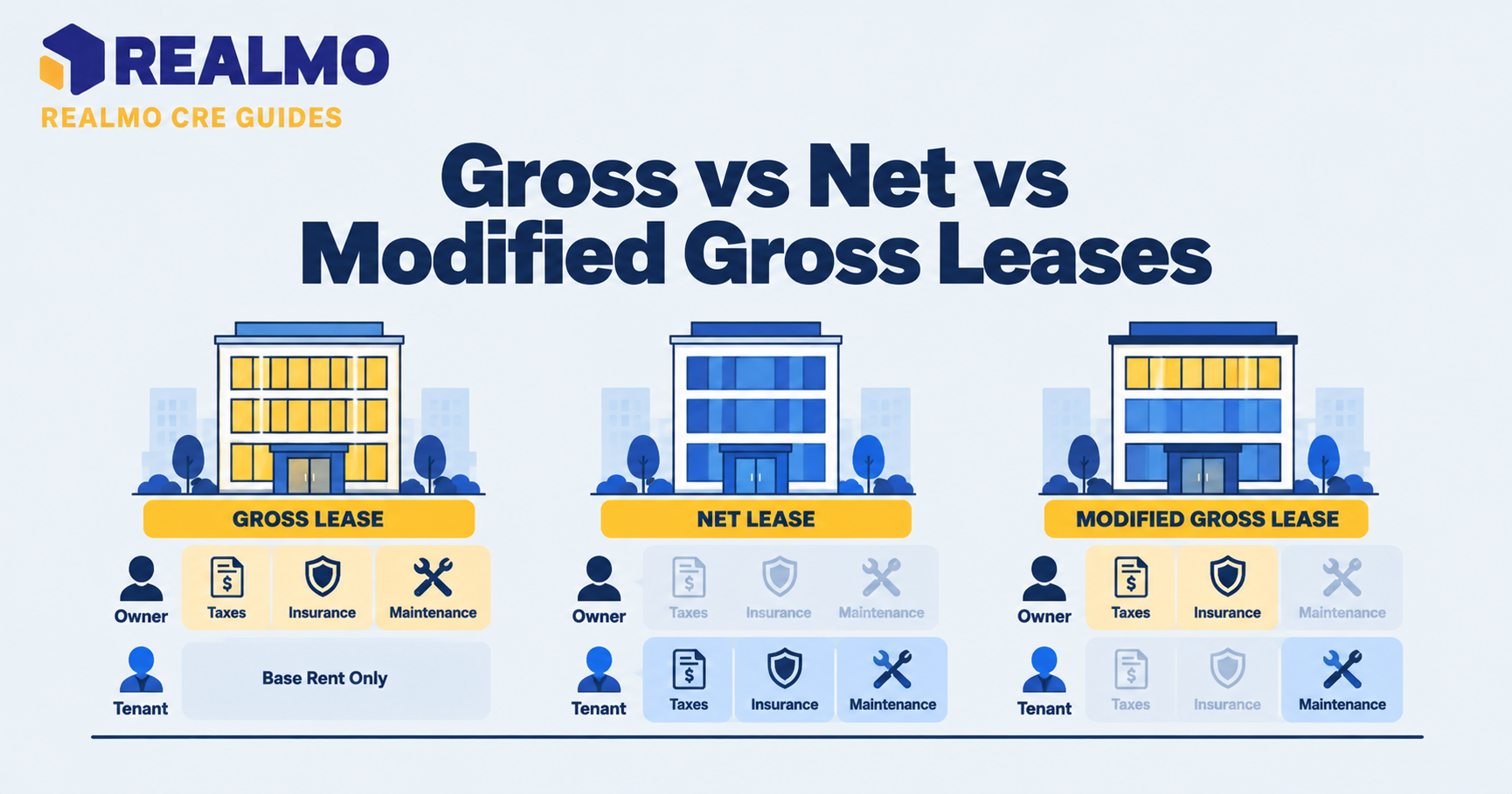
Can I lower my LTV without paying down principal?
Yes , raising net operating income raises appraised value, which lowers LTV at the same loan balance. Signing a longer-term tenant, burning off free rent, converting gross leases to triple net, or cutting controllable operating expenses all move the denominator in your favor.
Related terms
Debt service coverage ratio (DSCR) · Debt yield · Cap rate · Net operating income (NOI) · Loan-to-cost (LTC) · Commercial appraisal methods · Recourse vs. non-recourse debt