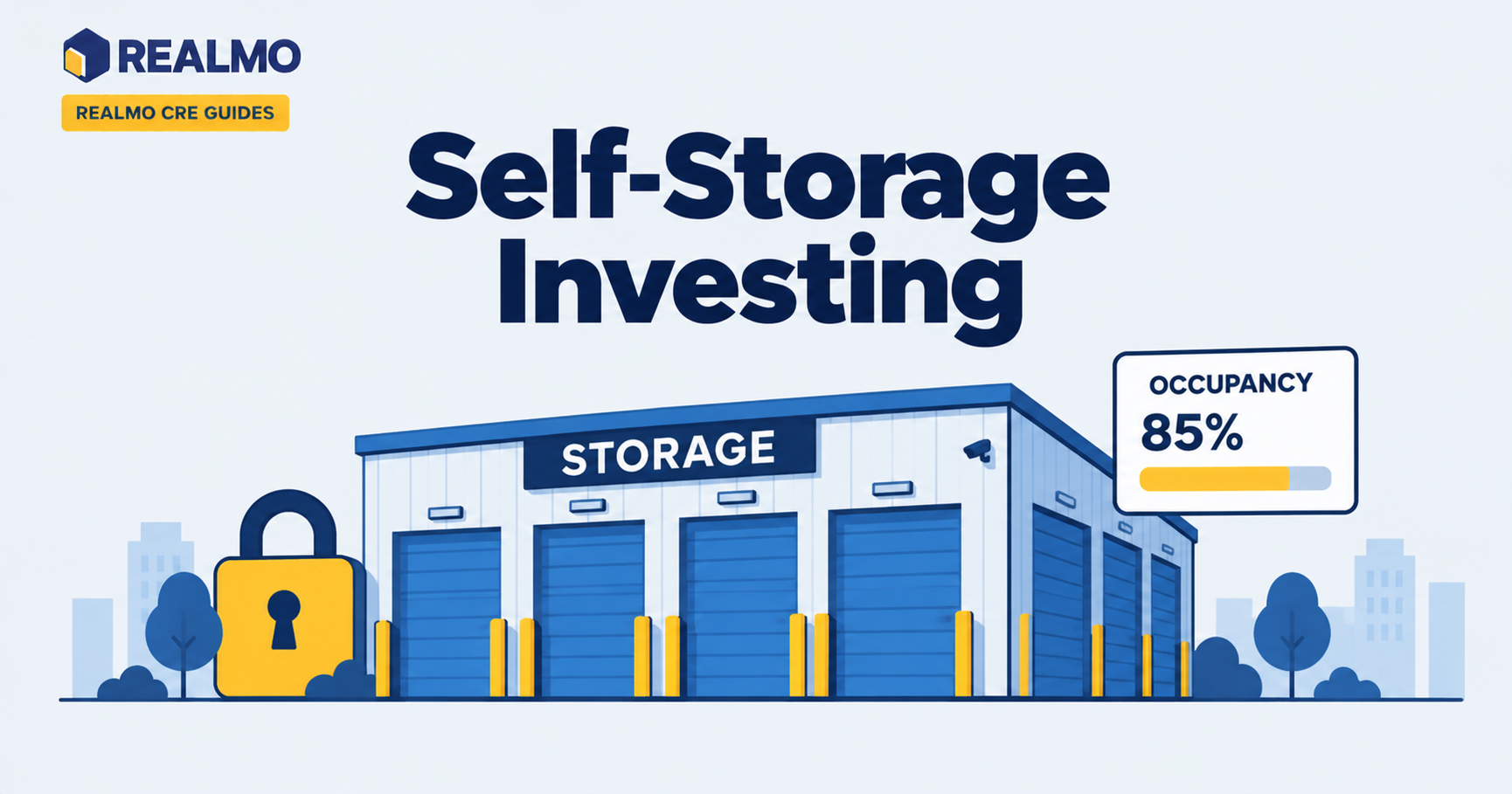
Passive vs Active Commercial Real Estate Investing
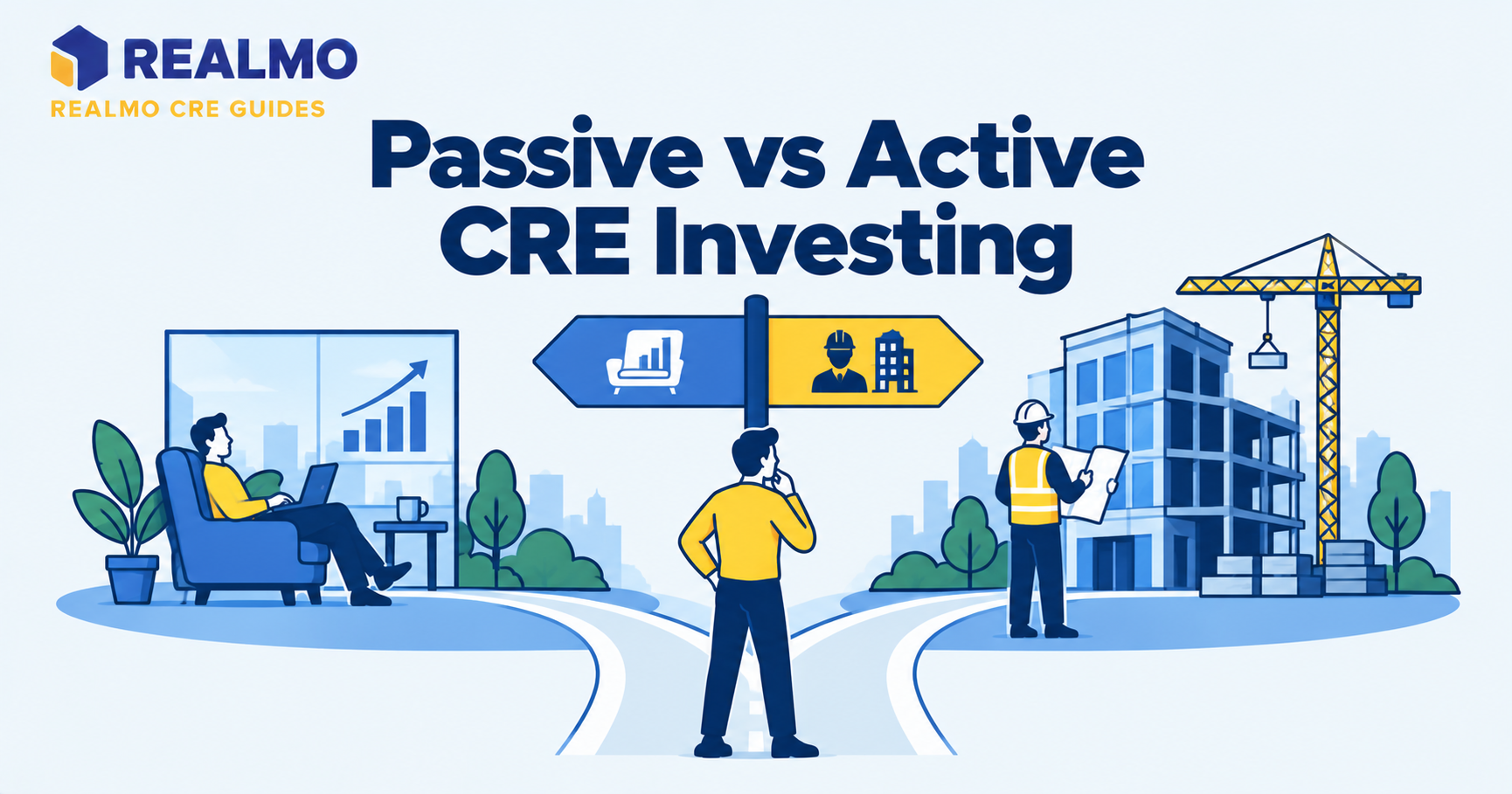
Passive commercial real estate investing means owning an interest in commercial property without operating it. You supply capital, and a sponsor, fund manager, or REIT handles acquisition, financing, leasing, and disposition. Active investing means holding the decision rights: you select the asset, sign the loan, hire the leasing team, and own the outcome.
Why the choice shapes everything after it
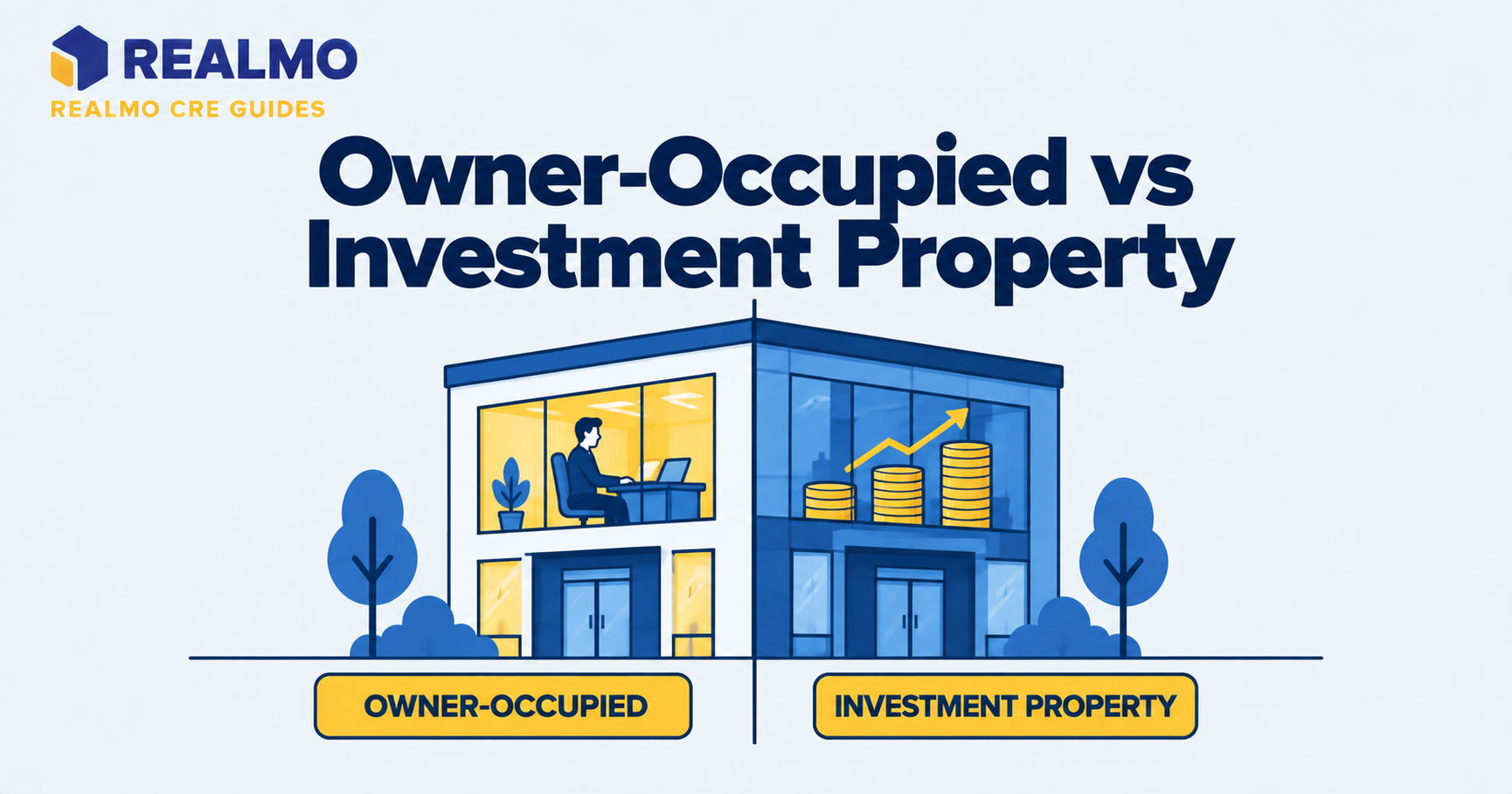
An investor with $200,000 and a full-time job faces two versions of the same deal. In one, that money buys a limited partner position in a sponsor’s multi-tenant industrial acquisition. It brings quarterly distributions, a K-1 each spring, and no phone calls when the roof leaks. In the other, it becomes the down payment plus reserves on a small flex building. The investor owns that building outright, signs a recourse guaranty for it, and manages it personally.
The gross economics of the underlying real estate can be nearly identical. What differs is who captures the fees, who carries the liability, who controls the exit timing, and how many hours the position consumes. Investors who pick a path based on projected returns alone usually discover the mismatch two years in. By then, the workload or the lack of control has become the binding constraint, not the yield.
What counts as a passive position
Passive exposure runs along a spectrum rather than a single category. Publicly traded REITs sit at one end: daily liquidity, market pricing, and zero involvement in any individual asset. Private structures sit further along that spectrum: syndication LP interests, private equity real estate funds, Delaware Statutory Trusts, and debt or preferred equity funds. Each offers asset-level exposure without asset-level control.
The practical marker is not effort but authority. If you cannot approve a lease, replace the property manager, refinance, or force a sale, the position is passive. That holds regardless of how many hours you spend reading reports. A single-tenant NNN lease property owned directly with a third-party manager is commonly called passive, but it is not. You still sign the loan, approve capital projects, and decide when to sell.
Passive returns also arrive net of someone else’s compensation. Acquisition fees, asset management fees, disposition fees, and the sponsor’s promote all sit between property performance and your distribution.
What active ownership actually requires
Active ownership is an operating business attached to an asset. Sourcing and underwriting come first, then negotiating the capital stack, usually with a personal guaranty on the loan. After closing, the work shifts to leasing, tenant relations, vendor management, insurance, tax appeals, and capital projects. Bookkeeping has to be precise enough to survive a lender’s annual review.
The compensation for that work is real. An active owner keeps the fees a sponsor would charge and controls hold period and refinancing timing. That owner can also create value through leasing and repositioning, rather than waiting for market movement. The skill also compounds: the second deal underwrites faster than the first.
The costs are equally real. They include concentration in one asset, recourse exposure, illiquidity without a buyer, and a workload that spikes precisely when a major tenant leaves.
How the IRS treats passive and active property income
Tax classification follows a separate rulebook from the plain-English meaning of “passive.” Under IRC §469, rental activity counts as passive by default. Losses from passive activities can offset only passive income, with the excess suspended until you generate passive income or dispose of the activity. IRS Publication 925 covers the mechanics and the material participation tests.
Two exceptions matter to active owners. Real estate professional status requires more than 750 hours in real property trades or businesses. It also requires more than half of all personal services performed in those businesses. Meeting both tests can convert rental losses into losses usable against other income. Short-term rental and certain non-rental structures follow different rules. Limited partners in syndications rarely meet material participation standards. Their depreciation benefits, including accelerated deductions from cost segregation on a 39-year commercial asset, usually shelter deal income rather than salary.
REIT dividends work differently again. They are reported on a 1099-DIV, not a K-1, and a REIT must distribute at least 90% of its taxable income under IRC §857. Confirm any of this with a licensed CPA before it drives a decision.
Syndications, REITs, funds, and direct deals compared
Traded REITs give liquidity and diversification but price with equities, which means your quarterly statement moves for reasons unrelated to the buildings. Private syndications offer asset-level specificity and control over which market and property type you enter. That control comes at the cost of a multi-year lockup and total dependence on sponsor competence. Most are offered under Reg D Rule 506(b) or 506(c) and limited to accredited investors as defined in SEC Rule 501. Verify the current definition, since the criteria have been revised.
Funds spread sponsor risk across several assets but blur your ability to underwrite any single one. DSTs serve a narrow purpose: they qualify as replacement property in a 1031 exchange under Rev. Rul. 2004-86. That lets an exiting active owner defer gain while going passive.
Direct ownership remains the only structure where underwriting skill translates directly into return. Whether you are diligencing a sponsor’s target market or a building you plan to bid on yourself, the same check applies. Realmo’s ownership records and valuation data let you check the story against the asset before capital is committed.
Worked example: one asset, two ownership paths
Illustrative figures, chosen for round math rather than current market conditions.
An $800,000 property produces $60,000 of NOI. A $600,000 loan at an 8% mortgage constant costs $48,000 annually, leaving $12,000 of cash flow on $200,000 of equity, a 6% cash-on-cash return.
- Passive path: the same $200,000 goes into a syndication owning that asset. The sponsor charges a 2% annual asset management fee on equity ($4,000), leaving $8,000, or 4%. Because that falls below a typical 8% preferred return, the shortfall accrues and no promote is paid. Investor time: roughly 5 hours a year reading reports.
- Active path: the investor owns the building directly, pays no sponsor fees, and keeps the full $12,000. Investor time: roughly 120 hours a year on leasing, vendors, and books, plus a personal guaranty on the loan.
The difference is $4,000 a year for about 115 additional hours. That’s implied compensation near $35 per hour, before accounting for the guaranty and the concentration risk. Interpretation: active ownership pays for labor and risk-bearing, not simply for being an owner. If your hourly rate elsewhere exceeds that figure and you do not intend to build operating skill, the fee is buying something. You would otherwise have to provide that yourself.
The frequent error is comparing a sponsor’s projected gross returns to a direct deal’s net returns. Compare like to like: after all fees, after your own time valued honestly.
Common mistakes investors make choosing a path
- Treating “passive” as “no diligence.” The sponsor is the investment. Skipping track record verification, alignment review, and fee-stack analysis converts a passive position into an uncontrolled one.
- Ignoring liquidity mismatch. Private positions commonly lock capital for a multi-year hold, and sponsors can extend. Money needed inside that window belongs somewhere else.
- Assuming losses offset W-2 income. Passive losses suspend under §469, so a tax strategy built on that assumption fails at filing.
- Going active for control while outsourcing every function. Paying a manager, broker, and bookkeeper while holding recourse debt gives you a passive workload with active liability.
- Confusing property risk with structure risk. A great asset in a poorly aligned partnership can still deliver a poor investor outcome.
Related terms: cap rate · real estate syndication · recourse vs non-recourse loans · equity multiple · sponsor promote · REIT
FAQs
Can you invest in commercial real estate without managing property?
Yes. Traded REITs, private funds, syndication LP interests, DSTs, and real estate debt funds all provide ownership exposure while a manager or sponsor operates the assets. You give up control over leasing, financing, and sale timing, and your returns arrive net of the manager’s fees and profit participation.
How much capital do you need to invest passively?
It depends entirely on structure. Traded REITs require only the price of a share. Private syndications and funds set their own minimums, which run far higher. Most private offerings also restrict participation to accredited investors under SEC Rule 501. Check each offering’s documents rather than assuming a market standard.
Do passive investors get depreciation benefits?
Usually yes, but with limits. LP investors receive their share of depreciation on a K-1, and it can shelter distributions from that deal. Because limited partners rarely meet material participation tests, excess losses suspend under §469 rather than offsetting wages. REIT investors receive no pass-through depreciation.
Is buying a NNN property with a property manager passive?
Not in the meaningful sense. You still sign the loan, approve capital expenditures, handle re-tenanting risk, and decide when to sell. The day-to-day workload is light, but the decision authority and liability remain yours, which is the distinction that matters for both risk and tax treatment.
Can you move from active to passive ownership without triggering tax?
A 1031 exchange into a DST is the common route, since DSTs qualify as replacement property under Rev. Rul. 2004-86. Strict identification and closing deadlines of 45 and 180 days apply, and DST interests are illiquid. A licensed tax advisor and qualified intermediary should be engaged before you list the relinquished property.