Entity Owned
 Ownership intelligence
Owner of record from public deeds, plus portfolio, hold profile and investor signals where the data supports them. In the full report.
Owner contacts
Skip-traced phones and e-mails of the owner. Included with the full report.
Mortgages
Recorded lenders, amounts and estimated maturities of the owner's loan book — in the full report.
Property tax · 2023
Value estimate
· Sep 2026Realmo valuation models over county records.
Recently sold
Cap rate analysis
No income signal is modeled for this parcel yet — the Cap Rates tab runs the workflow.
Zoning insight
Location intelligence
Demand index: how under-served this business type is around this point — modeled from the LocInt grid (area demand vs. what already operates, adjusted by real visit traffic). Higher means stronger unmet demand.
Location
Every figure names its source: public record, benchmark, or modeled. Coverage varies by property — thin data is stated as missing, never invented.
Comparables
6 recorded sales · 15 properties nearbyComparable nearby


Similar Nearby for Sale

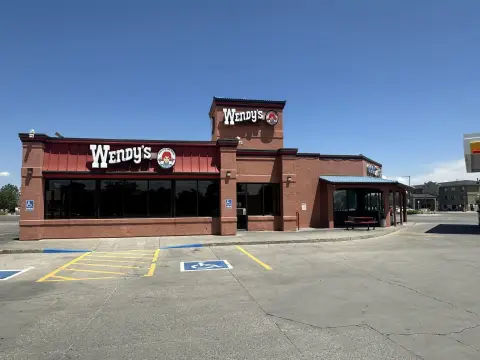


Similar Nearby for Lease
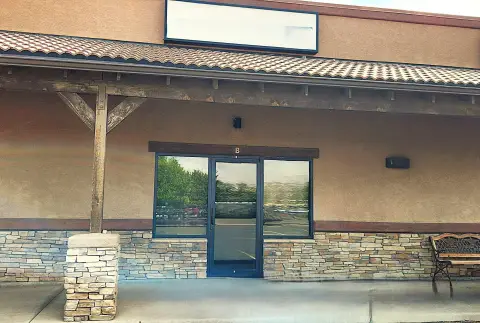
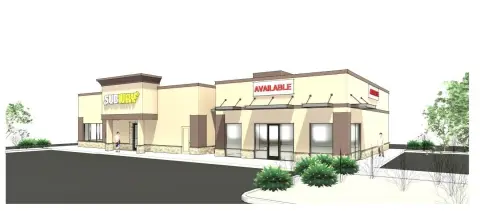

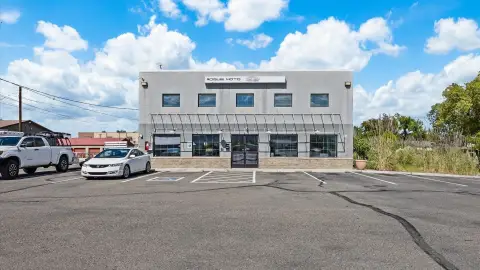

Instant AI valuation built from comps, income signals, and proprietary benchmarks.A defensible range, not a single guess.
from $99/month
- GBA
- 900 SF
- Lot area
- 0.75 ac
- Year built
- 2019
- Stories
- 1
- APN
- 2697-173-00-004
- Zoning
- DMU
- Assessed value · 2023
- $66,470
- Annual tax · 2023
- $5,422
Cap rate calculated from real income and expense signals, benchmarked against sales of similar assets nearby.
from $99/month
Price sensitivity
The rate is the decision lever; valuation is the consequence.
The recorded zoning designation, what the district officially allows, and the municipal source it comes from.
Zoning designation
Registration is required before the official district profile is shown.
Official district profile
Overlay, and in the Downtown Mixed Use (DMU), and Commercial-1 (C-1) zones. Accessory dwelling units must be located on a lot that contains a principle single-family dwelling unit and cannot exceed one thousand (1,000) s…
Phones and e-mails of the people behind this property's owner, traced from licensed contact data.
Owner phones and e-mails come with the full report for this property - traced from licensed contact data, with verification and Do-Not-Call flags on every number.
Unlock the evidence behind ownership: portfolio, transactions, debt and any signals we can model, to help you decide who to contact next.
Registration is required before any owner information is shown.
The mortgage data is behind the paid report: recorded loans of the owner - lender, amount, rate and the estimated maturity - as part of the Ownership Intelligence workspace.
Registration is required before any owner information is shown.
- Ownership
- Owner Contacts
- Full Property Data
- Historical Records
- Value Estimation
- NOI Potential
- Cap Rate Calculation
- Location Insight
- Alternative use
- Local Zoning Insight
Cancel anytime.
- 30 reports a month
- Ownership
- Owner Contacts
- Location Analytics
- Everything in the Light report
- Full Property Data
- Historical Records
- Value Estimation
- NOI Potential
- Cap Rate Calculation
- Location Insight
- Alternative use
- Local Zoning Insight
Cancel anytime.
- 300 reports a month
- Ownership
- Owner Contacts
- Location Analytics
- Everything in the Light report
- Full Property Data
- Historical Records
- Value Estimation
- NOI Potential
- Cap Rate Calculation
- Location Insight
- Alternative use
- Local Zoning Insight
and get 1 Light Report
- Full Property Data
- Historical Records
- Value Estimation
- NOI Potential
- Cap Rate Calculation
- Location Insight
- Alternative use
- Local Zoning Insight
The PDF can’t be displayed here
Use Download PDF or Open in new tab above to view the sample report.