Unique Conversions: A Guide to Buying a Church Building
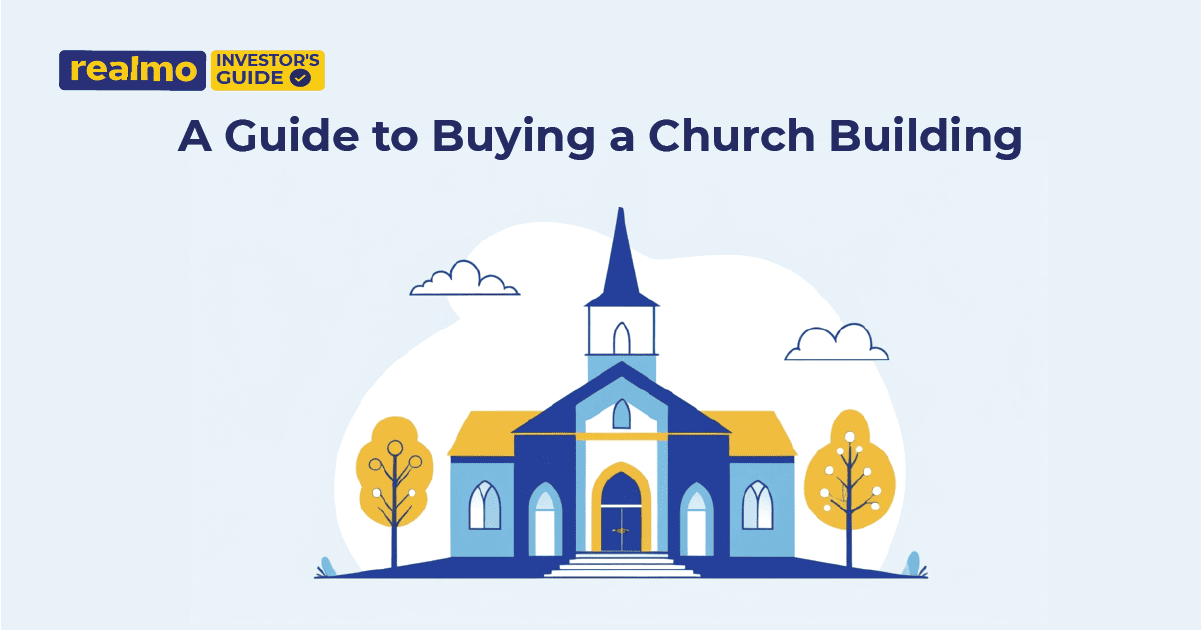
For the sophisticated investor, commercial real estate is often defined by predictability: standardized leases, credit tenants, and generic floor plates. The existing church asset class defies this reliability. Churches are “special use” assets—purpose-built facilities that do not conform to standard retail or office valuations. Whether you represent a religious organization seeking a permanent home or a developer eyeing unique conversions, buying a church requires a customized acquisition playbook.
The complexity here is the opportunity. Because these properties often sit outside the mandate of institutional funds, the market is less efficient, allowing savvy buyers to acquire prime acreage or architectural gems below replacement cost. However, the operational risks are distinct. You are not just buying square footage; you are acquiring a facility with unique zoning constraints, variable occupancy loads, and specialized maintenance needs. Successful acquisition requires moving beyond price-per-square-foot analysis to understand the functional utility of the special use asset.
Phase 1: Financial Feasibility & Lending Metrics
The Debt Service Coverage Ratio (DSCR) for Churches
Simple Definition: The Debt Service Coverage Ratio (DSCR) measures the cash flow available to pay current debt obligations. In this context, it is the ratio of the church or entity’s net operating income to its total debt service.
Why It Matters: Borrowing Power
Lenders view religious facilities as higher-risk, single-tenant assets without corporate guarantees. Understanding your borrowing power begins here. Unlike multifamily assets where projected rents can justify the loan, a church lender underwrites the historical stability of the congregation’s giving units.
A standard commercial loan might accept a 1.25x DSCR, but church lenders often require stricter adherence to coverage ratios to buffer against the volatility of donation-based revenue. If the entity cannot demonstrate a DSCR between 1.0 and 1.35, financing options will be limited to high-interest bridge loans or requiring significantly higher equity contributions (often up to 30-50%).
Expert Insight: The 3-Year Lookback
When valid financing options are on the table, the documentation becomes the bottleneck. Lenders do not lend on vision; they lend on history. I advise clients that a pro forma budget is insufficient. You must provide a clear 3-year history showing that the church grows—or at least maintains—its financial capacity.
Specifically, you must demonstrate adequate months of operating reserves. Many lenders require a minimum of three to six months of operating expenses in liquid cash after the down payment is made. This liquidity signals the ability to weather seasonal dips in giving. When you borrow, do not just present the P&L; present the story of the “giving units” (families who donate). A building with 500 attendees but only 50 giving units is a higher credit risk than a building with 200 attendees and 150 giving units.
Phase 2: Navigating the Regulatory Landscape
Religious Land Use and Institutionalized Persons Act (RLUIPA)
Simple Definition: RLUIPA is a federal law enacted to permit religious assembly and protect religious institutions from discriminatory or overly burdensome zoning regulations.
Why It Matters: The Zoning Shield
For investors and congregations alike, RLUIPA serves as a critical shield against the “Not In My Backyard” (NIMBY) effect. Municipalities often resist religious use in commercial corridors because churches do not generate sales tax or property tax. RLUIPA ensures that a municipality cannot treat a religious assembly on less favorable terms than a non-religious assembly (like a theater or private club). When you attempt to navigate a purchase in a hostile zone, understanding this act is your first line of defense.
Expert Insight: Preventative Diplomacy
While the Religious Land Use and Institutionalized Persons Act is a powerful legal tool, leading with a lawsuit is a poor investment strategy. It is far more effective to ensure the city planning department knows that you understand your rights under the land use and institutionalized persons regulations.
I advise clients to engage land-use counsel early to review specific zoning ordinances before making an offer. The goal is to demonstrate compliance so clearly that the city attorney advises the planning commission to approve your project to avoid regulation litigation. The “halo effect” of a church—providing social services and community stability—should be part of your pitch, but the federal statute provides the legal backbone.
The Special Use Permit (SUP)
Simple Definition: A discretionary permit, often called a conditional use permit, that allows a specific activity (like assembly) that is not permitted “by right” in a zone.
Why It Matters: Legal Assembly
Most commercial zones do not allow church use by right. Without an SUP, you cannot legally gather. Buying a building without this permit is buying a distinct liability, not an asset.
Expert Insight: Contract Contingencies
Always make your purchase contract contingent on obtaining the Special Use Permit. Never buy “as-is” regarding zoning. I have seen investors acquire a building assuming they could gather, only to be shut down by the fire marshal for occupancy violations. The right guidance from a local broker who understands the political climate of the planning commission is essential.
Phase 3: Physical Due Diligence—The “Invisible” Costs
Infrastructure Due Diligence (Utilities & Capacity)
Simple Definition: A rigorous engineering evaluation of the building’s mechanical and civil capacity, specifically regarding sanitary lines, storm sewer, and electrical loads.
Why It Matters: The “Sunday Flush”
A retail store has consistent utility usage. A church has “peak load” usage. A sanctuary for 500 people creates a massive strain on necessary utilities during the 15-minute window after a service. If the sanitary capacity isn’t rated for that surge, you face immediate and expensive infrastructure failure.
Expert Insight: The Parking Ratio Cap
You must evaluate the parking space ratios immediately. Municipalities often require 1 parking spot for every 3 or 4 seats in the sanctuary. If the lot only holds 50 cars, your legal occupancy may be capped at 150-200 people, even if the building is 20,000 square feet. If you do not have enough parking, you cannot utilize the building’s full capacity, which destroys your investment value.
AVL & FF&E (Audio, Visual, Lighting & Furniture)
Simple Definition: The technical infrastructure—sound systems, lighting grids, and projectors—and fixtures required to optimize the facility for modern worship or events.
Why It Matters: Capital Expenditure Shock
These are distinct from the real estate but are critical for operations. A sanctuary without a functional sound system is just a large echo chamber. In renovation projects, AVL is often the budget buster.
Expert Insight: Budget for Technology
I’ve seen $100k sound system quotes tank a budget weeks before opening. Investors often treat this as an afterthought. Include detailed AVL quotes in your initial loan request or capital raise. When you optimize a space for assembly, the acoustic treatment and technology are as vital as the roof.
Phase 4: Investment, Conversion & Community Impact
Adaptive Reuse & Comparable Valuation
Simple Definition: The strategy of converting a religious asset into a new commercial use, such as community centers, event venues, or multifamily housing.
Why It Matters: Valuation Disconnects
For investors, the value of a church is rarely in the religious utility; it is in the underlying land and the durability of the “shell.” Property values for churches can be difficult to determine because sales comparables are scarce. Understanding the potential for conversion prevents overpaying for a specialized layout that is obsolete for modern markets.
Expert Insight: Comps that Matter
Churches are often considered “white elephants.” When determining what to offer to invest, do not look at residential real estate comps. Instead, look at the sales per square foot of charter schools, event venues, or community centers. These assets share similar occupancy loads and parking requirements.
If you are buying to convert, you must “de-church” the valuation: look strictly at the land value minus the demolition or gut-renovation costs. A beautiful steeple may have emotional value, but to a developer, it is often an insurance liability and a maintenance cost. Comparable sales should be weighted based on the future use, not the past restriction.
Summary: The Long-Term Investment in Legacy
Buying a church building—whether for ministry or adaptive reuse—is an exercise in stewardship. A building is merely a tool, yet without rigorous due diligence, that tool can bankrupt the owner. By securing stability through proper financing, navigating the zoning maze with proper guidance, and understanding the hidden infrastructure costs, you ensure the asset serves the mission rather than depleting organizational resources.
The process of due diligence is not a hurdle to clear; it is the protection that secures the legacy of the organization. Whether the goal is to create a permanent ownership stake for a congregation or a profitable long-term investment for a portfolio, the “owning the building without the building owning you” philosophy is the only path to sustainable success.