How to Find Off Market Commercial Properties: An Expert Guide
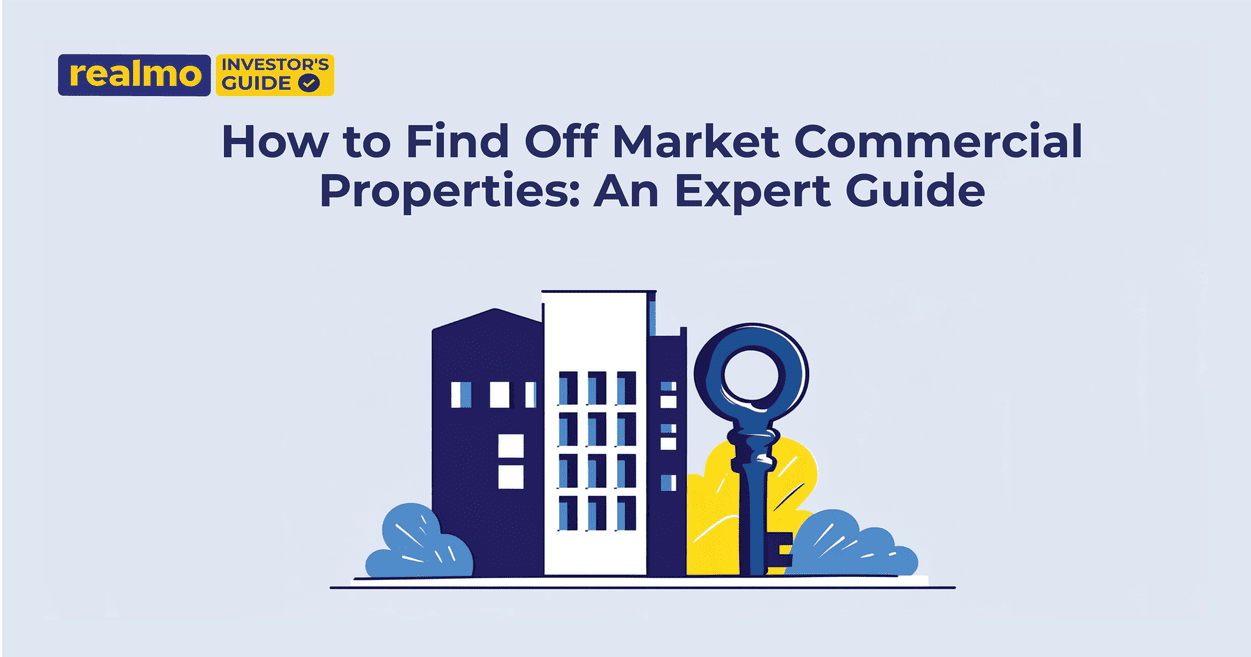
If you are relying solely on LoopNet or Crexi to source your acquisitions, you are likely overpaying for assets. In the current investment landscape, looking only at publicly listed inventory means you are analyzing approximately 1% of the total commercial real estate market. The remaining 99% constitutes the off-market inventory—properties not actively advertised but often owned by sellers open to a transaction.
For institutional and private investors alike, moving from on-market to off-market sourcing is the single most effective lever for increasing alpha. Off-market deals let you skip the competitive auction environment, secure better prices, and structure more flexible terms. This guide details the sourcing architecture required to uncover these hidden opportunities.
The 5 Big Advantages of Off-Market Deals
Why should an investor allocate resources to finding unlisted assets? The return on effort is quantifiable through five distinct advantages:
- Less Competition: By definition, you are not competing in a widely marketed bidding war, which prevents artificial price inflation.
- Better Prices: Sellers often accept a lower strike price in exchange for a discreet, certain transaction without marketing delays.
- Direct Negotiation: Dealing directly allows for creative financing or flexible closing timelines that huge brokerages often filter out.
- Early Access: You see the deal before anyone else in the market.
- Find Unique Assets: You can identify specific buildings that fit your thesis perfectly—assets that would never be publicly listed—and curate your own deal.
Relationship-Based Sourcing
The most capital-efficient entry point into off-market commercial real estate deals is leveraging relationship capital. This approach is about making sure the right people think of you first when they hear about a deal. It is less about hunting and more about ensuring you are the first call when a source identifies a potential investment.
Strategy 1: Build a Roster of “Off-Market” Brokers
Not all real estate agents and brokers operate broadly. While many focus on volume listings, a specific subset of brokers specializes in “pocket listings”—deals held quietly for a select group of trusted buyers. Accessing this exclusive inventory requires treating the broker not as a vendor, but as a partner in your investment thesis.
To unlock these off-market opportunities, you need to stand out as a serious buyer. Brokerage professionals are inundated with “tire kickers.” To source deals through them, you must articulate a specific “buy box” (e.g., Value-add multifamily, Class B, 1980s vintage, $5M-$15M). Furthermore, you must demonstrate execution capability. A professional relationship is built on the assurance that if they bring you a filtered, viable deal, you can close. By proving your reliability, you move from their general email list to their speed dial.
Strategy 2: Network with Allied CRE Professionals
Brokers manage the transaction, but they are rarely the first to know when a property encounters distress or an owner is looking to exit. To find deals before they reach a brokerage, you must cultivate a “ground team” of allied professionals who have intimate visibility into a portfolio or specific asset’s operations.
- Property Managers: They are the first to know when an owner is fatigued by high vacancy, deferred maintenance, or tenant disputes. A property manager knows the operational reality of a building better than anyone.
- Contractors & Engineers: When a contractor bids on a roof replacement or major structural repair that an owner declines due to lack of funds, that is a signal of a potential seller in distress.
- Lenders & Bankers: A lender is aware of owners facing maturity risk or pre-foreclosure scenarios months before public notices are filed.
- Attorneys & Title Companies: These professionals are involved in estate planning, partnerships dissolving, or bankruptcies—all prime triggers for an asset sale.
Strategy 3: Leverage Niche Social Media & Online Forums
Modern deal-making has expanded beyond the country club to digital communities. High-signal social media groups and online forums have become legitimate venues to invest in and network for commercial real estate deals.
Don’t underestimate the power of platforms like LinkedIn, Twitter (X), and specialized Slack or Discord channels. For example, Tyler Cauble of The Cauble Group bought an office tower in downtown Chattanooga after posting about his interest on Instagram—someone reached out with three properties the same day. To utilize this strategy, engage in niche communities where active operators discuss deal flow. By consistently posting your criteria and adding value to discussions, you signal to the market that you are a credible buyer. This “digital networking” attracts leads from younger owners and tech-savvy operators who prioritize speed and direct connection over traditional listing services.
Expert Insight: How to Be the First Person a Broker Calls
A common rookie mistake is treating a broker like a commodity. The pros do the opposite. To get their best off-market deals, you must make their life easy. Provide a “buy box” so clear a 5-year-old could understand it. Send them a one-page PDF: “My Criteria: 10-50 unit multifamily, Class B/C, in [Zip Codes], close in 30 days.” When they send you a deal, respond in 1 hour, even if it’s a “no.” This speed and clarity proves you’re a serious operator, making you the profitable, reliable buyer they prefer.
Proactive Outreach Sourcing
While relationships yield high-quality leads, they are inherently passive. To aggressively scale your pipeline, you must adopt a “hunter’s” mentality. This section covers how investors can actively find and create their own opportunities through direct outreach.
Strategy 4: Master Scalable Direct Mail Campaigns
Direct mail remains one of the most effective, scalable methods to find off-market inventory, provided it is executed with precision. Unlike blasting a generic zip code, successful direct mail campaigns focus on specific data sets.
- Build the List: Use public records or data platforms to identify property owners matching precise criteria (e.g., “all industrial warehouses built before 1980 in zip code X with 50%+ equity”).
- The Message: Avoid marketing fluff. Your flyer or letter must be professional and clear: “I am a private investor interested in acquiring your asset at [Address].”
- The Key: Consistency is the only metric that matters. Sending direct mail once is a waste of capital; it requires a quarterly campaign. You are paying to be in front of the owner exactly when their motivation to sell spikes.
Strategy 5: “Driving for Dollars” (The CRE Version)
While technology offers scale, physically inspecting specific areas remains the most accurate way to find properties that data can miss. In commercial real estate, “Driving for Dollars” involves canvassing target submarkets to identify assets showing physical signs of distress or neglect.
Look for indicators that an owner has disengaged: overgrown landscaping, boarded windows, lingering “For Lease” signs, or full vacancy in a thriving corridor. These visual cues often precede financial distress. Once a target is identified, use tax records or data tools to skip-trace the property owners. This method allows you to target highly motivated sellers who haven’t yet listed their property. While it inevitably leads to cold calling or door knocking, the conversion rate on these assets is significantly higher because you are solving a visible problem for the owner.
Expert Insight: Your Direct Mail Isn’t Working? Try This.
Stop sending generic, printed flyers. They look like junk mail and end up in the trash. The highest-response mailer is the “Handwritten Note.” Use a simple, personal-sized envelope and hand-write the address. Inside, include a concise, handwritten note on high-quality stationery. “Dear [Owner Name], I own other properties in the area and have always admired your building at [Address]. If you’ve ever considered a simple, private sale, please call me.” It’s personal, it gets opened by the property owner, and it establishes a human connection that a gloss flyer cannot.
Data-Driven Sourcing (The “Where”)
For investors looking to find commercial assets at scale, relying solely on physical driving or manual searches is inefficient. This section outlines how to blend technology with outreach to identify off-market opportunities using robust market data.
Strategy 6: Harness CRE Data Platforms
Modern CRE technology provides institutional-grade visibility into the entire stock of real estate, regardless of listing status. Platforms like Reonomy, CoStar, and Crexi allow you to aggregate market data to identify owners who fit a “likely to sell” profile.
Instead of browsing “For Sale” tabs, use these tools to filter by ownership signals. You can search for property owners who have held an asset for 10+ years (nearing end of hold period), have debt maturing in the next 12 months (interest rate risk), or own a fragmented portfolio across different states. This data enables you to find properties where the owner has a logical reason to exit, even if they aren’t actively marketing the deal. By utilizing these platforms, you can generate highly targeted lists for your direct mail or cold calling campaigns, ensuring your outreach resources are focused on the highest probability targets.
Strategy 7: Scour Public Records & Listing Websites
Paradoxically, some of the best off-market leads can be found by analyzing listing websites and public records with a different lens. You can use explicit on-market data to infer off-market intent.
Listing Websites: Browse platforms like LoopNet or Crexi not for sales, but for “For Lease” listings. Look for spaces that have been vacant for 180+ days. An owner struggling to fill vacancy is bleeding revenue and may be open to a sale to stop the bleeding.
Public Records: Monitor county records for adverse filings. Pre-foreclosure lists, tax liens, and city code violations are definitive signs of distress. These publicly listed records flag property owners who are under financial pressure. Contacting these owners offers them a solution to a compounding problem, often resulting in a transaction below market value.
From Lead to Deal (The “Next Steps”)
Identifying the property is only the first phase. Converting a lead into a closed deal requires a different skill set than buying listed for sale assets. You must effectively negotiate and navigate a transaction structure without a broker’s safety net.
How to Approach the Owner Directly
Your initial contact determines the trajectory of the deal. Whether through cold calling or a follow-up letter, your approach must be professional, direct, and non-threatening. Distinctly state, “I am a local investor, not a broker looking for a listing.”
Acknowledge that they are likely not actively selling. Your goal is not to convince them to sell, but to present yourself as a viable option if they choose to. Tailor your pitch using the research you gathered: “I noticed your loan is maturing soon,” or “I see the vacancy has persisted.” Signal that you are prepared to make a fair, private offer that saves them broker fees. This transparency builds the trust required to negotiate a private sale.
Vetting the “Un-Vetted” Deal
Unlike on-market properties that come with a polished Offering Memorandum (OM), off-market deals arrive with zero documentation. The burden of due diligence falls entirely on the buyer.
You must underwrite the deal from scratch. This involves verifying rent rolls, auditing trailing 12-month financials, and physically inspecting the asset. Be wary of “pro forma” numbers; rely only on actuals. Evaluate the current cap rates against prevailing interest rates to ensure the spread justifies the risk. Because there is no intermediary vetting the information, you must validate every claim the seller makes regarding the market and the property condition before committing capital.
Build Your Off-Market Pipeline
Finding off-market commercial real estate deals is a process, not a singular event. The most successful investors treat sourcing as a daily business function. Whether you choose to network with five property managers this month or launch a quarterly direct mail campaign, the key is consistency.
By systematically applying these strategies, you build a robust pipeline where opportunities come to you. This shift from reactive browsing to proactive sourcing is what separates passive buyers from sophisticated investors who consistently uncover the most profitable deals in the commercial real estate market.
Disclaimer: The information presented in this article is for general educational purposes only and does not constitute financial, legal, or tax advice. Realmo.com assumes no responsibility for errors, omissions, or actions taken based on this content. This material should not be relied upon as a substitute for a consultation with professional advisors. Please note that laws and regulations may vary significantly by state