How to Invest in Industrial Real Estate: A Master Class
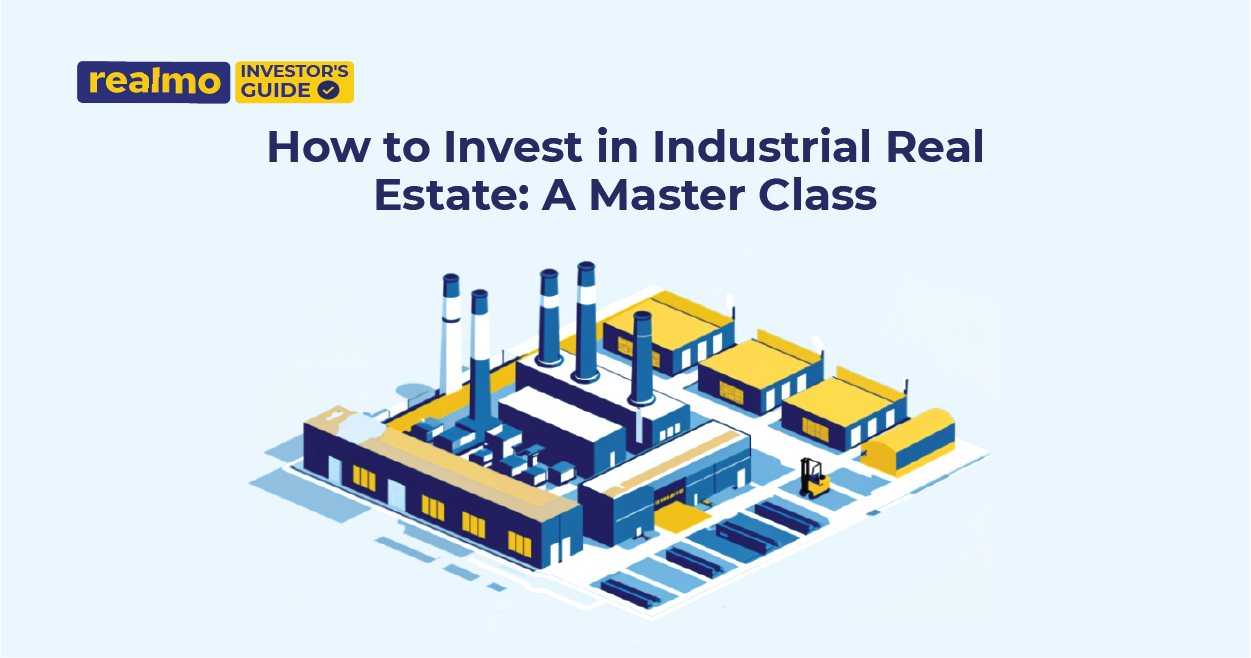
A package gets ordered and shows up at your door in two days. Behind that speed is a physical network of warehouses, land, and infrastructure that powers modern commerce. Industrial real estate sits at the center of it.
Over the past decade, accelerated by pandemic-driven supply chain shifts, it has become one of the most in-demand asset classes. E-commerce now accounts for roughly 20% of retail sales, and every increase drives demand for logistics space. Vacancy is tight, rents are rising, and investors are paying attention.
Unlike office or retail, industrial real estate isn’t trend-driven. It’s driven by logistics, the constant movement of goods. This guide breaks down how to invest in it step by step, with a clear, practical approach.
Why Industrial Real Estate Stands Out as an Asset Class
Structural Tailwinds Driving Demand
Industrial real estate didn’t suddenly become attractive. It just became unavoidable.
E-commerce is the most obvious driver. Every online order needs space: not just one building, but a chain of them. Large-scale warehouses handle bulk storage, while smaller last-mile facilities move goods closer to cities. That layered system didn’t exist at this scale before, and now it’s expanding constantly.
Then there’s the supply chain shift. After years of global outsourcing, companies started rethinking how far away their operations were. Onshoring (bringing manufacturing and storage closer to home) has created new demand for domestic industrial facilities. Not just warehouses, but manufacturing space, assembly, distribution hubs.
And the geography is changing too. Industrial real estate isn’t limited to major gateway cities anymore. Population growth in Sun Belt and secondary markets has opened up entirely new industrial corridors. Places that weren’t on the map ten years ago are now seeing sustained demand for industrial space.
That’s why industrial real estate continues to attract attention from both institutional and individual investors.
Income Profile and Lease Advantages
The appeal of industrial real estate isn’t just demand; it’s how the income works.
Industrial leases often span 5 to 15 years. That alone changes the experience for property owners. Compared to office space or retail, where tenants can turn over more frequently, industrial properties tend to offer longer-term stability.
Lease structure matters as well. Many industrial properties operate under triple-net (NNN) leases. That means tenants cover operating costs (taxes, insurance, maintenance) on top of rent. From an investor’s perspective, that protects cash flow in a way traditional commercial leases don’t always do.
Another detail gets overlooked: industrial tenants often invest heavily in the space itself, with equipment, layout changes, and infrastructure upgrades. Once that capital is committed, tenants are less likely to leave quickly. This adds even more stability.
It’s not completely passive — no real estate investment is — but compared to other commercial property types, the management burden is often lighter. And for many investors, that balance between income and effort is exactly what makes industrial stand out.
Types of Industrial Real Estate: Know What You’re Buying
Warehouses, Distribution Centers, and Flex Industrial
Not all industrial properties function the same way, and that distinction matters more than it might seem at first.
- At one end, you have massive distribution centers. Think 500,000 square feet or more, the kind of buildings used by major e-commerce players. These are built for scale to move volume efficiently.
- At the other end, smaller last-mile facilities sit closer to urban areas with maybe 30,000 to 150,000 square feet. These tend to command higher rents because they solve a different problem — speed. The goals is getting goods from a regional hub to the doorstep quickly.
- Flex industrial is another type. These properties combine warehouse space with office space, which broadens the tenant pool. A business might need storage, light manufacturing, and administrative space all in one place. Flex properties accommodate that.
The physical details matter here:
- Ceiling height affects storage capacity
- Loading docks affect logistics efficiency
- Power supply affects what operations can even take place, etc.
These features directly influence demand and property value.
Manufacturing Facilities, Cold Storage, and Industrial Parks
Some industrial assets go further into specialization:
- Manufacturing facilities, for example, require specific infrastructure: heavy power, ventilation systems, zoning compliance. They tend to attract long-term tenants because relocating isn’t simple. But they also require deeper due diligence, especially around environmental factors.
- Cold storage is another niche that’s been growing quickly. Food logistics, pharmaceuticals, and temperature-sensitive goods all depend on refrigerated space. These properties can command strong rents, but they’re expensive to build and operate.
- Industrial parks take a different approach. Instead of one large tenant, they often house multiple businesses across several buildings. For investors, that creates diversification within a single asset. If one tenant leaves, the entire property isn’t suddenly vacant.
Each type comes with its own risk and return profile. The key is choosing what aligns with your investment strategy and what you understand well enough to manage.
How to Evaluate and Select an Industrial Investment
Location and Market Analysis
Location still matters. But in industrial real estate, it’s not about foot traffic or visibility; it’s about logistics.
- Proximity to highways, rail lines, ports, and intermodal hubs drives value. Tenants are choosing based on efficiency — how quickly goods can move in and out.
- Market trends matter just as much. Vacancy rates, absorption, or, say, new construction pipelines tell you whether supply is keeping up with demand. A tight market with low vacancy suggests strong pricing power. An oversupplied one can create pressure quickly.
Secondary markets often offer better entry points. Higher cap rates, more room for property appreciation. But they require deeper knowledge. What looks like an opportunity from a distance can behave very differently on the ground.
Physical Due Diligence: What to Inspect
Industrial due diligence is where most of the risk gets uncovered or missed.
- Start with the structure. Roof condition, foundation, overall integrity. These are expensive to fix, and issues don’t always show up immediately.
- Then the systems. Electrical capacity, HVAC, plumbing. Industrial tenants often need specific capabilities, and retrofitting can be costly.
- Environmental assessments are also critical. Industrial properties can carry legacy risks, including contamination from previous uses and compliance issues. A Phase I or Phase II assessment isn’t just a formality. It’s protection.
- Zoning also matters more than expected. What a tenant can legally do on the property determines its usability and value.
Tenant and Lease Analysis
The tenant can matter as much as the building itself.
A property leased to a strong, creditworthy tenant with a long-term lease behaves very differently from one with a short-term, less stable occupant. The difference in risk is significant.
Lease structure adds another layer. A 10-year NNN lease with built-in rent escalations provides predictable income. A short-term gross lease leaves more uncertainty – both in expenses and future vacancy. WALT (weighted average lease term) is a useful metric here. It shows how long the income is expected to last before leases expire.
An industrial property with a strong tenant and long lease can feel almost bond-like. Without that, it becomes much more active, more variable. Neither is inherently better, but they require different expectations.
Financing Your Industrial Real Estate Investment
Loan Types and Lender Criteria
Financing shapes the deal more than most investors expect.
- Commercial mortgages typically require 25-35% down, with loan terms ranging from 5 to 25 years. Lenders focus heavily on the property’s ability to generate income — DSCR, tenant quality, lease stability.
- SBA 504 loans are an option for owner-occupants. They offer favorable terms, but come with specific requirements.
- For larger, stabilized assets, CMBS loans or life company financing are common. These tend to offer competitive rates, but require strong fundamentals – location, tenancy, lease structure.
Interest rates matter here. A small shift can change returns significantly. Deals that work at one rate might not at another.
Alternative Paths: REITs and Investment Groups
Direct ownership isn’t the only way in:
- Real estate investment trusts (REITs) provide exposure to industrial real estate without owning physical properties. They’re liquid, diversified, and easier to access, but come with less control.
- Investment groups and syndications offer another path. Investors pool capital to acquire larger assets. This allows access to deals that would be out of reach individually.
Each option has trade-offs like control, liquidity, risk, and return. For many investors, these serve as entry points to build experience before moving into direct ownership.
Risks to Understand and Mitigate
Industrial real estate isn’t risk-free. It just carries different risks.
- Tenant concentration is one. A single-tenant building can produce strong income, that is until that tenant leaves. Then the property is fully vacant.
- Interest rate sensitivity is another. As rates rise, margins tighten. Cap rates adjust. Deals need to be underwritten carefully.
- And then there’s obsolescence. Older buildings (low ceilings, limited power, poor access) can struggle to compete. Tenant expectations evolve, and not all properties keep up.
None of these risks is unmanageable. But they require attention. Industrial real estate investing works best when approached with a clear understanding of what can go wrong, not just what can go right.
Conclusion: Starting Your Industrial Investment Journey
Industrial real estate isn’t a trend but an infrastructure. And as long as goods continue to move — which they will — the demand for industrial space will remain.
For investors, the path is relatively clear:
- Understand the property types
- Study the markets
- Approach due diligence seriously
- Match financing to strategy
There’s no single way to invest: direct ownership, REITs, or syndications all have their place. What matters is starting with informed decisions and building from there. Because once the system starts to make sense, industrial real estate starts feeling like an opportunity that was always there.