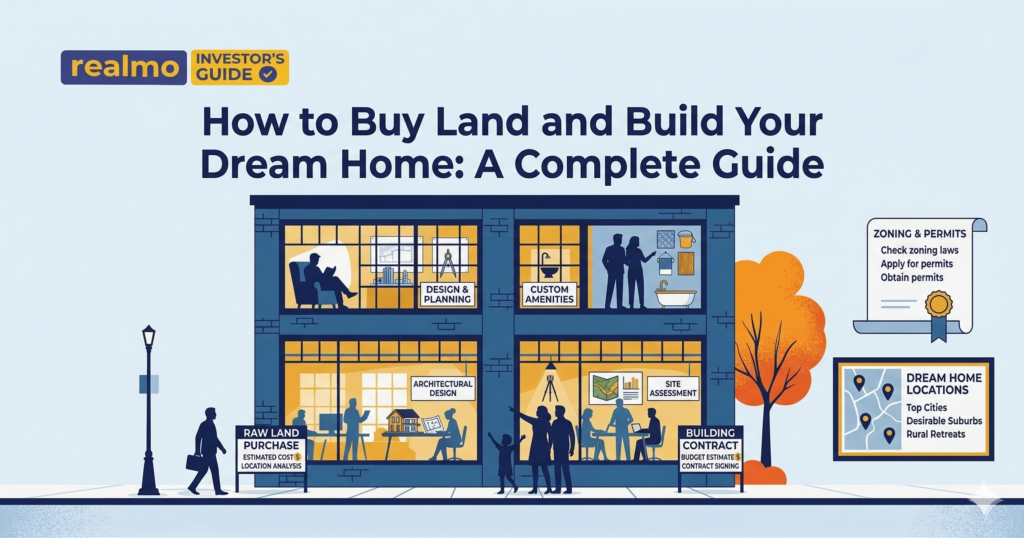
How to Buy Land and Build Your Dream Home – A Complete Guide
You start looking for a home – scrolling listings, going to viewings – but something always feels off: the layout, the location, or the price just doesn’t add up.
At some point, a different idea comes up: what if you built it instead?
That’s where buying land starts to make sense. It gives you control over design, layout, and how the space fits your life. But it’s a different process, with zoning, utilities, permits, and construction to figure out. This guide breaks it down step by step.
Is Buying Land to Build Right for You?
There’s a reason more buyers are starting to look beyond existing homes.
When you buy land and build, you’re not adapting to someone else’s decisions. You’re starting from zero. Every room, every layout choice, every feature is intentional. That’s what makes a custom home different – it reflects how you actually want to live, not how someone else did.
Location opens up too. Instead of choosing from where homes already exist, you can purchase land where it’s available, which sometimes means better views, quieter areas, or simply more space.
And depending on the market, the numbers can work out in your favor. In some cases, buying land and building ends up costing less than purchasing a home that already exists, especially when existing inventory is tight and prices are pushed up.
It’s not always cheaper. But it’s often more aligned with what you actually want.
Cons and Considerations
That said, this path isn’t simpler, just different.
The timeline alone changes things. Buying land and building a new home can take anywhere from six months to well over a year:
- Permits take time
- Builders get booked
- Weather delays happen, etc.
Then there’s complexity. Instead of dealing with one transaction, you’re managing multiple moving parts, including lenders, contractors, permits, and inspections. It’s manageable, but it requires attention.
Financing is also different. Land loans and construction loans usually come with higher interest rates and shorter terms than a traditional mortgage. It’s not a dealbreaker, but it does change how you plan.
None of this makes the process unworkable. It just means it’s something you step into deliberately.
How to Find Land for Sale
Where to Search for Land Listings
Finding land isn’t as straightforward as finding a house. Listings exist, but they’re often less centralized, less visible.
Real estate platforms and MLS listings are still a good starting point. But they don’t always show everything. Some parcels never make it to public listings.
This is where a real estate agent who specializes in land becomes important. Not just any agent, but someone who understands land sales specifically. They often have access to off-market opportunities, or at least know where to look beyond the obvious.
County records, auctions, and even direct outreach to landowners can surface options that wouldn’t appear otherwise. It’s not always fast, but it tends to be more effective.
Key Location Factors to Consider
Location feels obvious until you start looking at land, and realize how many layers there actually are.
At a basic level, you want the same things as any home: proximity to work, schools, hospitals, and everyday amenities. But land adds another dimension:
- Access
- Utilities
- Zoning
Rural land might offer space and privacy, but it often comes with trade-offs like limited utilities, longer drive times, and sometimes unclear road access. Suburban lots are more predictable, but also more competitive.
Then there’s the future. You might find the perfect lot for the view, but if development is planned nearby, that view can disappear. It happens more often than expected.
It’s also worth understanding what surrounds the property. Nearby commercial or agricultural use can affect noise, traffic, and even air quality.
The “perfect lot” isn’t just about how it look; it’s about how it functions long-term.
Due Diligence: What to Check Before You Buy
Zoning Regulations and Land Use
Before anything else, you need to know what you’re allowed to build.
Zoning regulations determine how the land can be used: residential, commercial, or mixed-use. But they also go deeper to include:
- Setbacks
- Building height limits
- Whether additional units are allowed, etc.
If your plan is to build a two-story home and zoning restricts height, that’s not something you fix later. That’s something you need to know upfront.
Changing zoning is possible in some cases, but it’s rarely simple or fast. It’s better to find land that already aligns with your building plans.
Checking with the local planning department (and any HOA, if applicable) helps avoid surprises that can completely reshape the project.
Utility and Infrastructure Access
Utilities are one of the most underestimated parts of buying land.
Some parcels already have water, electricity, gas, and sewage connections in place. Others don’t. And connecting them can be expensive. Drilling a well, installing a septic system, bringing in electrical lines — these costs add up quickly. Sometimes tens of thousands of dollars, depending on location.
Road access matters just as much. If the land is accessed via a private road, you may be responsible for maintenance. If it’s landlocked, you’ll need a legal easement to reach it.
These details aren’t always obvious in listings. But they affect both cost and usability in very real ways.
Site Inspection, Property History, and Survey
Of course, you need to visit the land in person. Walk it. Understand the slope, the soil, how water drains, and where the sun hits. These factors influence everything from construction cost to how the home actually feels once built.
Property history matters too. If the land was previously used for industrial or automotive purposes, soil quality could be affected. Environmental restrictions, flood zones, and conservation easements shape what’s possible.
Don’t forget the survey. A professional survey confirms exactly where the boundaries are. Without it, you’re relying on assumptions, and those can lead to disputes later. This is the stage where deals sometimes fall apart because something wasn’t fully understood early enough.
How to Finance Your Land Purchase
Land Loans
A land loan is different from a traditional mortgage for one simple reason: there’s no house yet.
Without a structure as collateral, lenders see land as riskier. That’s why land loans typically come with higher interest rates, larger down payments – often 20% to 50% – and shorter repayment terms.
It doesn’t mean they’re hard to get. But it does mean the process requires a bit more preparation. Working with a lender who specializes in land transactions helps. They understand how to evaluate undeveloped land in a way that standard lenders may not.
Construction Loans
Once you move from buying land to building, construction loans come into play.
These loans cover both the land purchase and the construction itself, including materials, labor, and permits. They’re usually short-term, with variable interest rates.
At the end of construction, the loan typically converts into a traditional mortgage. That transition — construction-to-permanent — is where things stabilize financially.
There are other options too:
- Personal loans, for example, are easier to access but come with higher interest rates
- Land contracts can sometimes work for buyers who don’t qualify for conventional financing
Each option has trade-offs. The key is choosing what fits your situation, not just what’s available.
Getting Pre-Qualified and Working with a Lender
Before making an offer, it’s best to have financing lined up.
Land sellers often expect proof of funds or pre-qualification. It shows you’re serious and capable of closing. Working with a lender experienced in land and construction loans makes the process smoother and more predictable. And at this stage, predictability matters more than anything.
Making an Offer and Closing on the Land
Once you’ve found the right piece of land, the process starts to look more familiar, but with a few differences.
Pricing isn’t always straightforward. Comparable sales exist, but they’re harder to find than with homes. This is where a real estate agent who specializes in land becomes essential.
When making an offer, contingencies matter. Financing, zoning verification, utility access, and inspection all give you an exit if something doesn’t line up.
Before closing, a title search ensures the property is free of liens or disputes. It’s one of those steps that feels routine, but protects you from long-term issues.
At closing, documents are signed, payment is made, and ownership transfers.
From Land to Home: Starting the Build
This is where the process changes again, from buying to creating.
Choosing the right builder becomes one of the most important decisions. Experience with raw land matters. Not every builder handles site prep, utilities, and custom construction the same way.
Permits come next. Building, electrical, and plumbing are all required before construction begins. Skipping steps here isn’t really an option. Construction plans need to be finalized before permits are submitted. Changes afterward are possible, but expensive and time-consuming.
Then the build itself starts:
- Site prep
- Foundation
- Framing
- Systems
- Finishes
It’s a process with stages, and each one builds on the last. Understanding that flow helps manage expectations and avoid unnecessary stress.
Conclusion
Buying land to build a home isn’t the simplest path. But for many buyers, it’s the most aligned one. The process moves from idea to reality step by step: finding land, understanding zoning, handling utilities, securing financing, making an offer, and finally starting construction.
It requires the right people along the way. A real estate agent who specializes in land. A lender who understands construction financing. A builder who can execute the vision.
But at the end of it, the outcome is different from buying an existing home. It’s something built intentionally around your needs, your preferences, your way of living. And for many, that makes the extra effort not just worth it, but necessary.