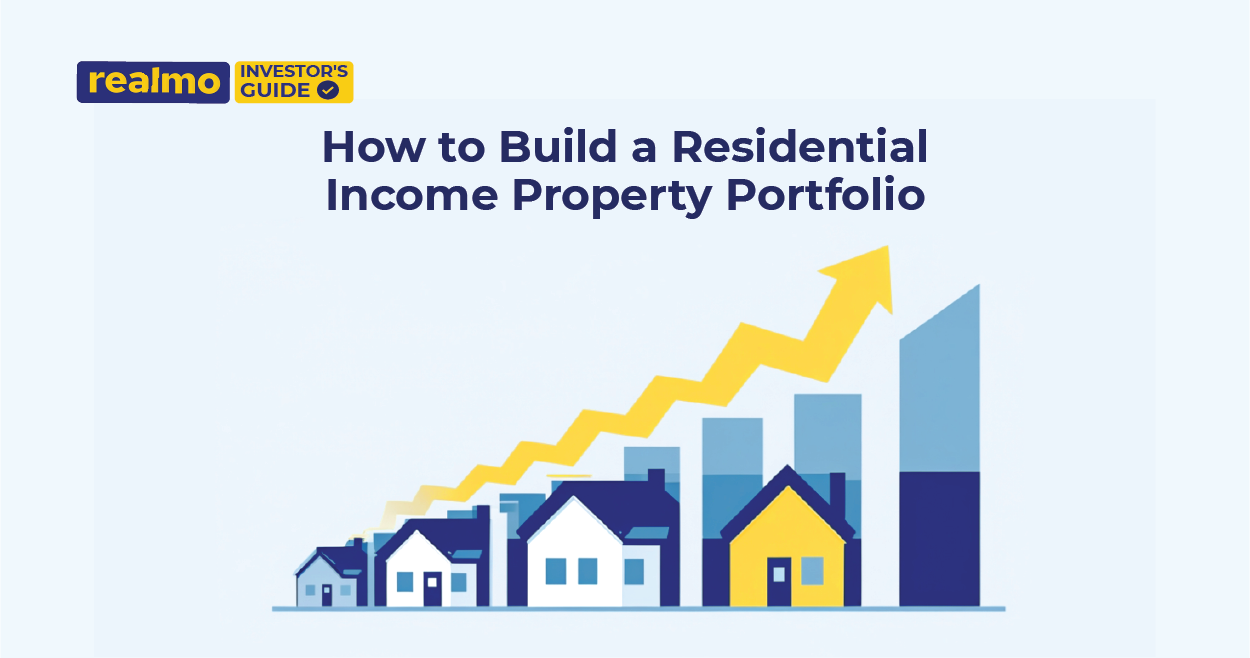
How to Build a Residential Income Property Portfolio: A Step-by-Step Guide
You buy your first rental property. The numbers work, mostly. Rent comes in, the mortgage gets paid, and there’s a bit left over at the end of the month. It feels like a win. For a while, it is. But then the question creeps in, usually when you’re staring at your bank account or scrolling listings late at night: is this it, or is this the start of something bigger?
Real estate investing has this strange reputation. It sounds like something reserved for people with deep pockets, industry connections, or decades of experience. But if you look closely, many investors start in a much simpler place — one property, sometimes two, figuring things out as they go. The difference is that some treat that first rental like a one-off decision, while others treat it like the foundation of a portfolio. This guide is for the second group. It’s a step-by-step way to go from one property to something that actually builds long-term wealth.
Set Your Financial Foundation Before You Buy
Define Your Investment Goals
It’s tempting to jump straight into the deal. Find a property, run a few numbers, convince yourself it works, and move forward. A lot of investors do exactly that. And sometimes it works out. Sometimes it doesn’t.
The problem is that without a clear goal, it’s hard to know what “working” even means. Define what you aim for. Is the goal strong monthly cash flow? Long-term appreciation? A mix of both? Those choices lead to very different properties in very different markets.
It helps to get specific, even if it feels a bit arbitrary at first. Something like: $3,000 a month in rental income within five years. Or five rental properties that collectively produce stable cash flow.
Once that’s clear, your financial situation starts to matter in a more practical way: credit score, available capital, existing debt, and the tax advantages you can actually use. Depreciation and mortgage interest deductions aren’t just abstract benefits; they shape real outcomes. This is usually where a CPA or tax advisor becomes useful, earlier than most people expect.
Understand Your Financing Options
Financing is one of those things that feels technical until it suddenly becomes the main constraint. Two investors can look at the same deal and have completely different options simply because of how they’re able to finance it.
Traditional mortgages are the starting point for most people. They’re familiar, relatively stable, and generally require solid documentation along with a 15–25% down payment for rental properties. They work, but they can slow things down once you try to scale.
Then there are DSCR loans. These look at the property’s rental income instead of personal income. In simple terms, if the rent covers the debt, the deal can qualify. That shift sounds small, but it changes how investors grow beyond one or two properties.
Hard money loans are a different tool entirely. Faster, more flexible, often used for rehab projects — but also more expensive and short-term. They solve specific problems, not long-term strategy.
And then there’s leverage. It shows up quietly at first, but it’s doing most of the work. A cash-out refinance, for example, lets you pull equity from one property and use it to fund another. That’s where things start to compound. The financing choice you make early on shapes how fast everything else can happen.
Find and Evaluate the Right Market
Research Rental Demand and Market Conditions
A property can look great on paper and still struggle if it’s in the wrong market. That’s one of the more frustrating lessons people run into.
Rental demand is usually the underlying issue. Strong demand tends to show up in predictable ways:
- population growth
- steady job creation
- low vacancy
- rising occupancy rates
A city adding a major employer or expanding a university can quietly become a very strong rental market, even if it’s not making headlines.
But even within a strong city, not everything works equally well. One neighborhood might be thriving while another is flat. Supply and demand don’t spread evenly. That’s why talking to local property managers or agents often reveals things that broader data misses. Many investors end up focusing on one city first, learning it in detail before thinking about diversifying their portfolio elsewhere.
Analyze Properties With the Right Metrics
Once the market makes sense, the focus shifts to the deal itself. This is where structure helps. Otherwise, everything starts to blur together.
The 1% rule is a common starting point. A $200,000 property should ideally bring in around $2,000 in monthly rent. It’s not perfect, and it doesn’t guarantee anything, but it filters out a lot of weak options quickly.
From there, the analysis gets more layered. Cap rate, gross rent multiplier, cash-on-cash return — each metric shows a different angle.
And then there are the things that don’t always show up clearly at first: rehab costs, contractor timelines, property management fees, maintenance requests that seem small until they aren’t. Smart investors look at all of it together.
Acquire Your First Rental and Build From There
Buying Your First Rental Property
The first rental property teaches more than anything else.
Starting simple tends to work best. Single-family homes or small multifamily properties are easier to understand, easier to manage, and generally easier to finance. There’s already enough to figure out without adding complexity too early.
Tenants matter more than most people expect. A reliable tenant makes everything feel smooth. An unreliable one can turn even a good property into constant work. Screening ( credit, income, rental history) becomes less of a formality and more of a safeguard.
Then there’s the question of management:
- Some investors prefer to handle everything themselves at first, just to understand how it works
- Others bring in a property manager right away to build a system that can scale
Both approaches have trade-offs. What matters is that the decision is intentional.
At some point, the topic of an LLC usually comes up. Liability protection, tax structure are all part of the conversation. But it’s rarely a one-size-fits-all answer, which is why most investors end up looping in a CPA or tax advisor before making that call.
Maximizing Cash Flow From Your Existing Properties
There’s a phase that doesn’t get talked about enough: the period after you buy, but before you scale. It’s not exciting, but it’s where a lot of value is either built or quietly lost.
- Rent should be aligned with the market, not left unchanged out of convenience
- Maintenance requests should be handled quickly, not delayed until they become bigger problems
- The relationship with tenants should be clear and transparent, even if it’s not always perfect
On the cost side, things drift if they’re not checked. Insurance premiums creep up, financing terms become outdated, and property management fees vary. Small inefficiencies don’t look like much month to month, but over time they add up.
Tracking helps keep things grounded. Cash flow, occupancy rates, net operating income are strong signals. Many investors rush to buy another property before stabilizing the first. But strong performance in existing assets makes everything else easier, especially when it comes to financing the next step.
Scale Strategically: Growing Your Rental Portfolio
Leverage Equity to Fund the Next Purchase
As a property increases in value and the loan balance decreases, equity builds. A cash-out refinance turns that equity into usable capital. That capital becomes the down payment for another property. And then, over time, the same process repeats.
It’s not always fast. Sometimes it feels slow, especially early on. But the pattern is consistent:
Equity builds → refinance → acquire another property → portfolio grows.
DSCR loans fit naturally into this stage because they focus on rental income rather than personal income. That removes a bottleneck that traditional financing often creates.
Reinvesting rental income also plays a role. Instead of treating cash flow as something to spend immediately, many investors redirect part of it back into the portfolio, either as reserves or future acquisition capital. It’s not always exciting, but it builds momentum.
Diversify and Protect the Portfolio
Growth introduces a different kind of problem — concentration.
If everything sits in one market, one property type, or one tenant profile, the portfolio becomes sensitive to specific risks. Diversifying your portfolio doesn’t mean owning everything everywhere, but it does mean being aware of where exposure builds up.
Financing decisions also carry more weight at this stage. Here’s what starts to matter more:
- Locking in favorable interest rates
- avoiding excessive short-term debt
- working with lenders who understand real estate investors
And then there’s the harder part: evaluating what you already own. Not every property continues to perform the way it once did. Some need to be improved, repositioned, or even sold. A portfolio requires ongoing attention. It’s not just about adding assets; it’s about maintaining alignment with the original goals.
Conclusion
Building a rental portfolio doesn’t happen all at once. It starts with one property, then another, and then a system begins to take shape. Each step builds on the previous one, from financial foundation and market selection to first rental, stabilization, scaling, and management.
Many investors start small and grow steadily. There’s no shortcut, but there is a path. And over time, those individual decisions — the careful ones, especially — start to look less like isolated moves and more like something intentional. That’s usually when a few properties turn into something closer to long-term wealth.